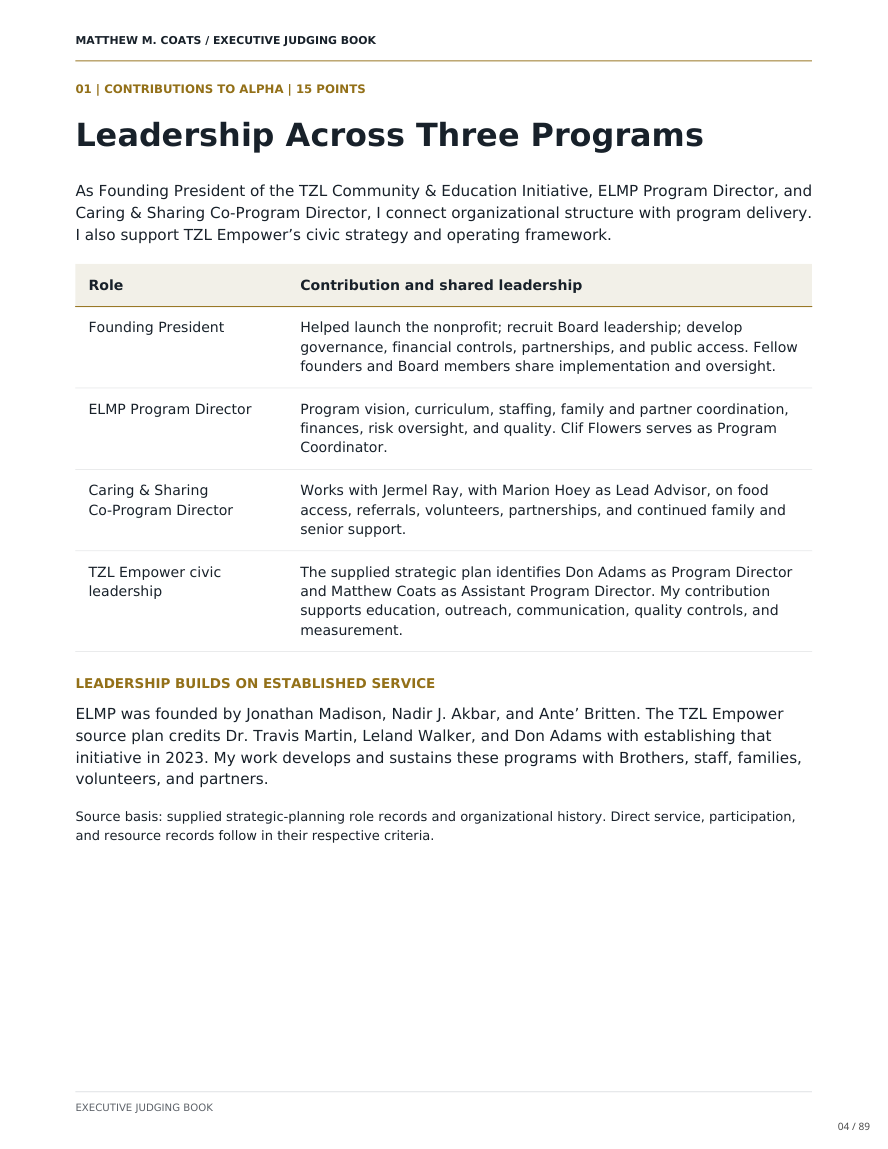
Founding President · TZL Community & Education Initiative
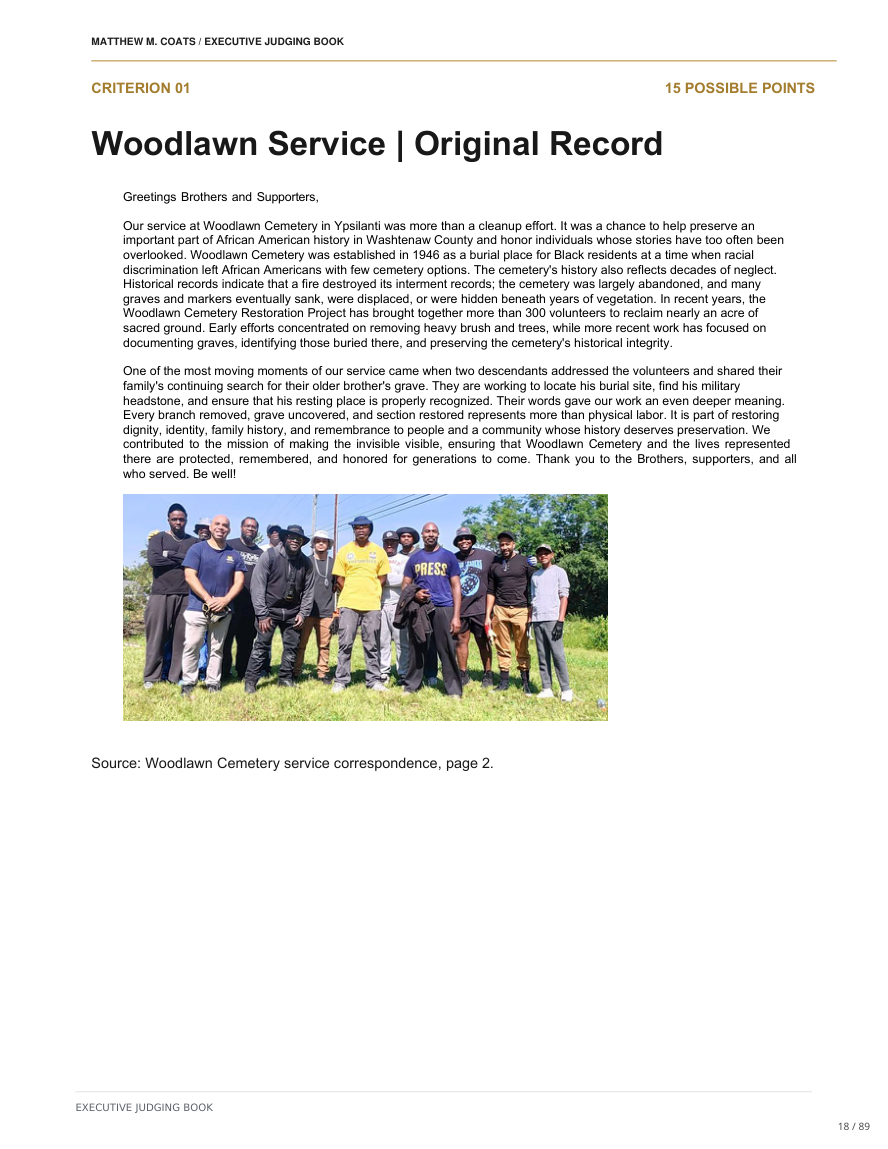
Led board activation, governance, strategic planning, resource development, accountability, and the connected three-pillar operating model.

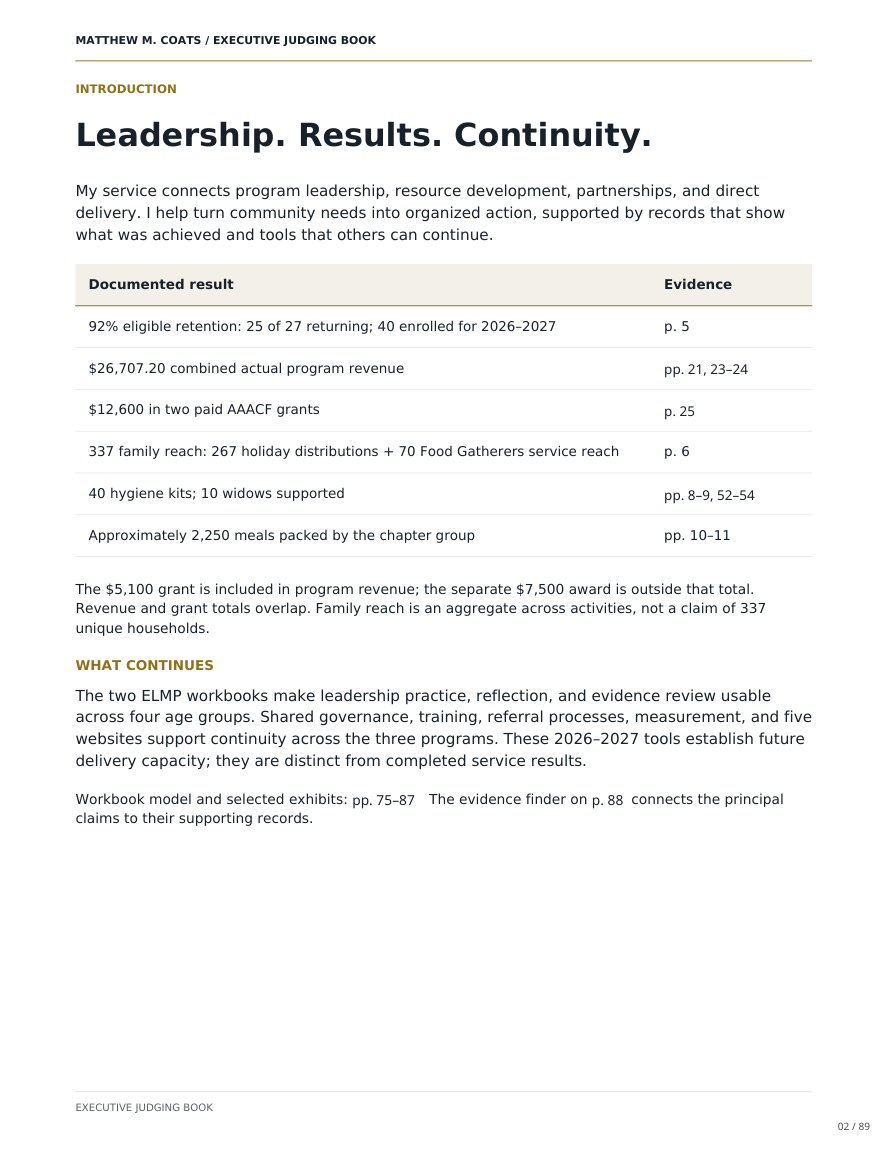
2025–2026 Electronic Evidence Book
Outstanding Alumni Brother of the Year
A five-minute, rubric-matched record of Alpha leadership, national program participation, sustainable systems, and documented community impact.
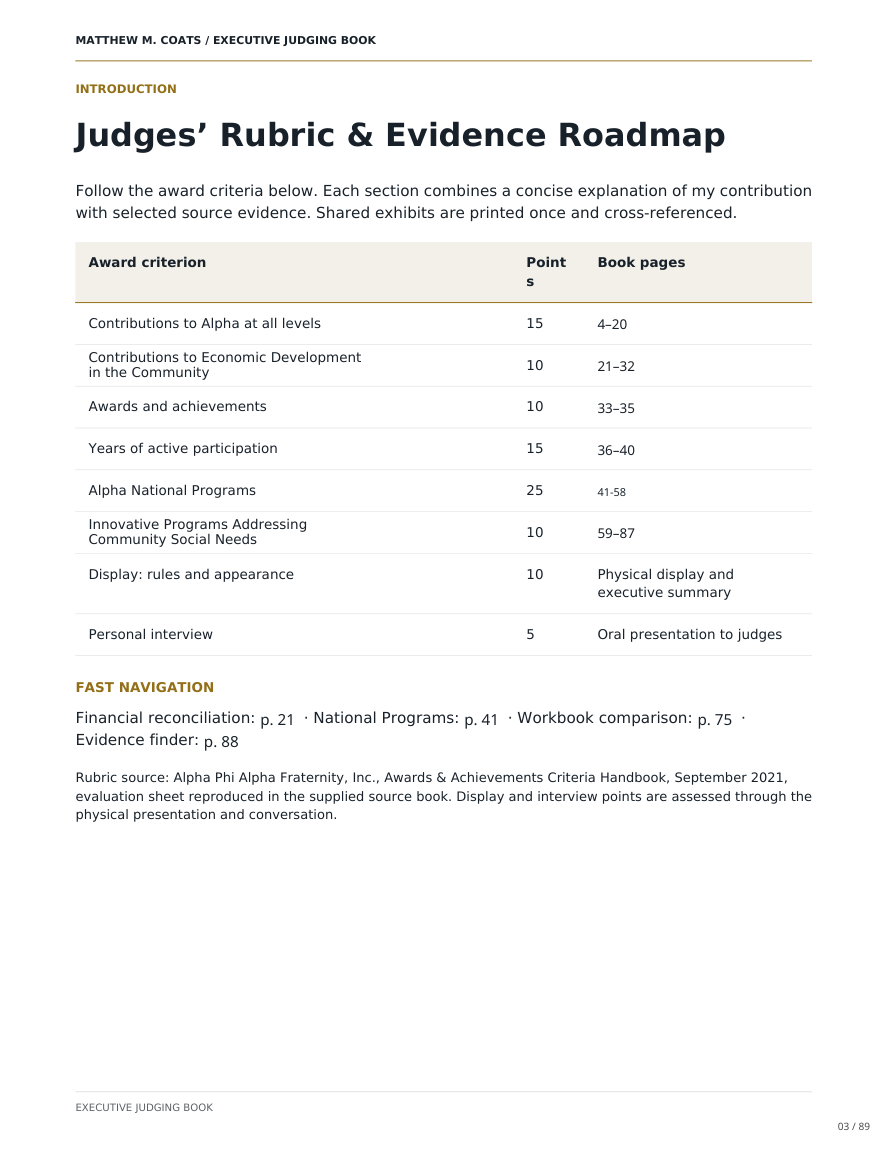
Official 100-Point Rubric
Eight scored categories in official order. Criteria 1–7 include matched documentary proof; Criterion 8 is evaluated live by the judges.
Criterion 1
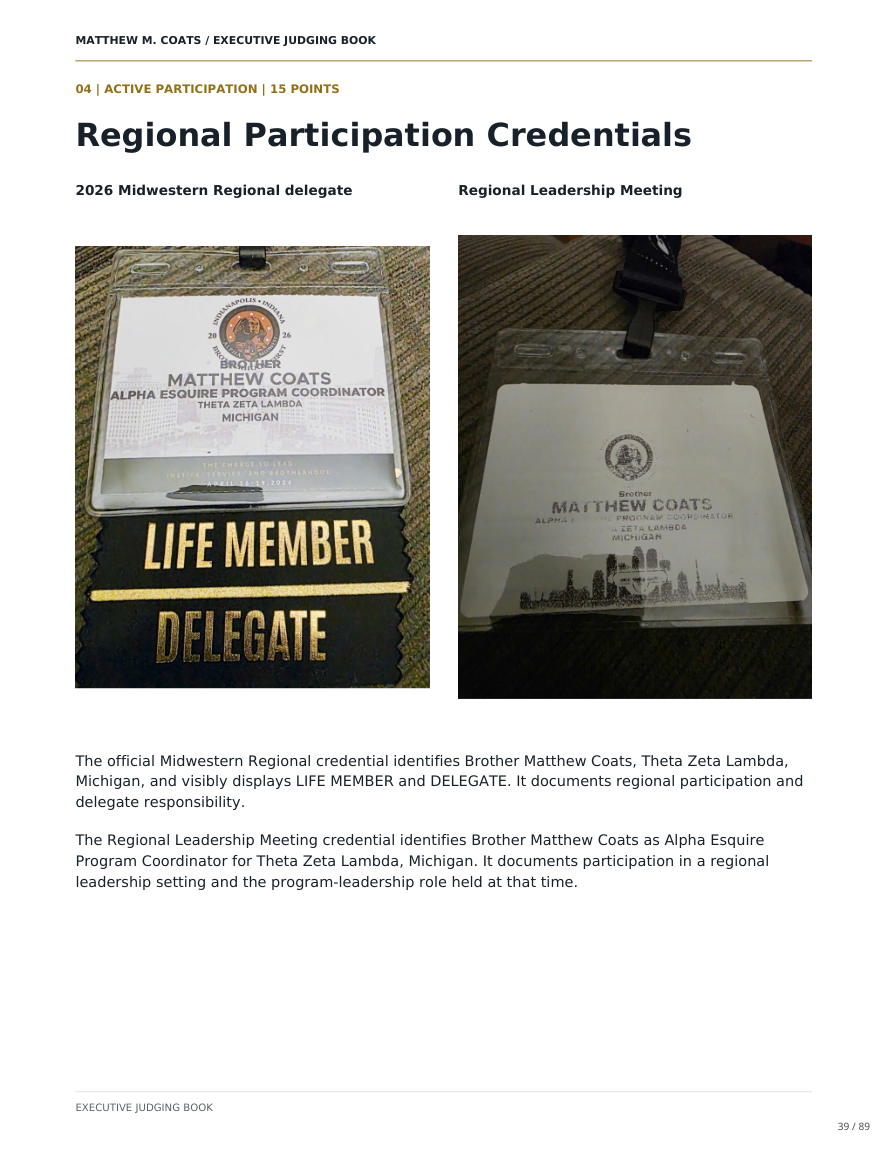
Chapter · Area/District · Region · General Organization — offices, delegate service, committees, and documented involvement.
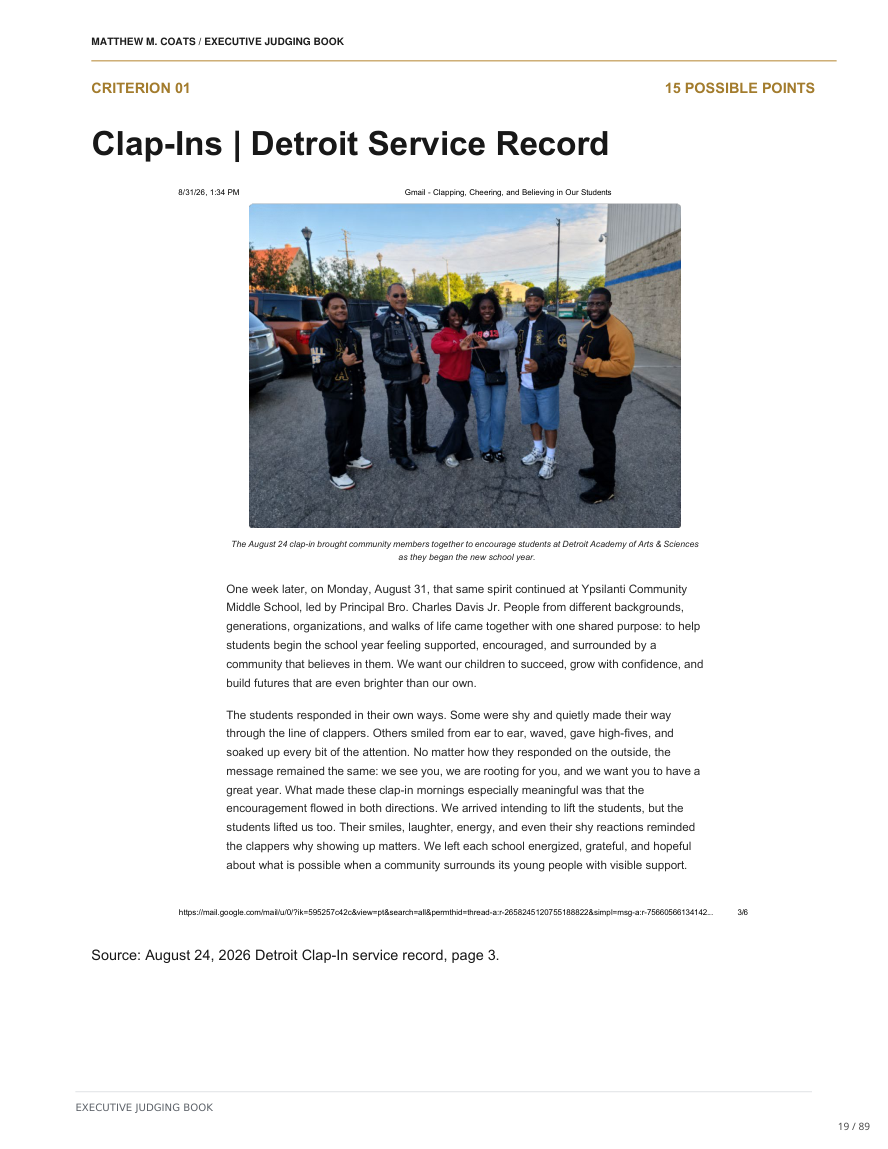
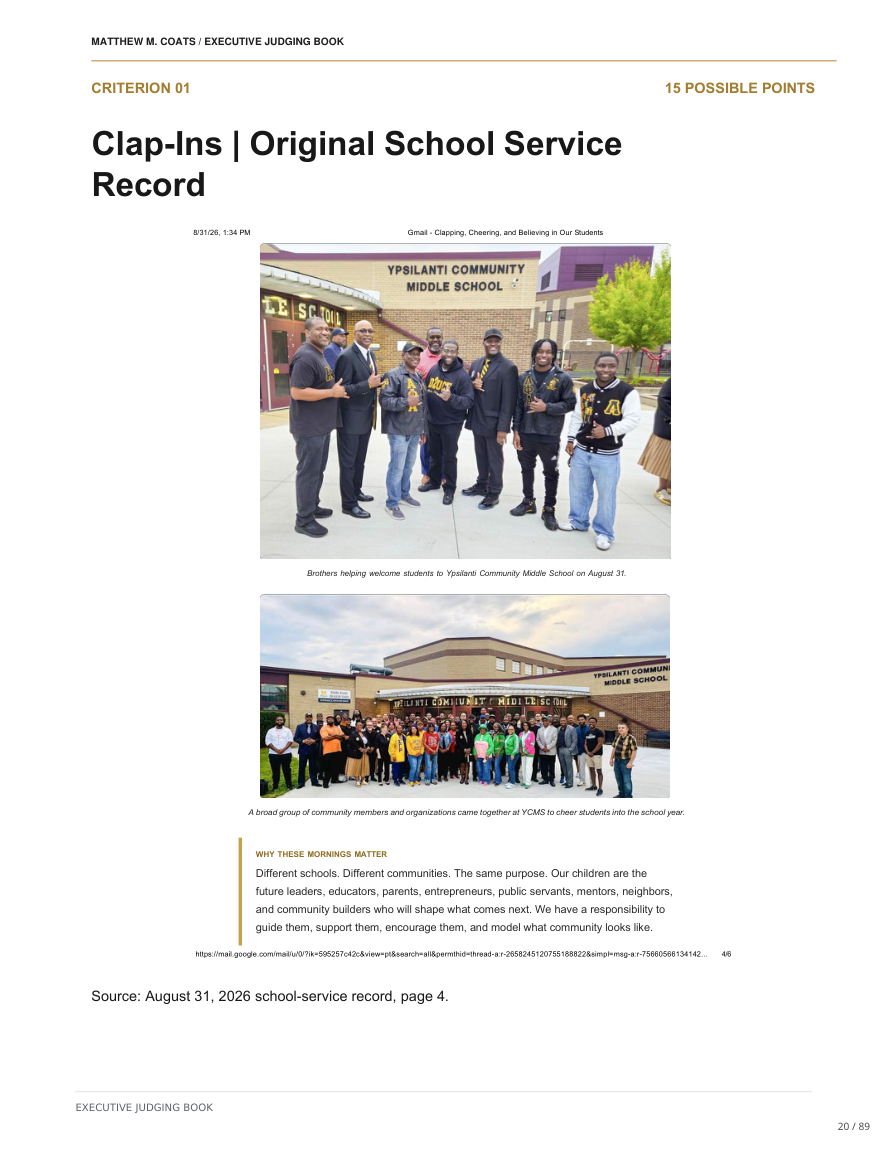
Led board activation, governance, strategic planning, resource development, accountability, and the connected three-pillar operating model.

Provides overall vision, risk oversight, program quality, family and partner coordination, curriculum direction, finances, and long-range planning.

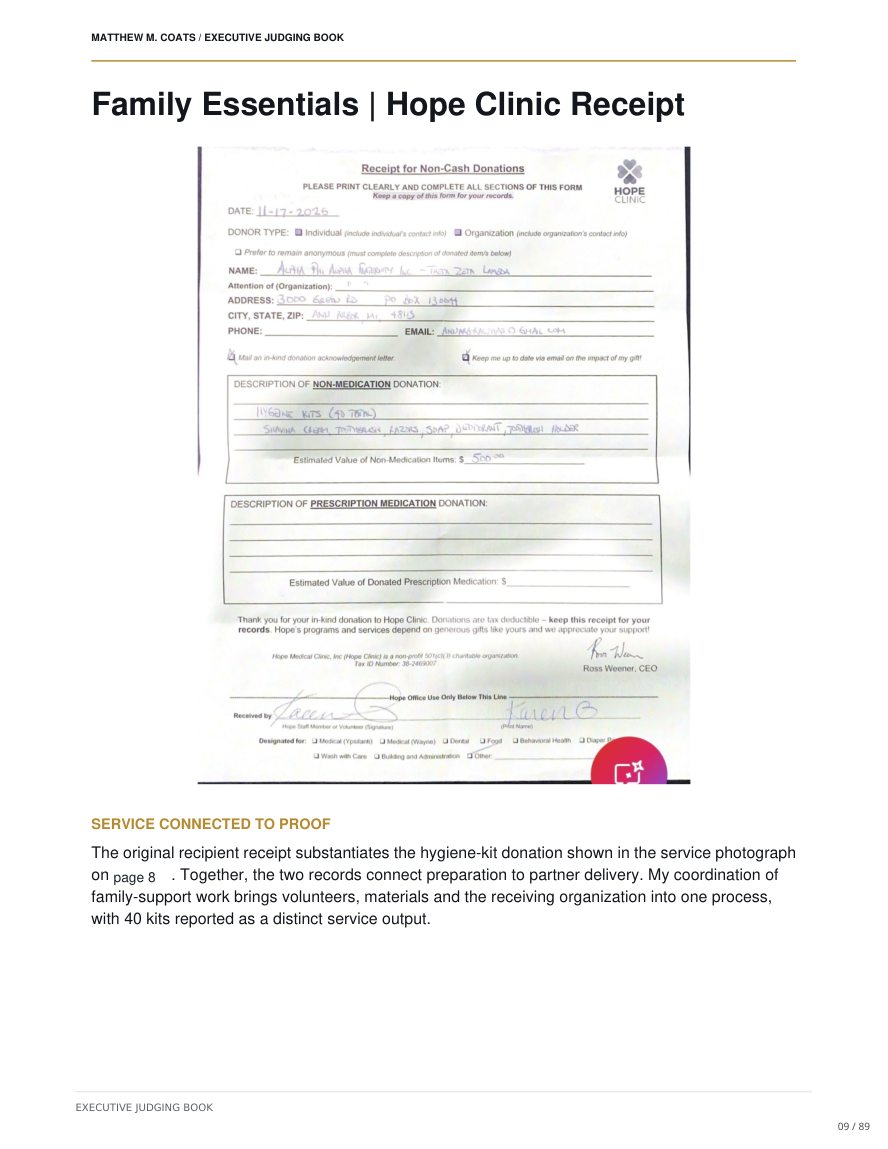
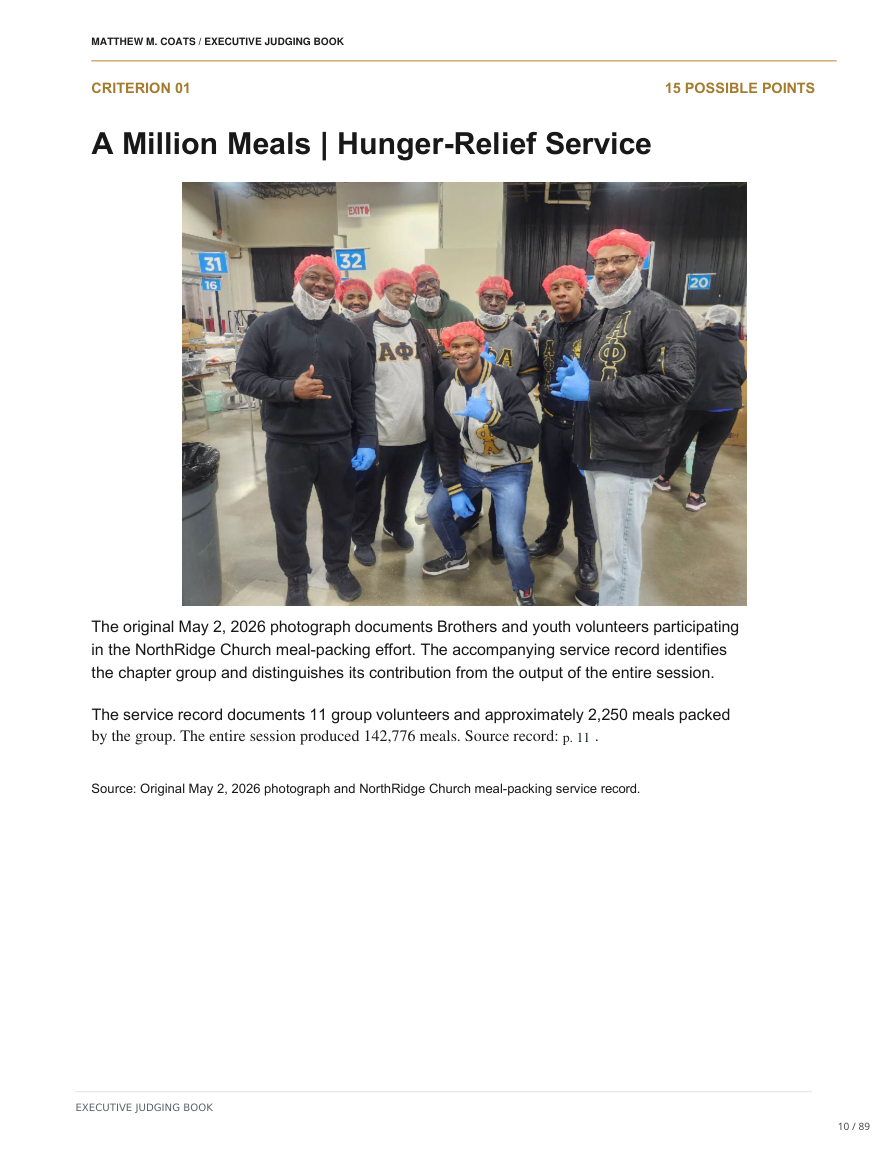
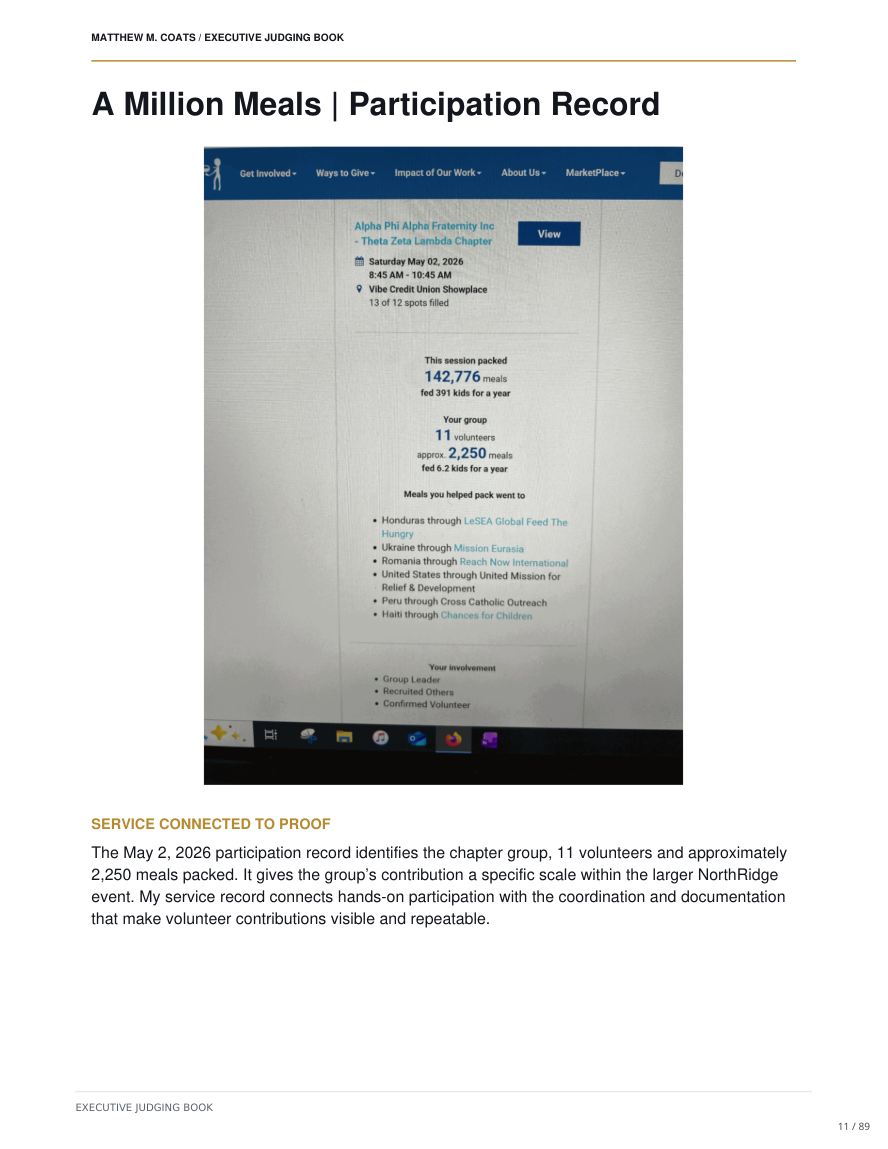
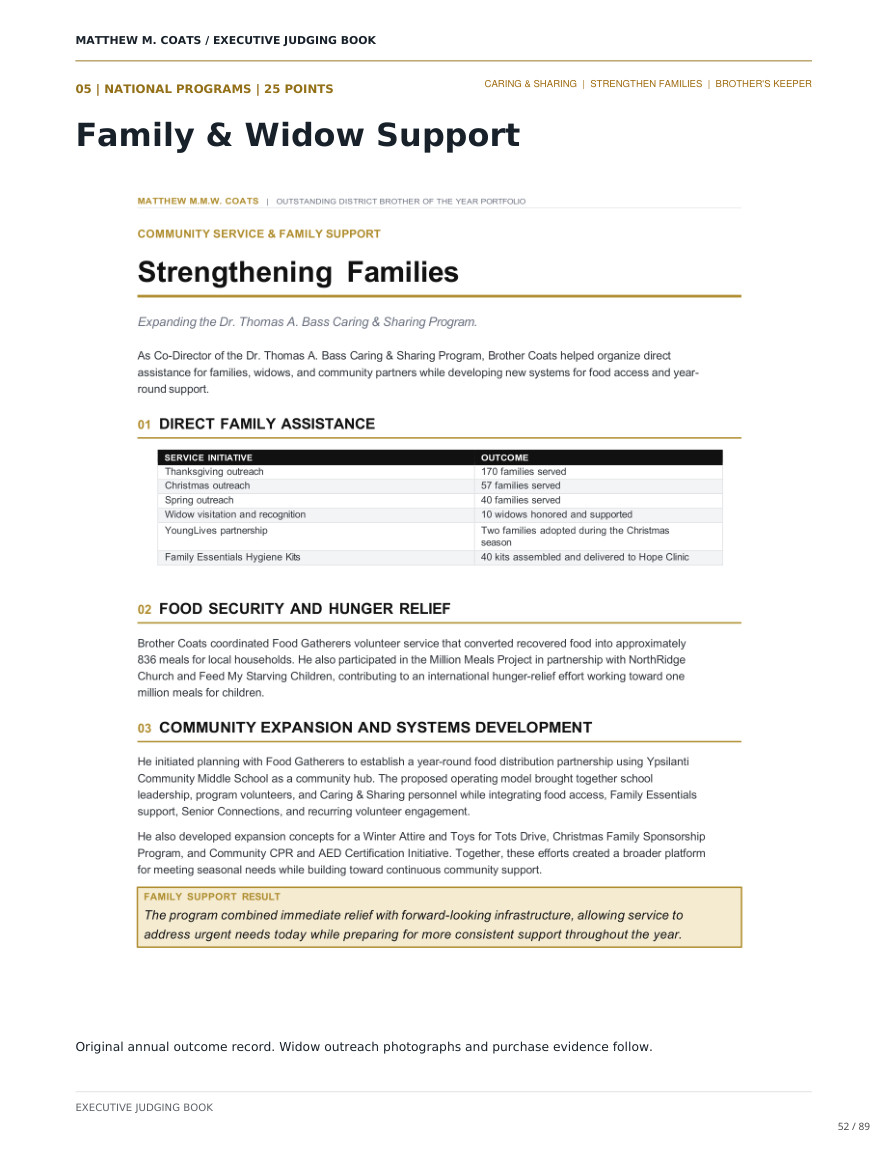
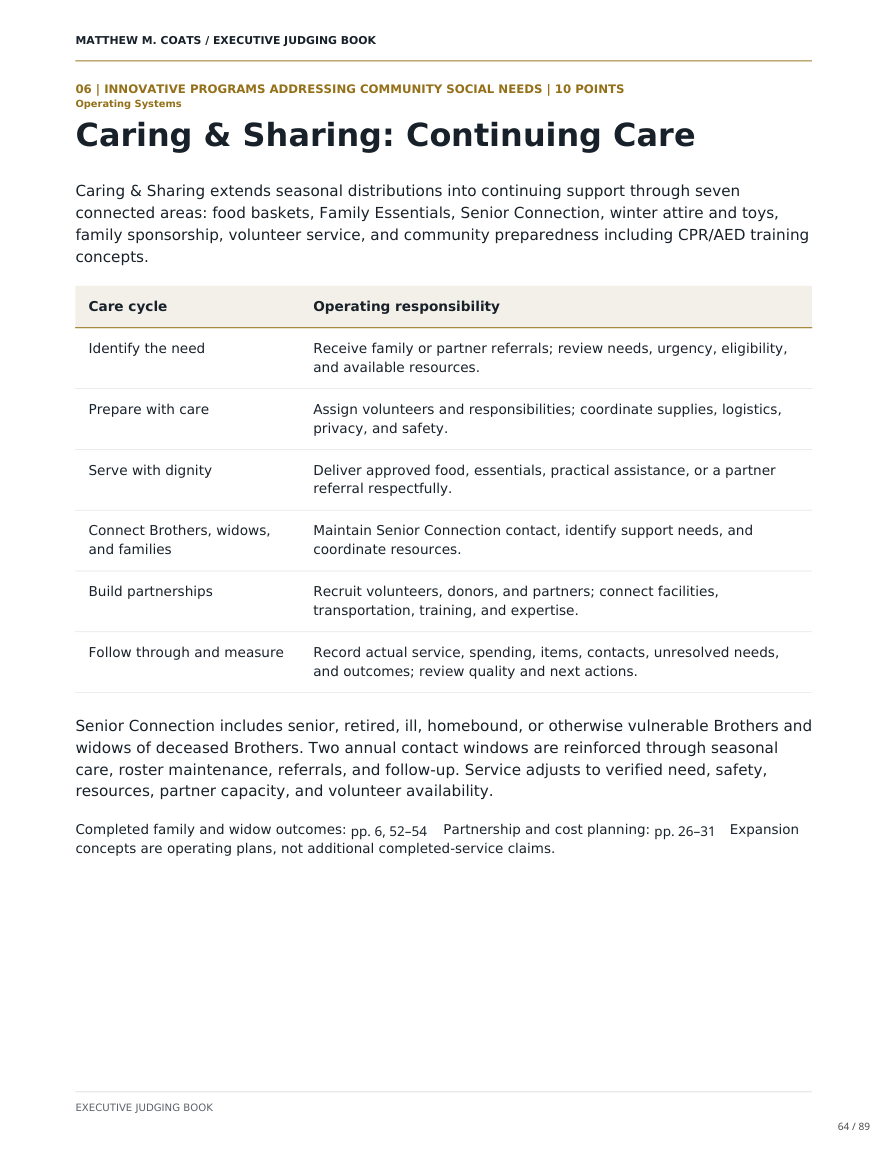
Coordinates family support, food access, partnerships, Senior Connection/Brother's Keeper, referrals, service operations, and follow-through.

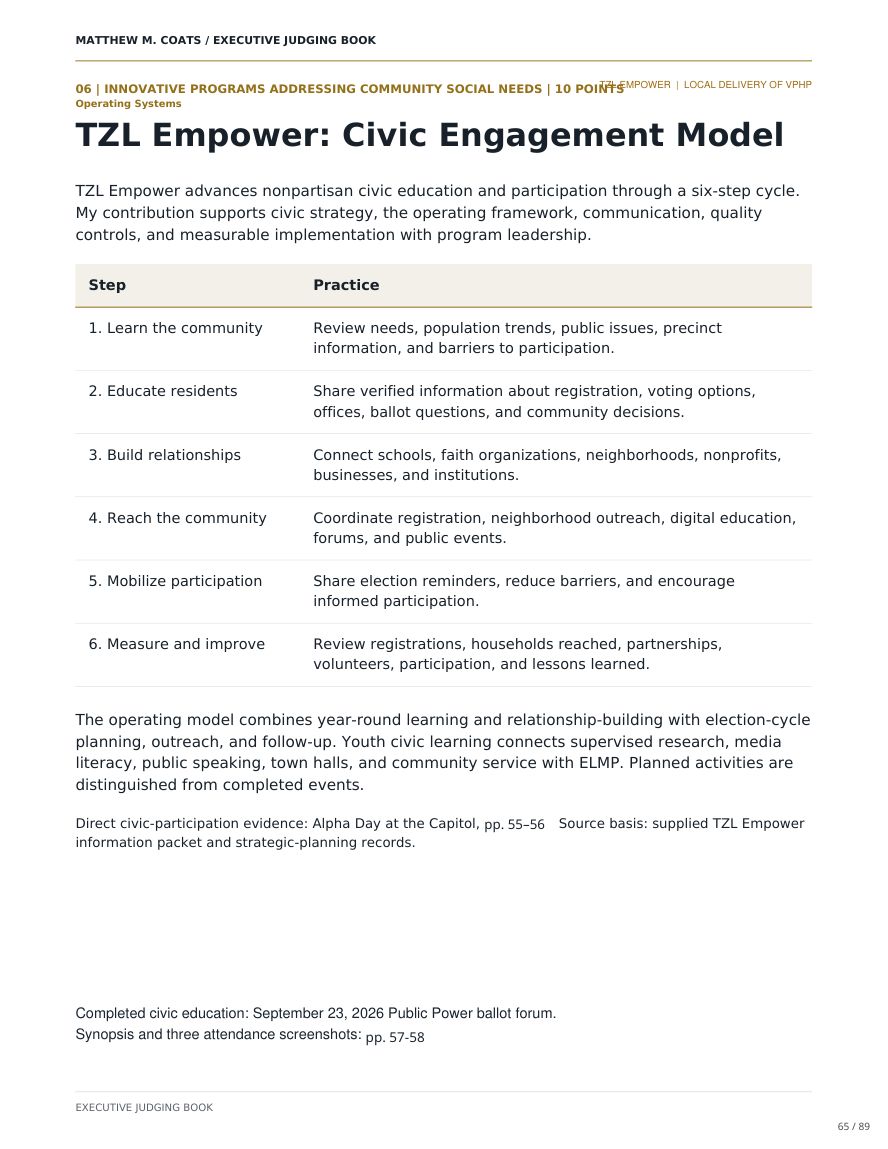
Supports the current civic education strategy, operating framework, public communications, quality controls, community outreach, and measurable implementation.

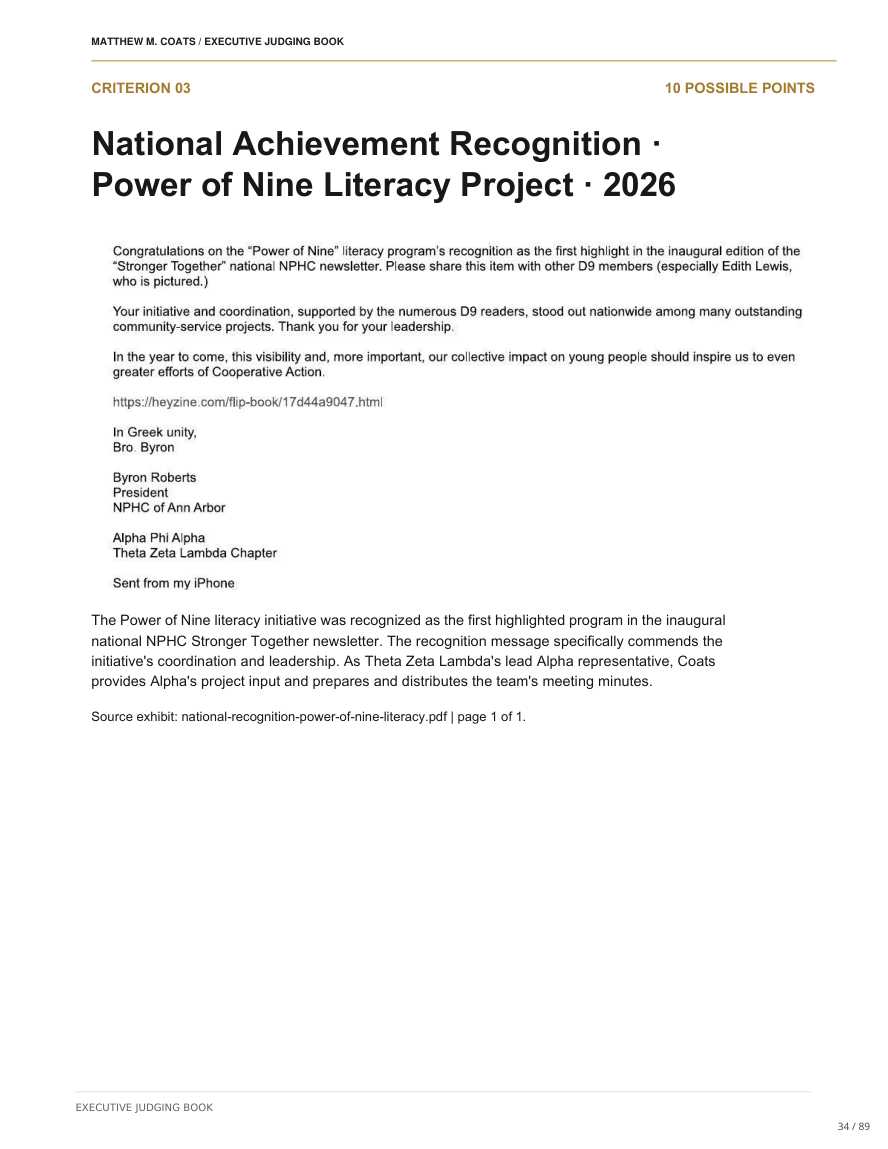
The work connects youth development, family support, civic education, literacy, partnerships, financial stewardship, and evidence-based reporting instead of operating as isolated projects.
Criterion 2
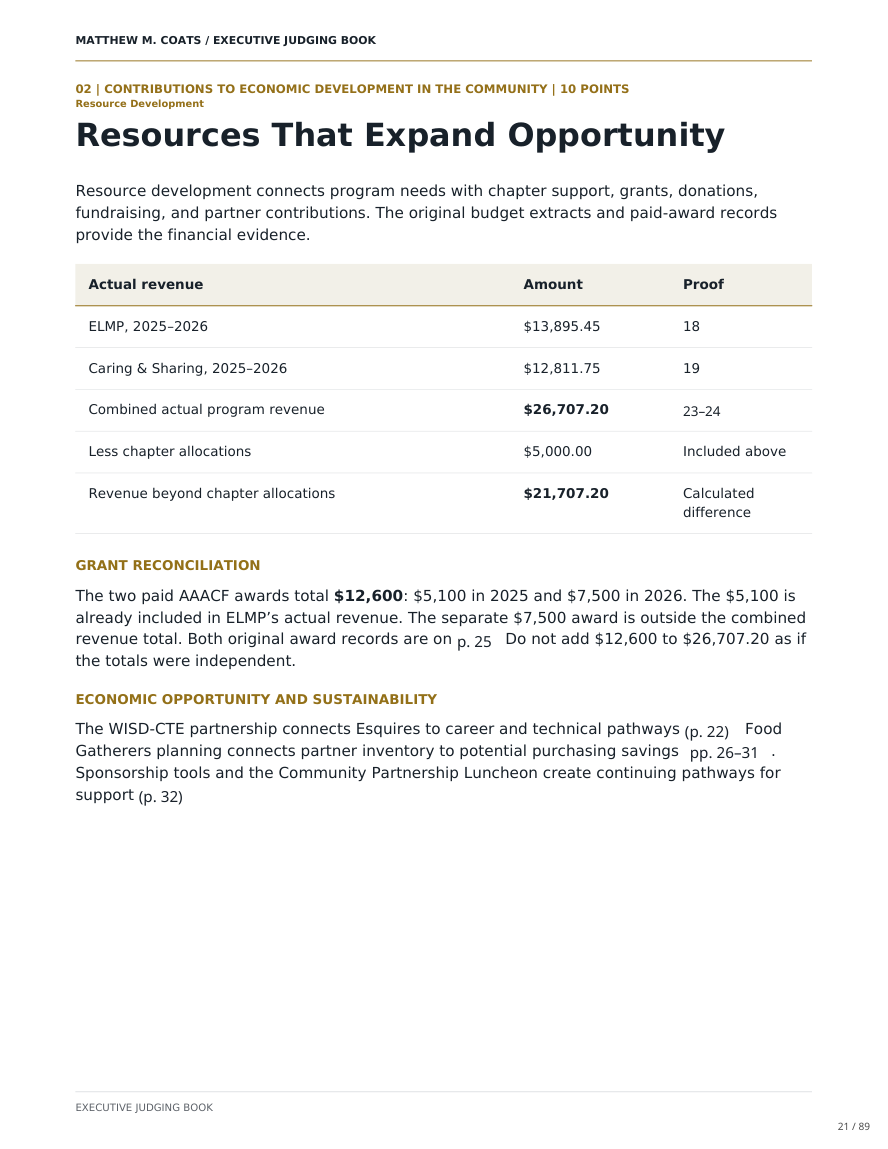
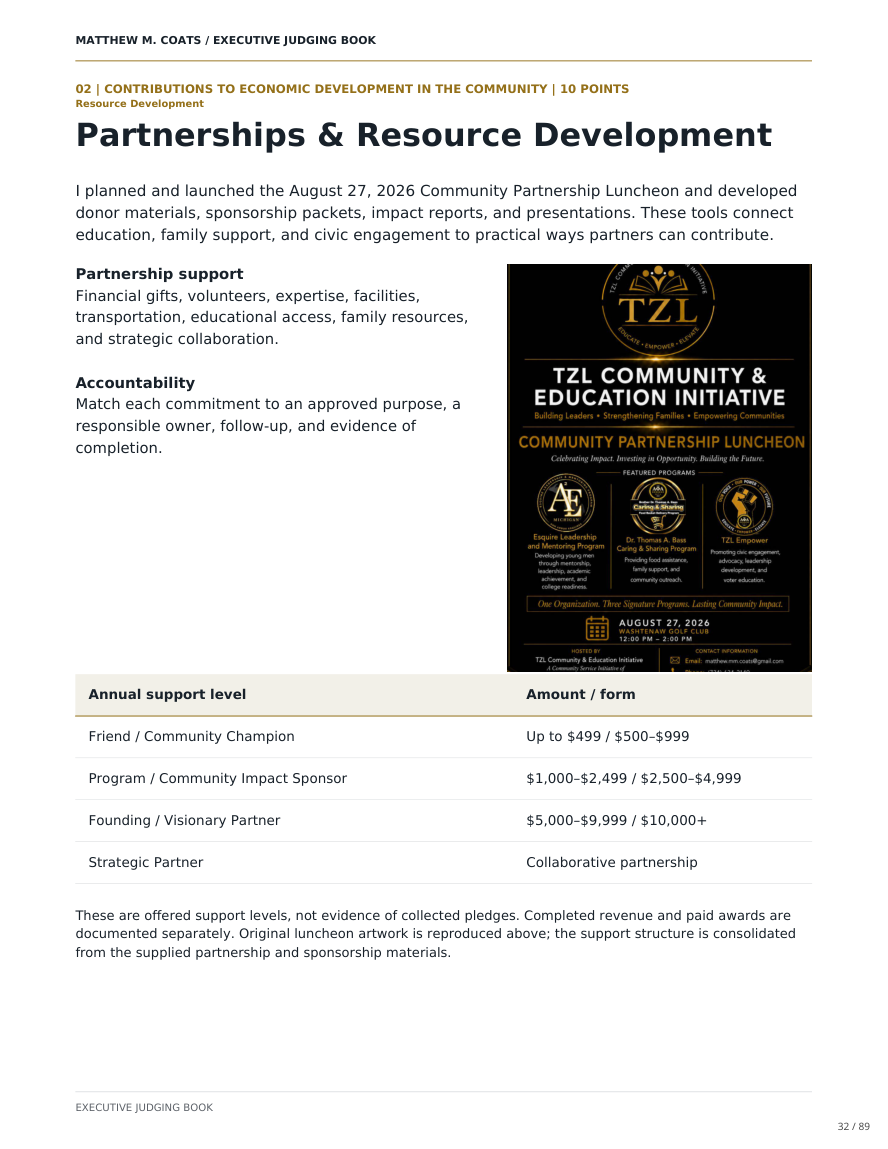
Documented economic, workforce-readiness, resource-development, and partnership outcomes in the community served by the chapter.
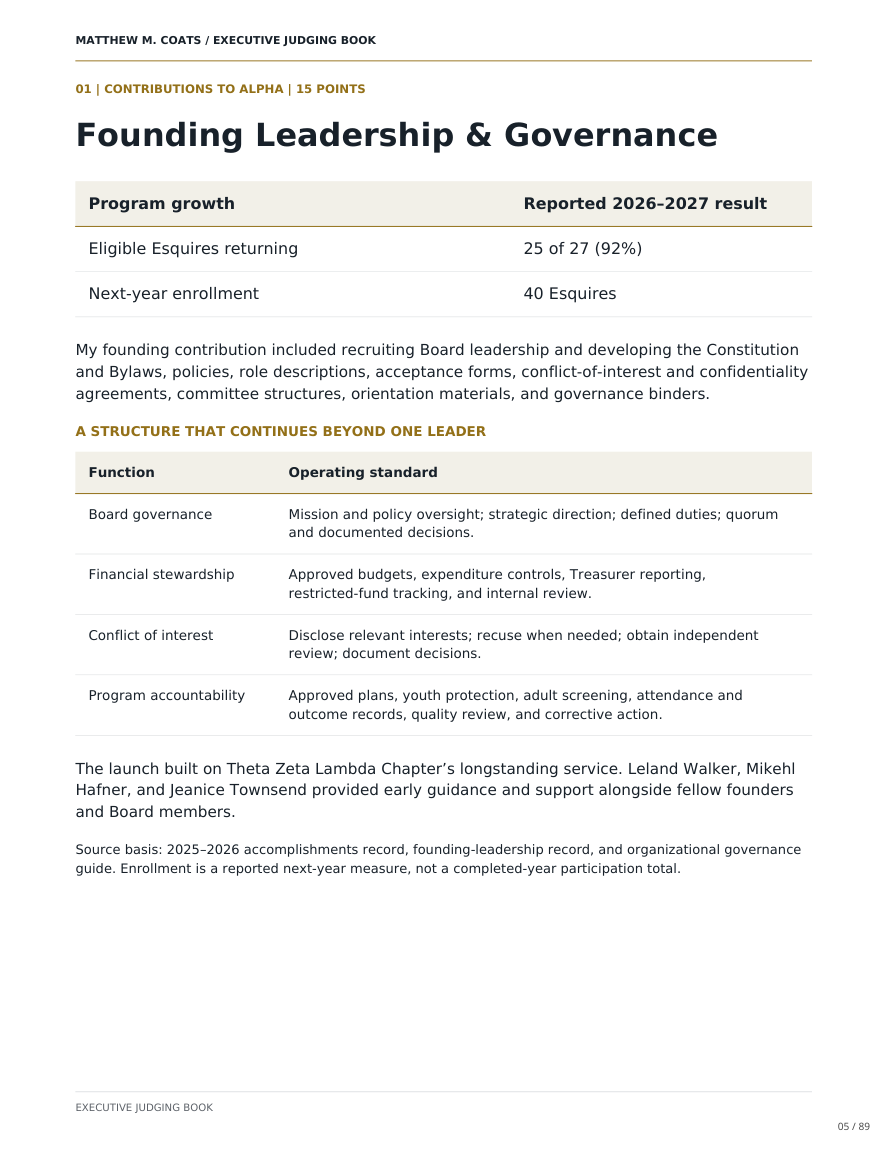
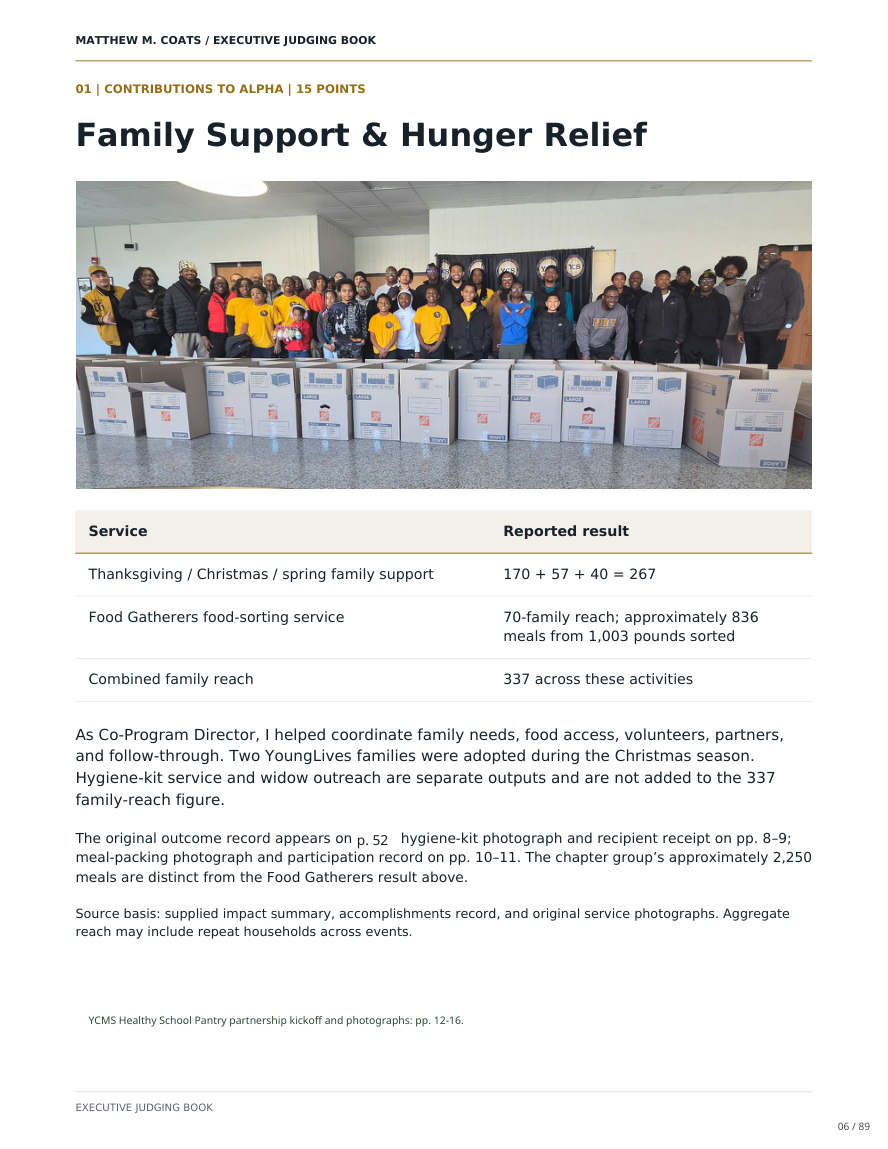
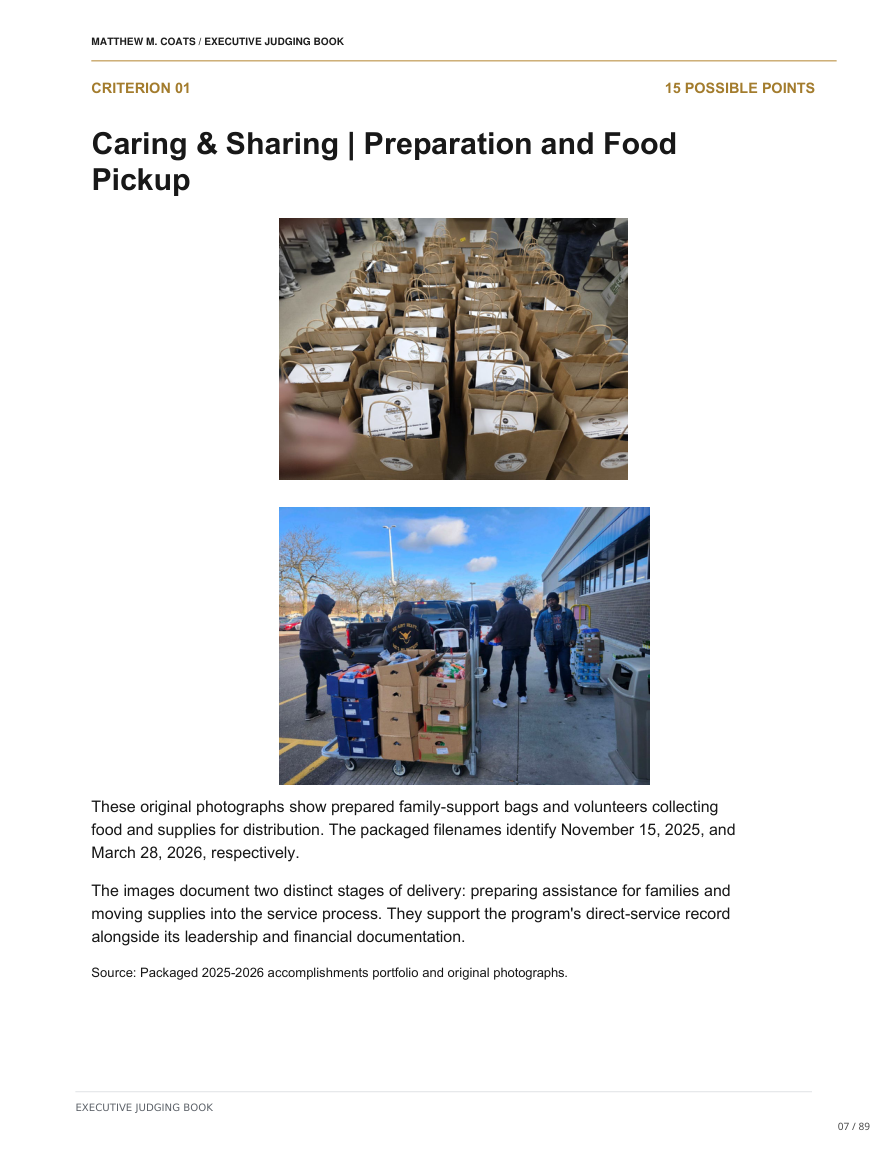
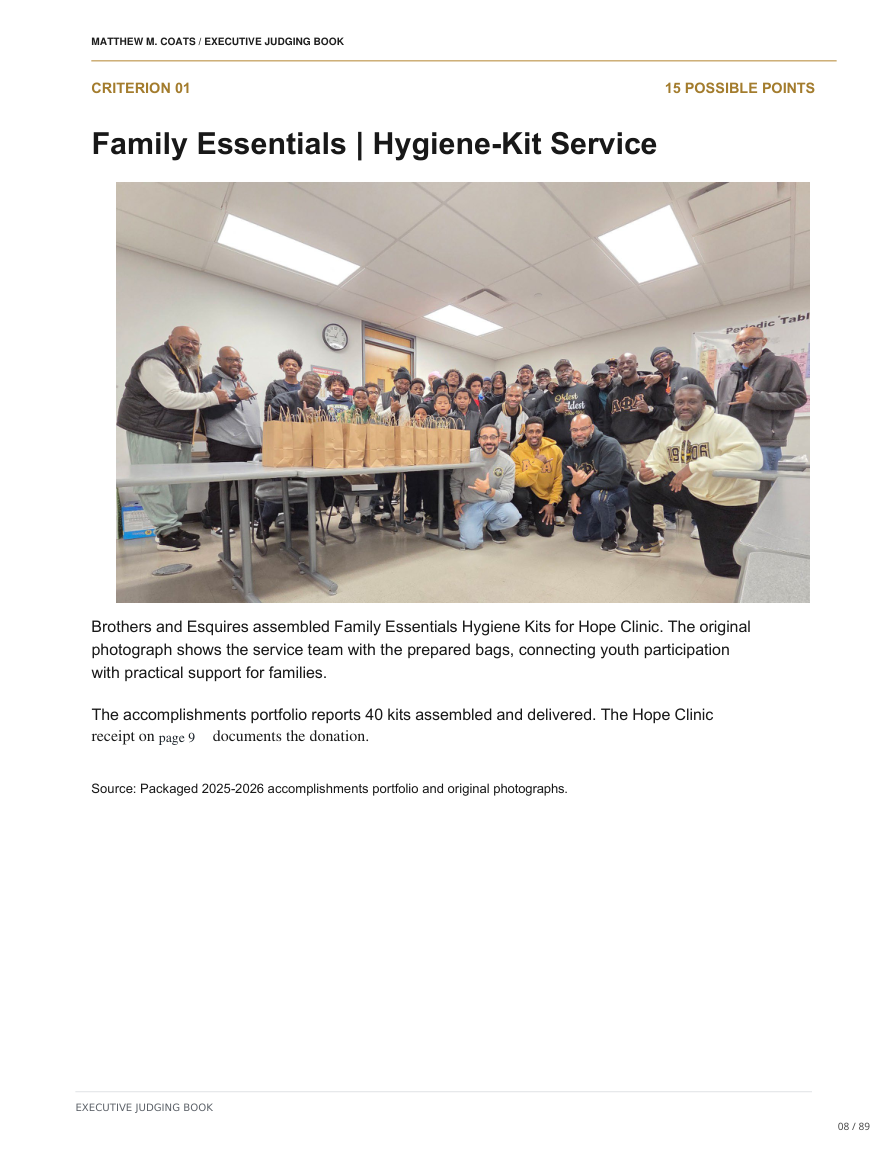
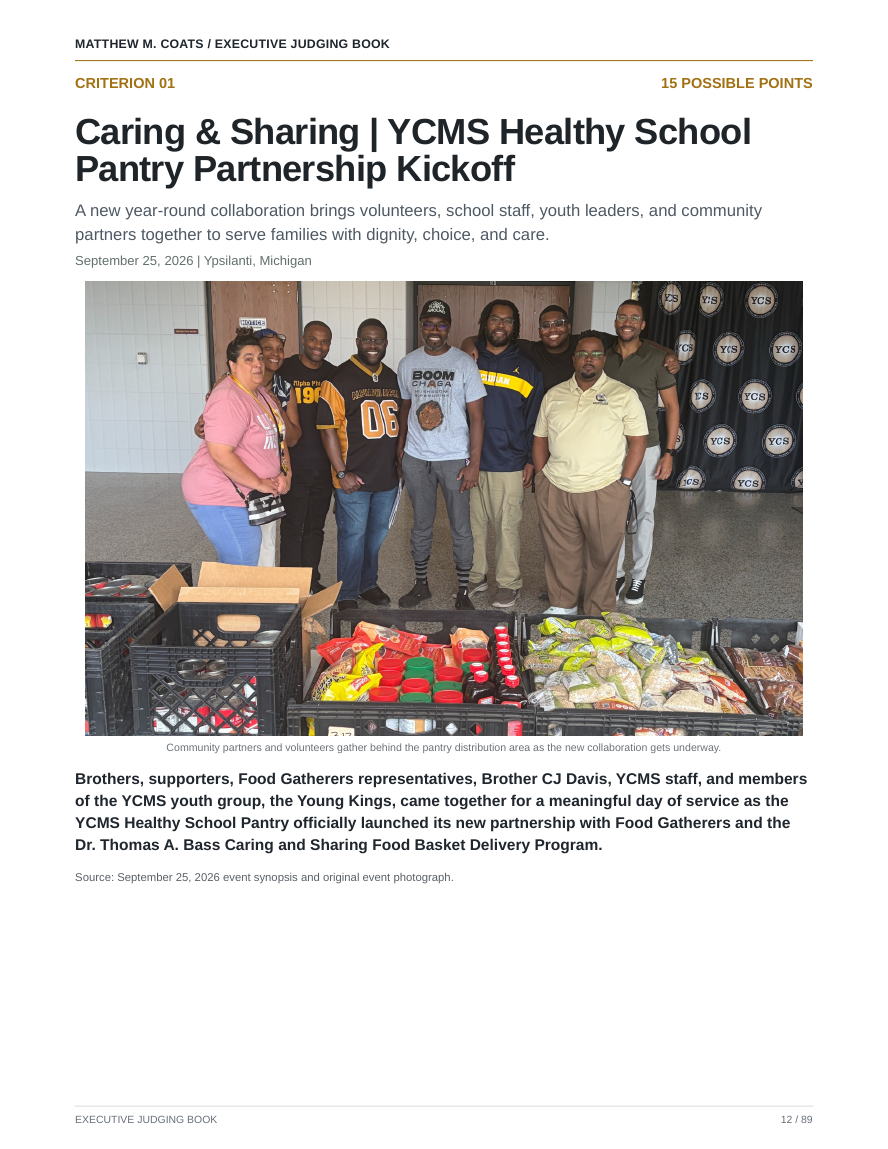
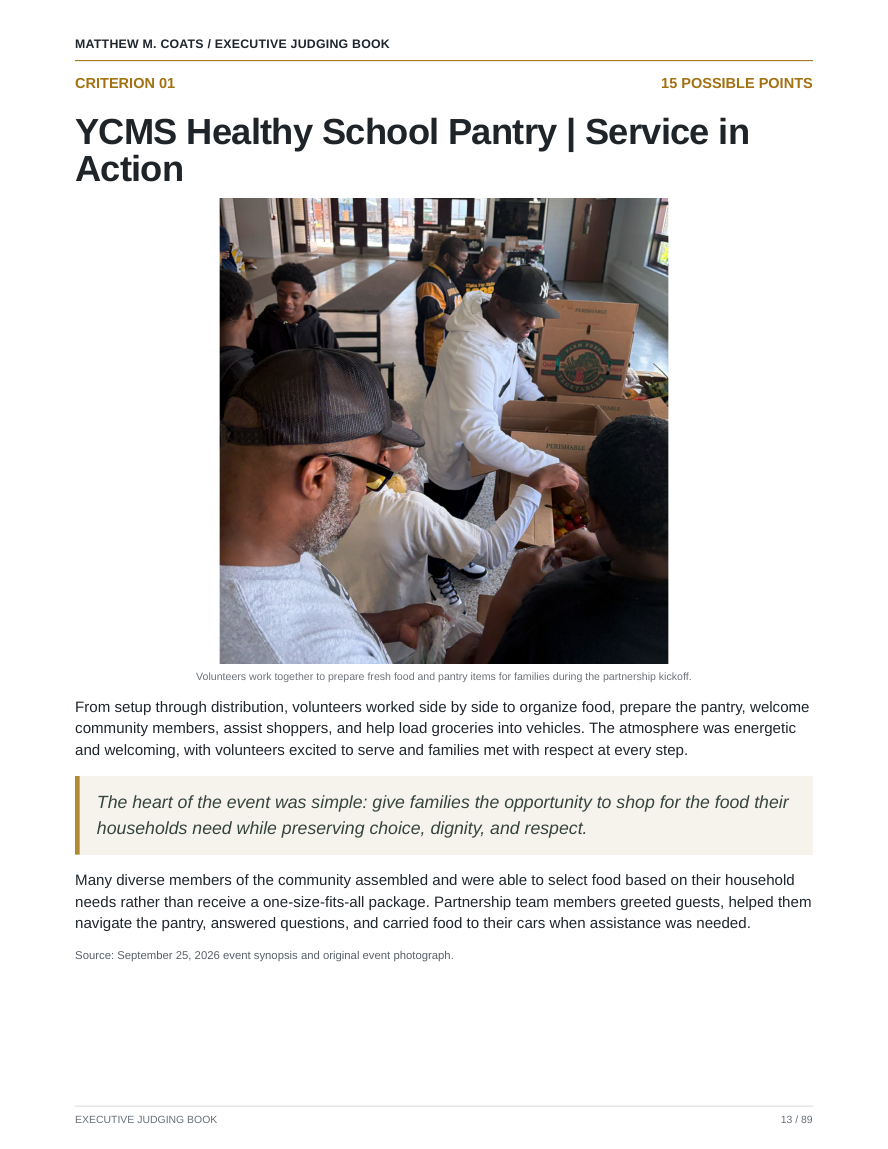
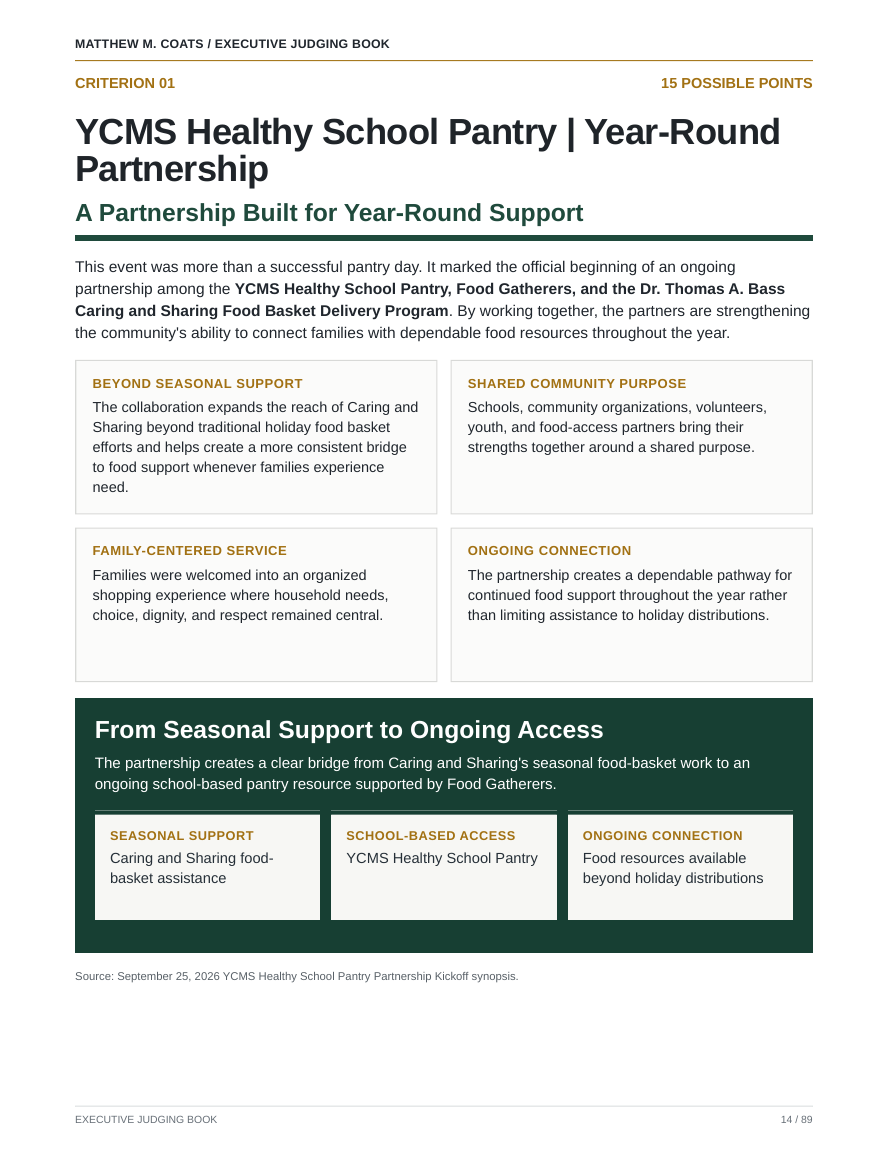
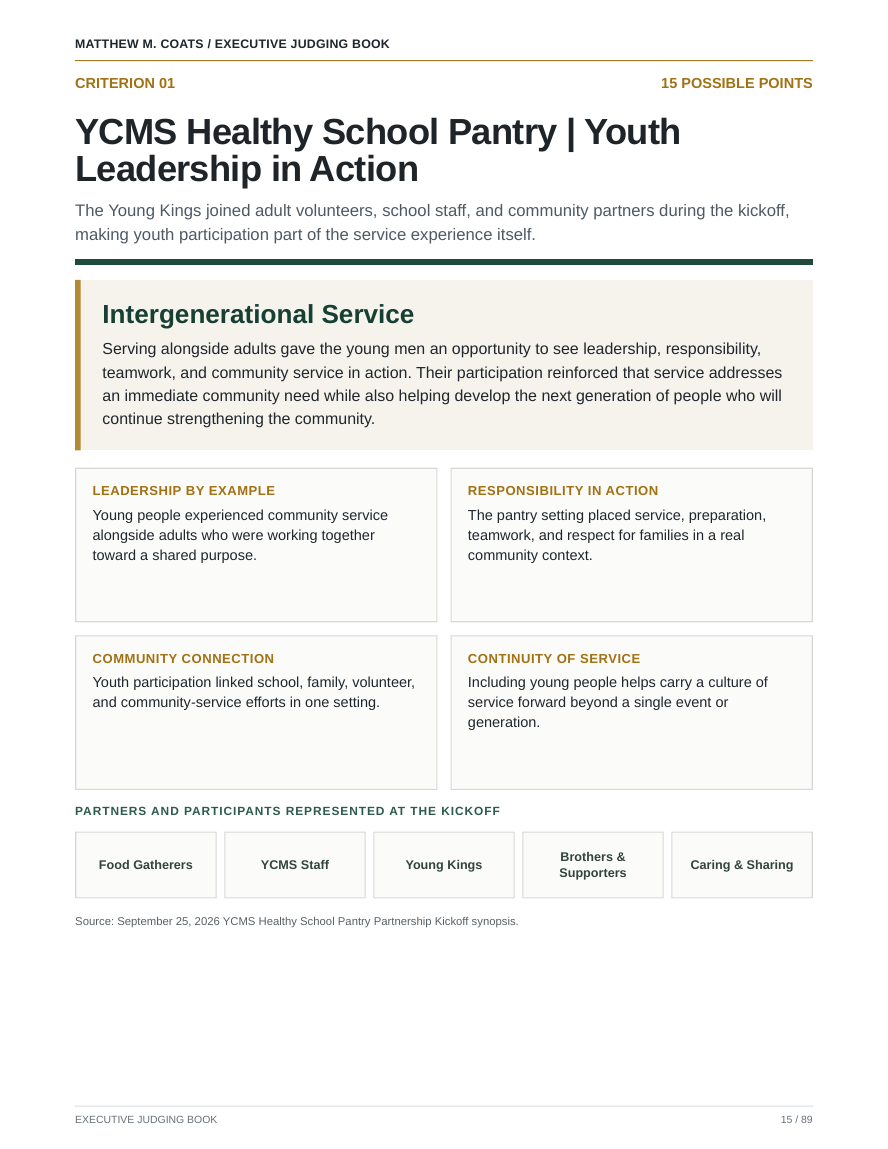
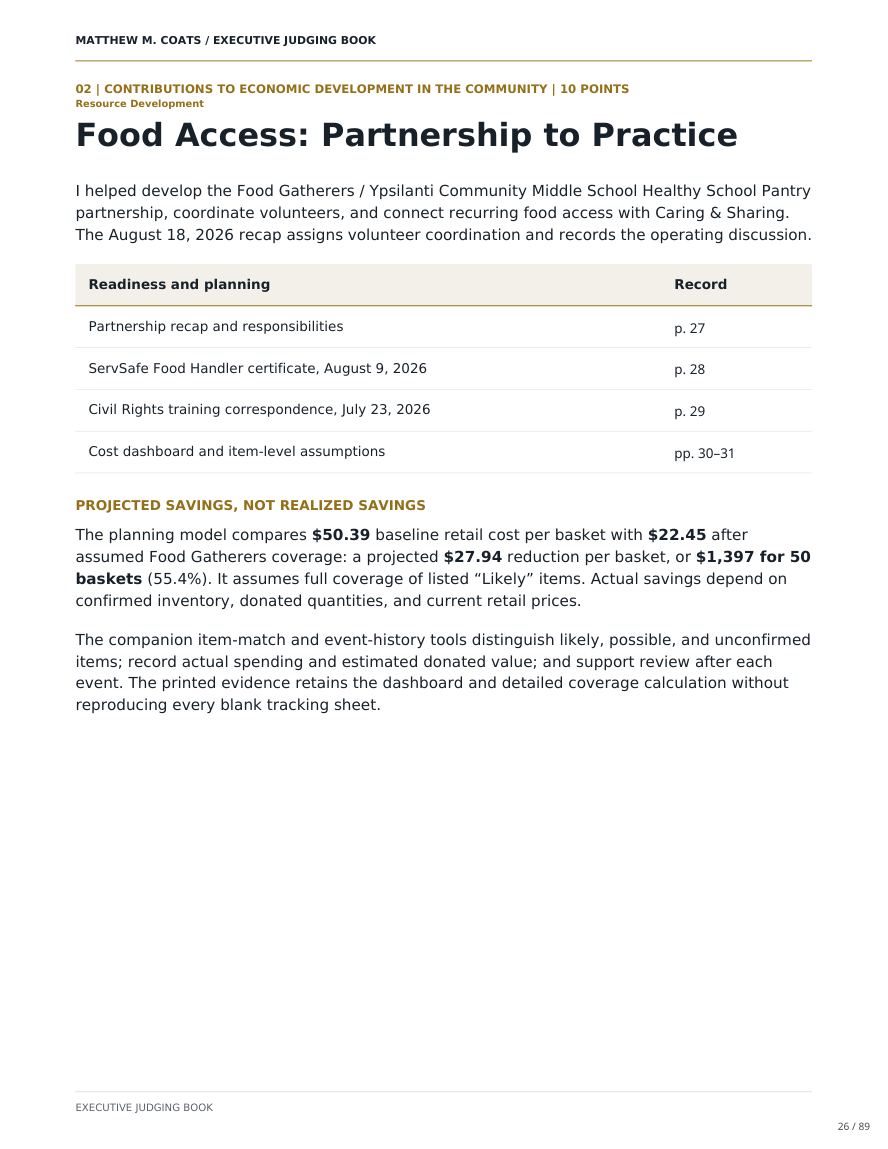
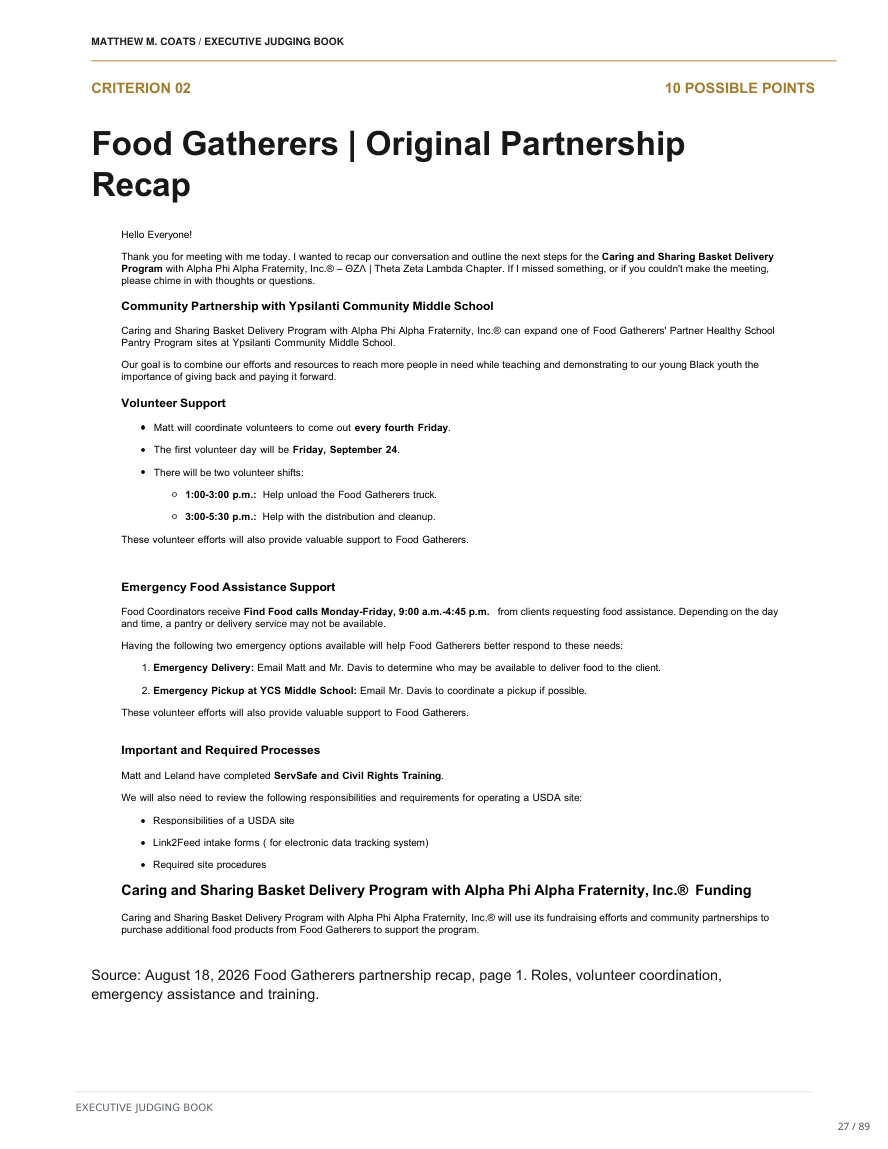
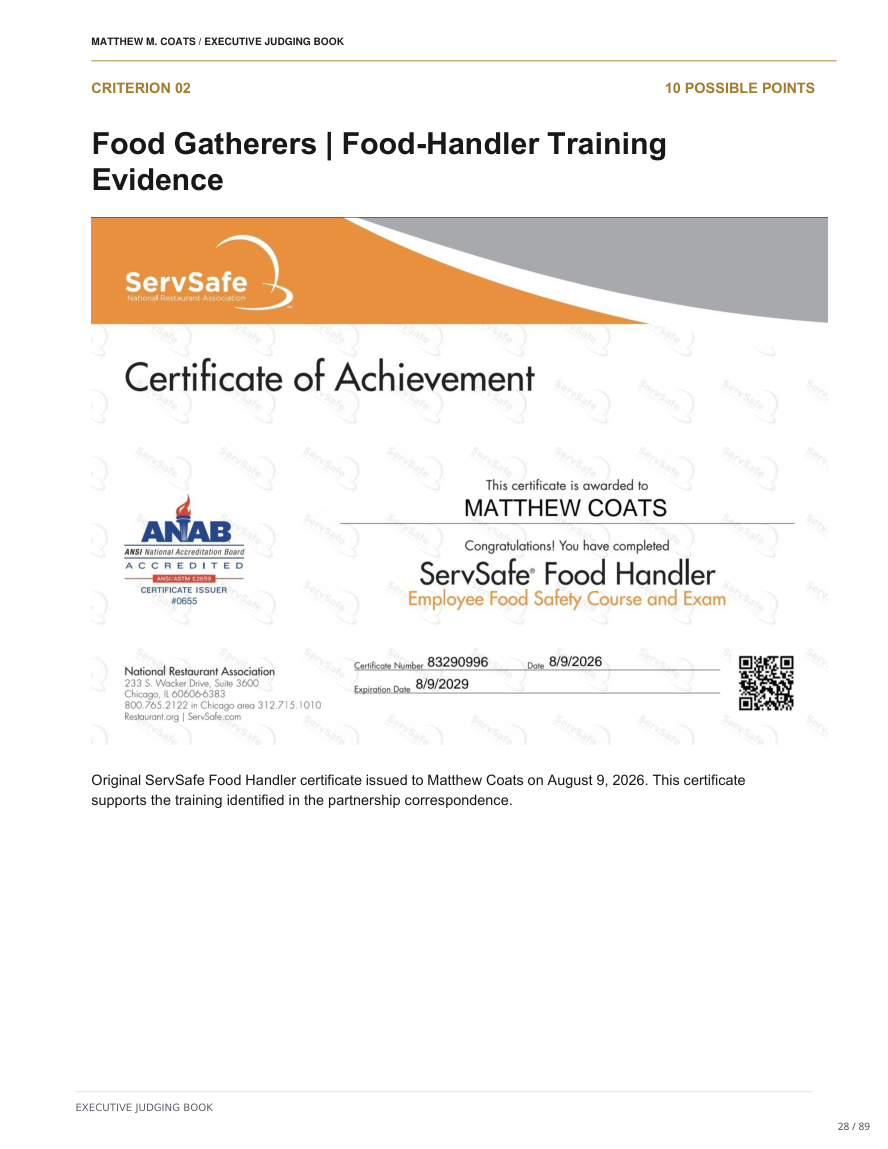
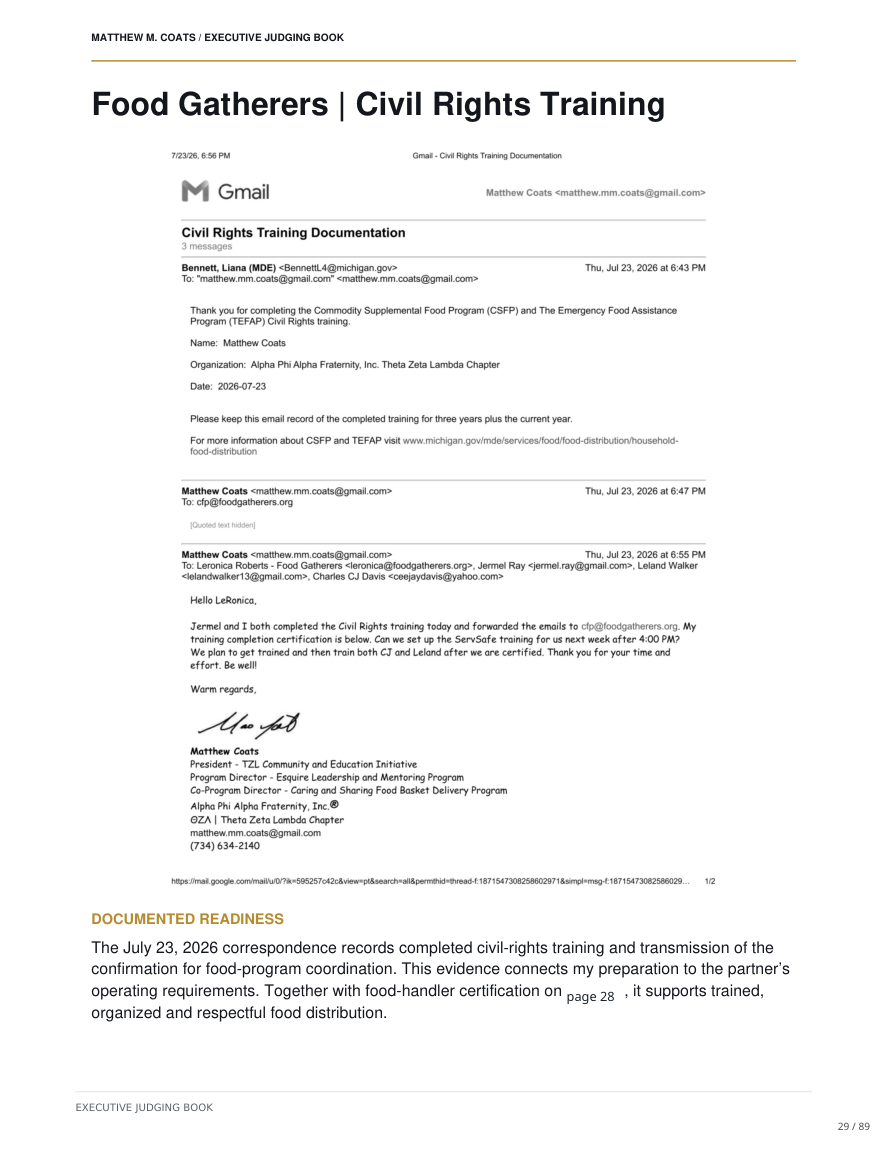
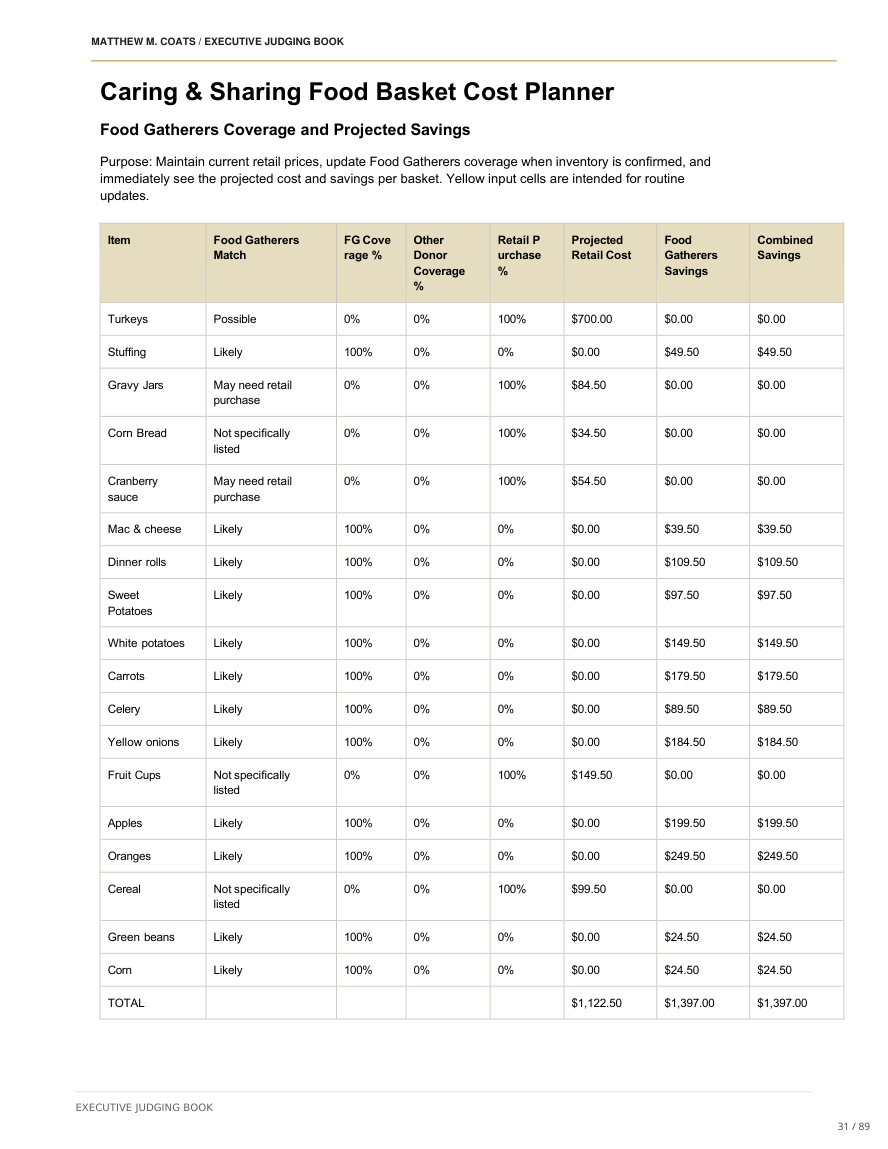
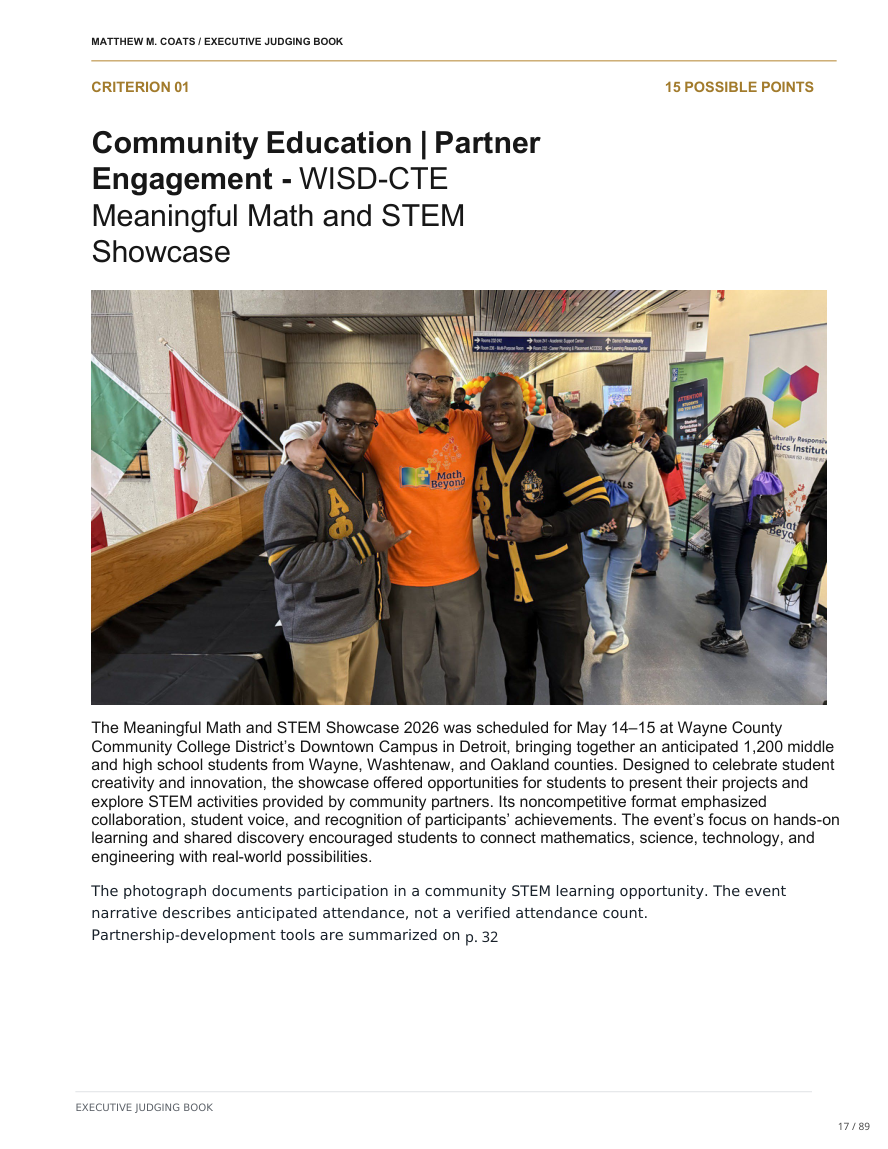
Caring & Sharing advanced from early coordination with Second Baptist's Food Gatherers program into a 2026–2027 Food Gatherers partnership that supports YCMS Food Pantry expansion and the holiday food-basket sourcing plan. Esquires can assist with sorting and packaging while adult Brothers handle transport and approved delivery responsibilities.
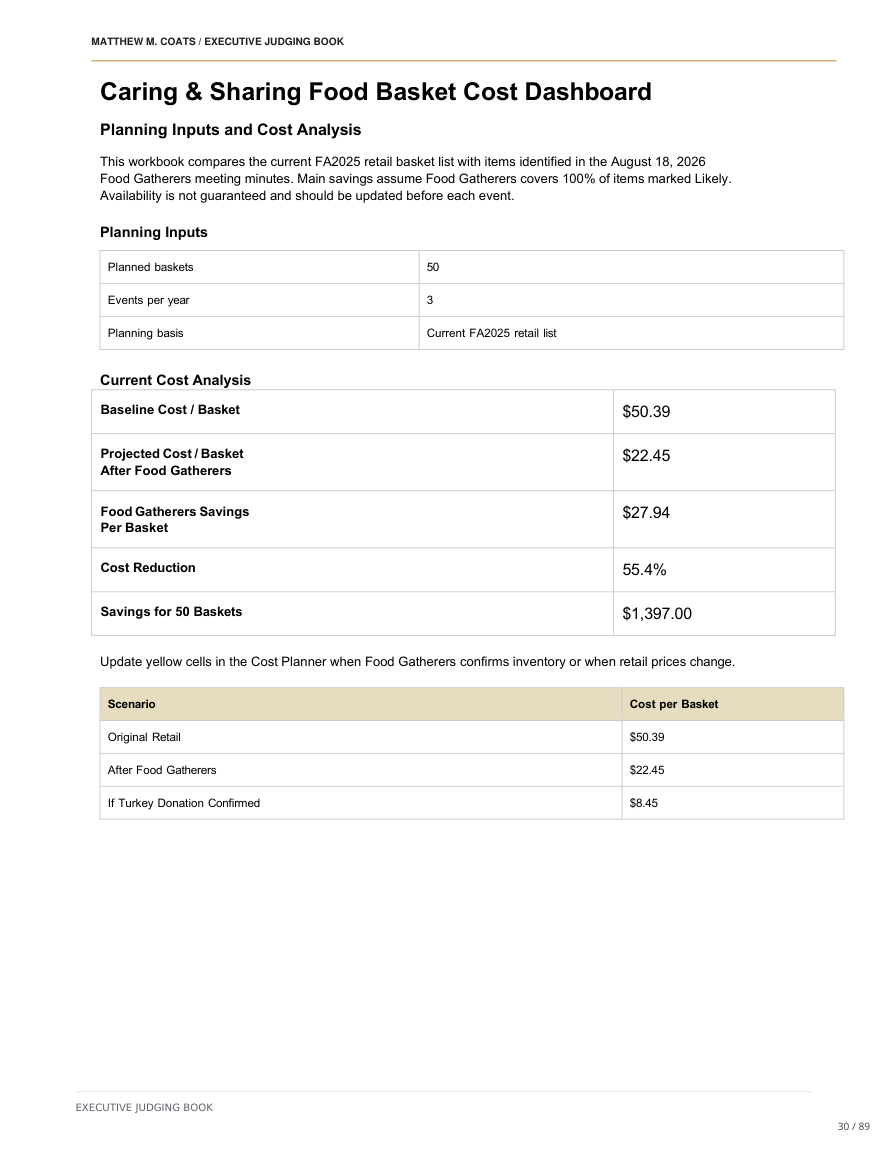
$50.39 baseline retail cost per basket → $22.45 projected retail cost per basket under current Food Gatherers coverage assumptions. For 50 planned baskets, the model projects $1,397 in savings per major distribution and $4,191 across three planned events.
Planning estimates only. Actual savings depend on Food Gatherers availability, donated quantities, and other donor support; these figures are not presented as realized savings.
Criterion 3
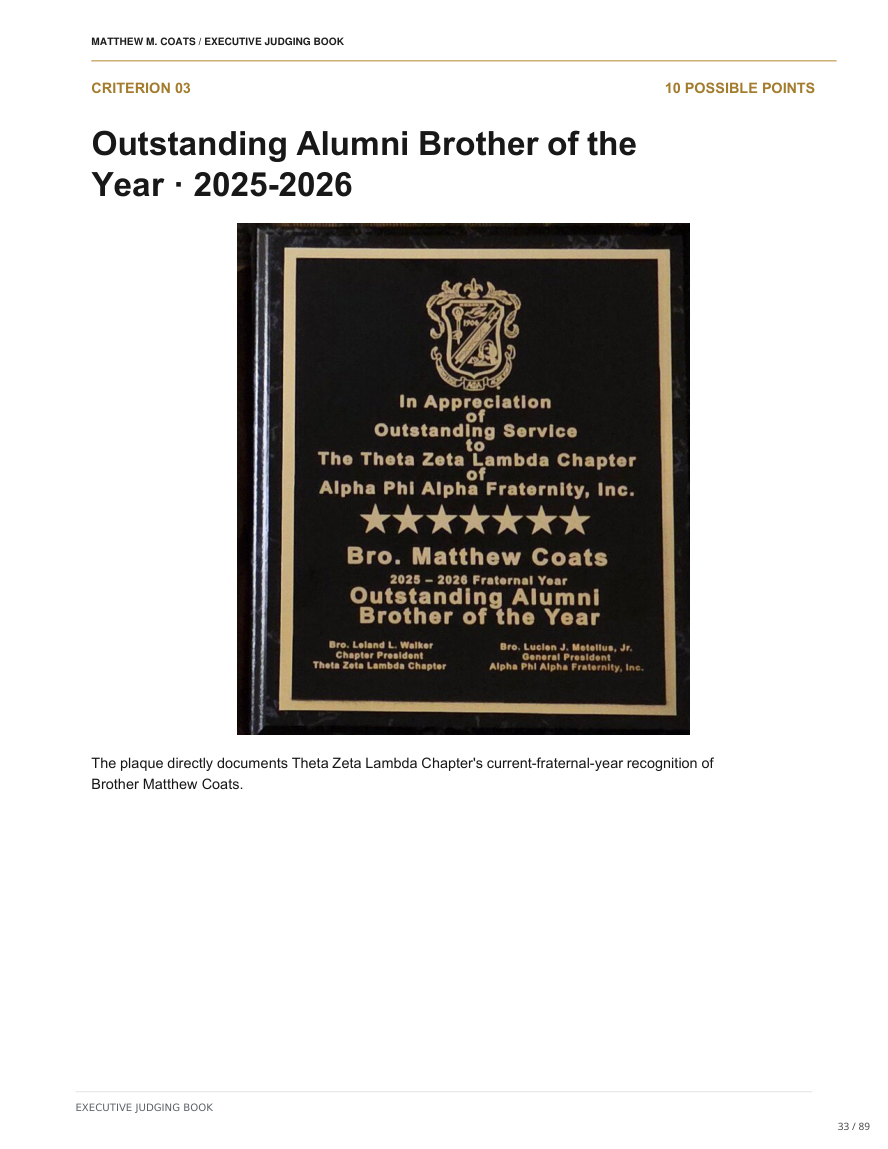
Current evaluation year only — dates and direct proof are shown with each recognition.
Criterion 4
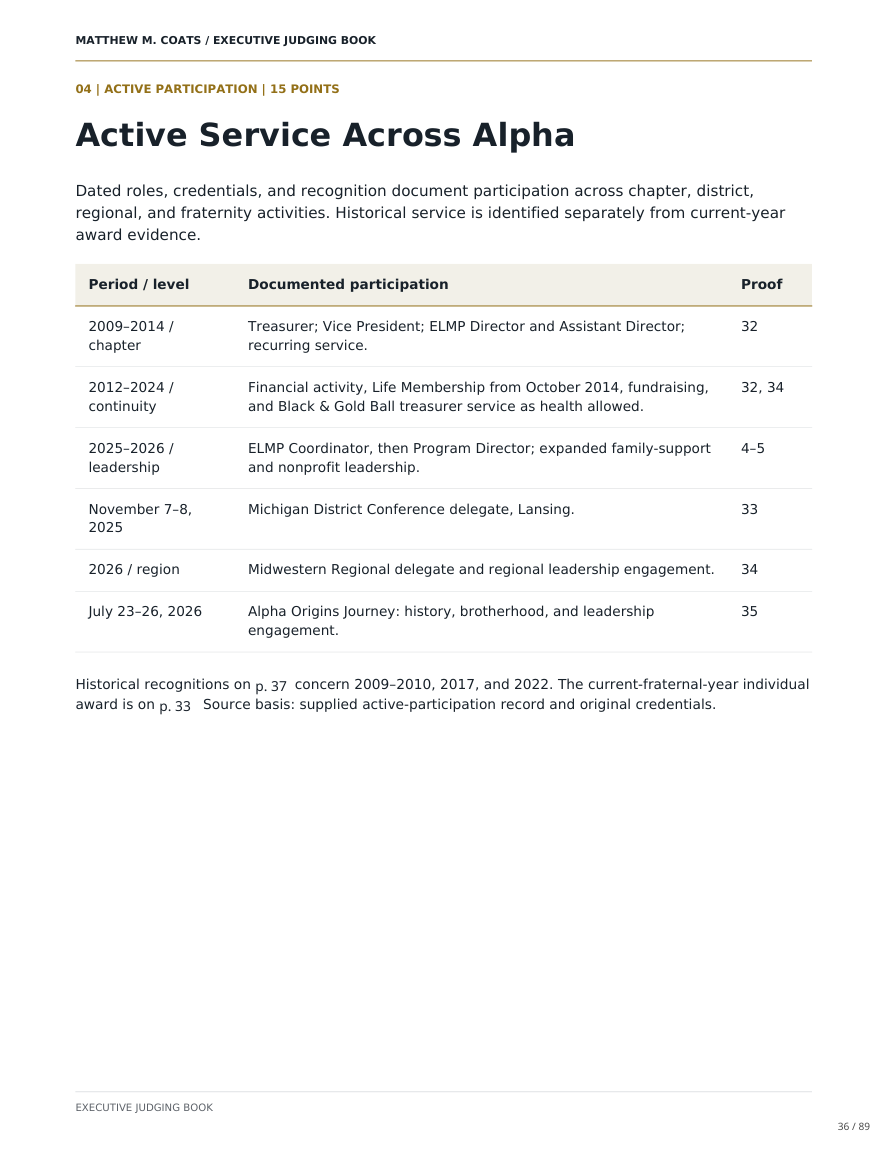
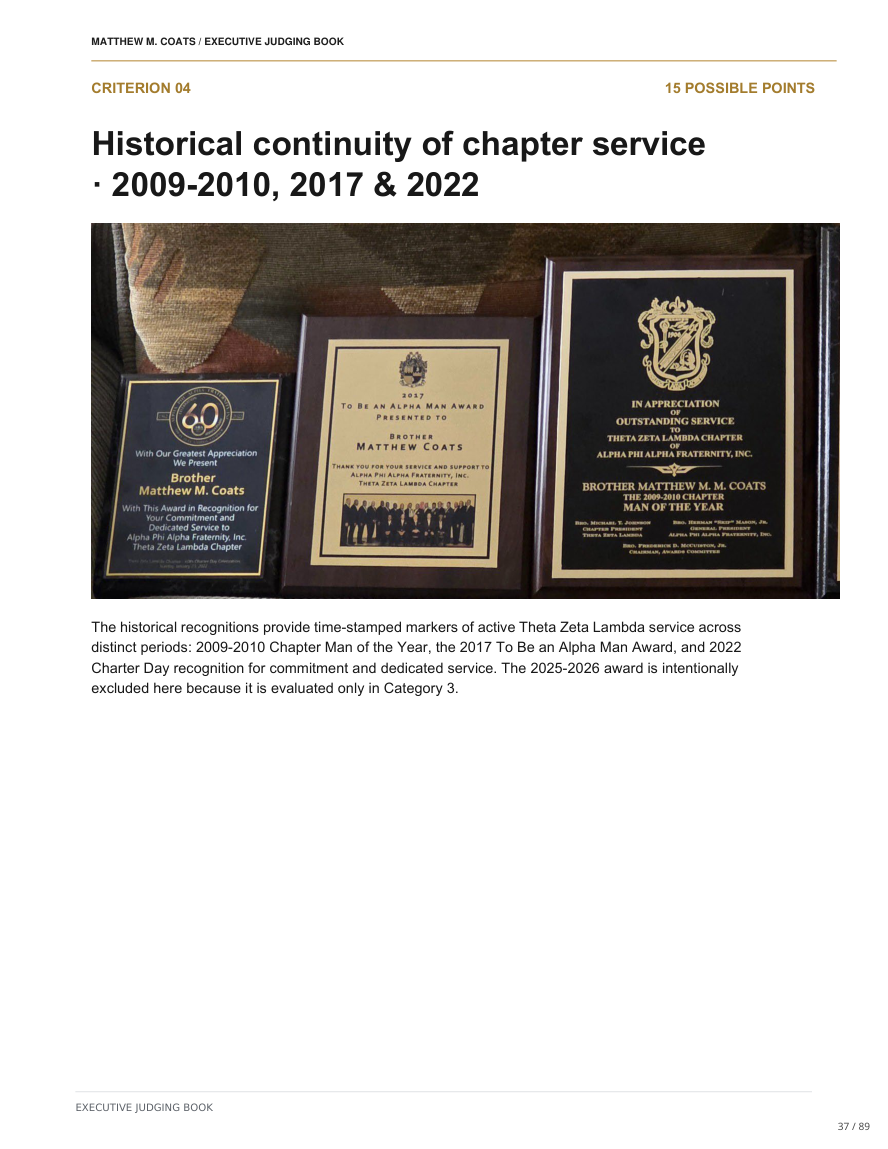
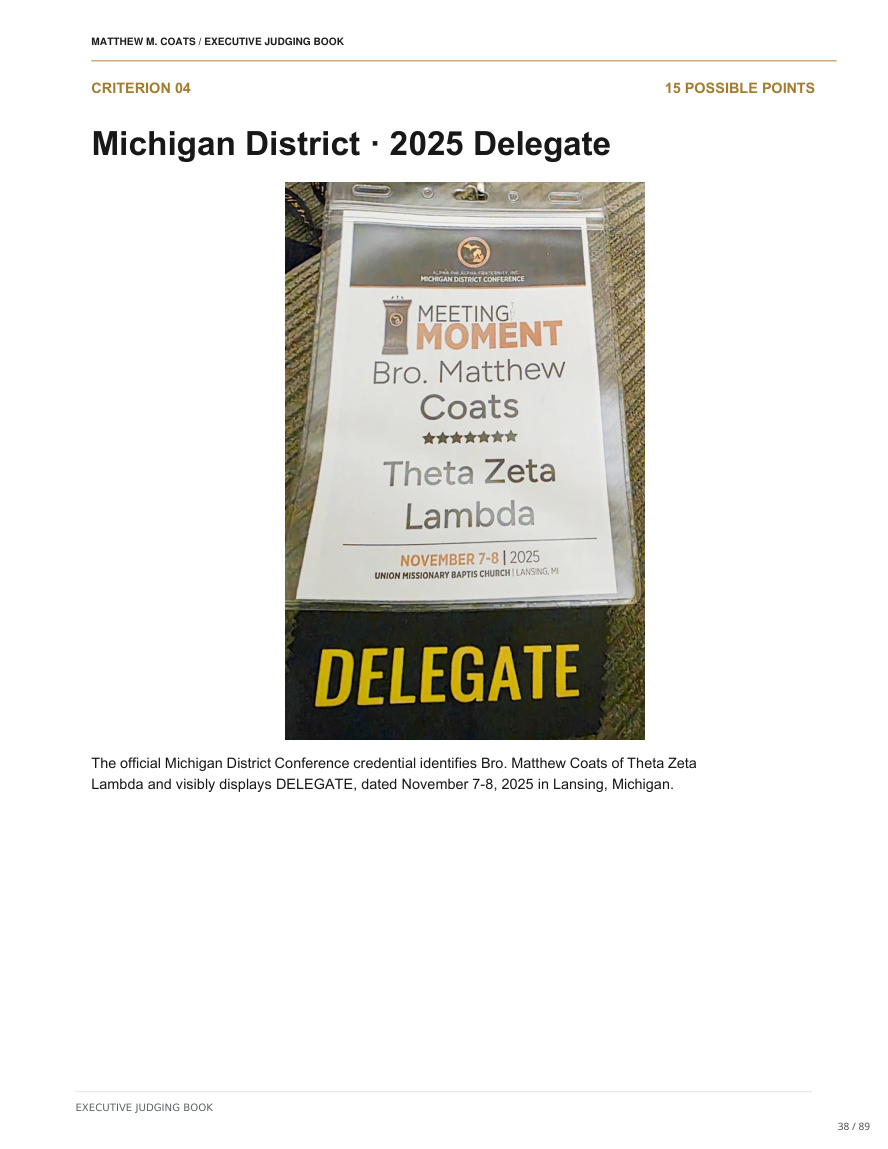
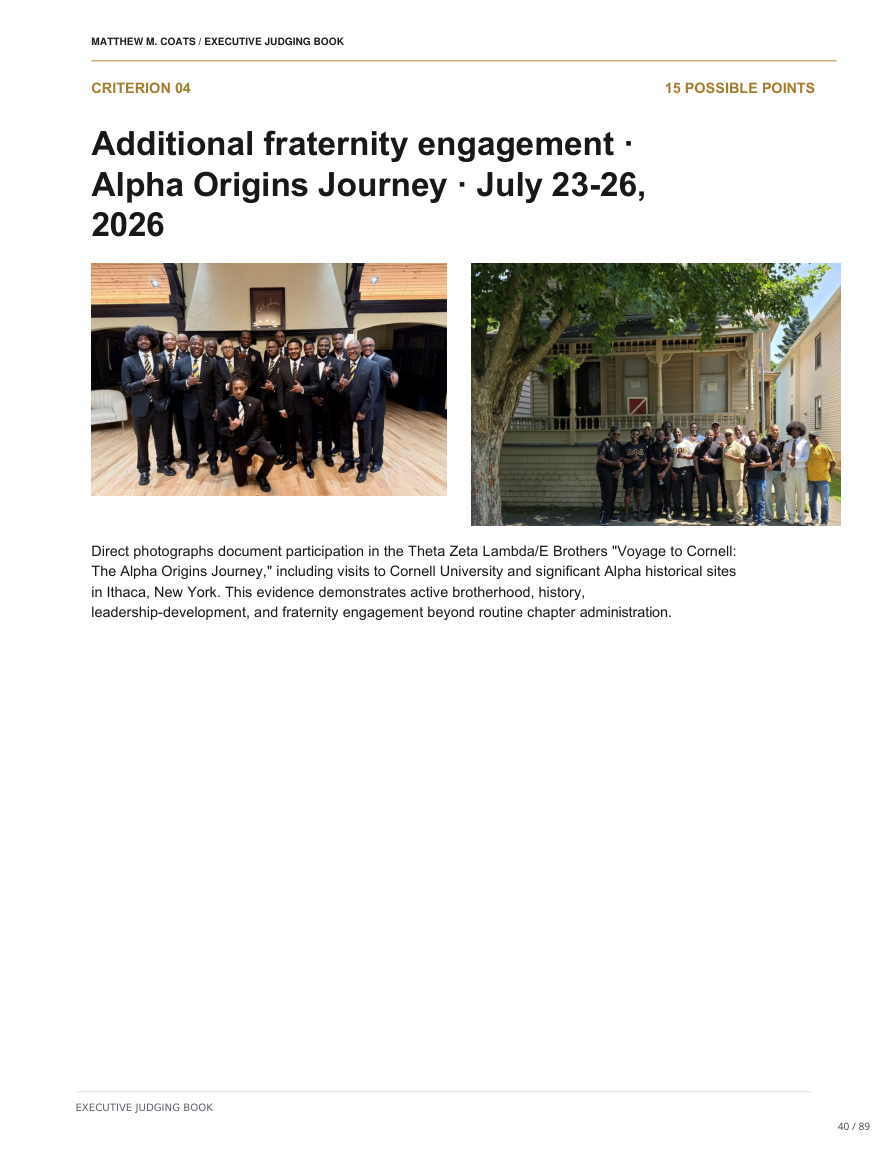
Active participation by year and Alpha level — not simply length of membership.
These assignments establish substantial chapter and youth-program leadership well before the current evaluation period.
A serious chronic health condition substantially limited public-facing participation and mobility during this period. Brother Coats nevertheless remained financially active through Chapter dues and Grand Tax, became a Life Member in October 2014, and continued serving as health allowed.
As improved mobility allowed greater participation, Brother Coats was asked to return and help revitalize ELMP—first as Program Coordinator and subsequently as Program Director—while also assuming broader family-support and community leadership responsibilities.
Criterion 5 · Highest Value
Direct participation and implementation during the evaluation period, supported by dated evidence and results.
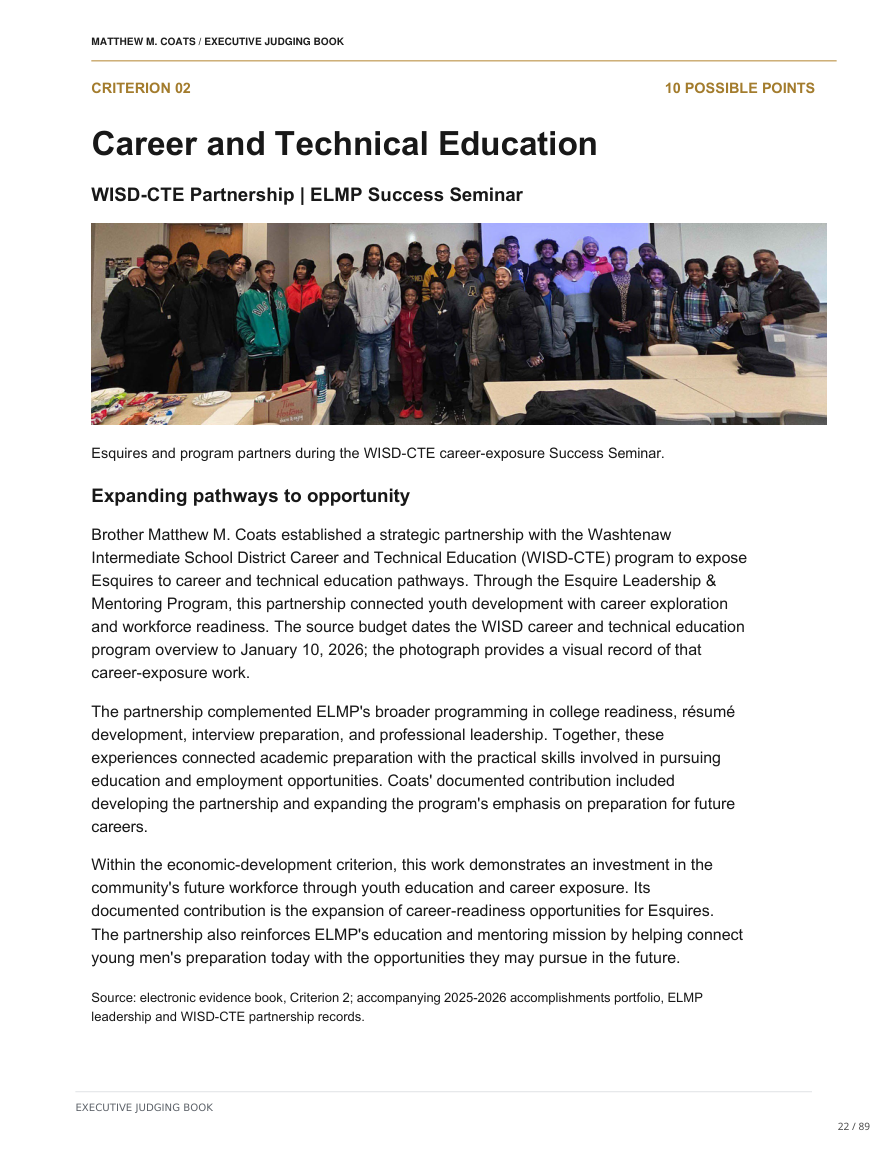
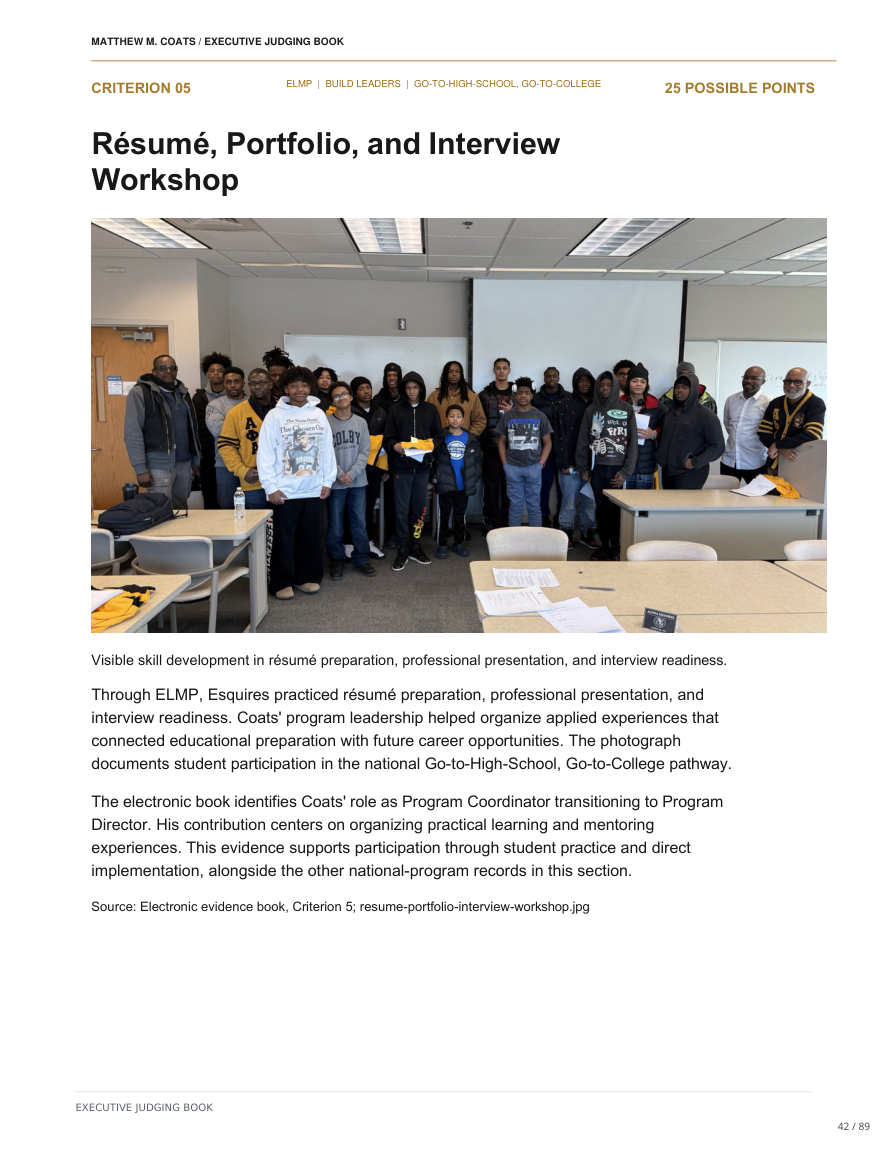
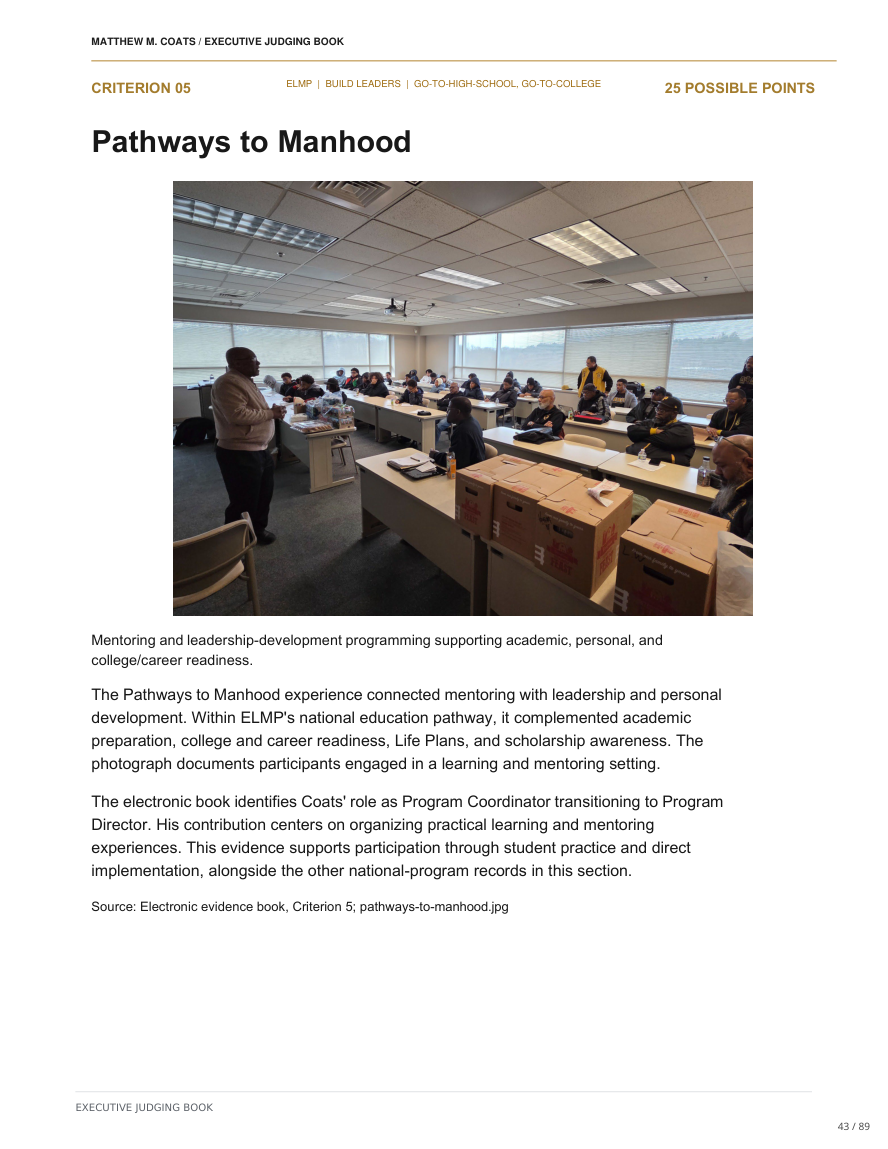
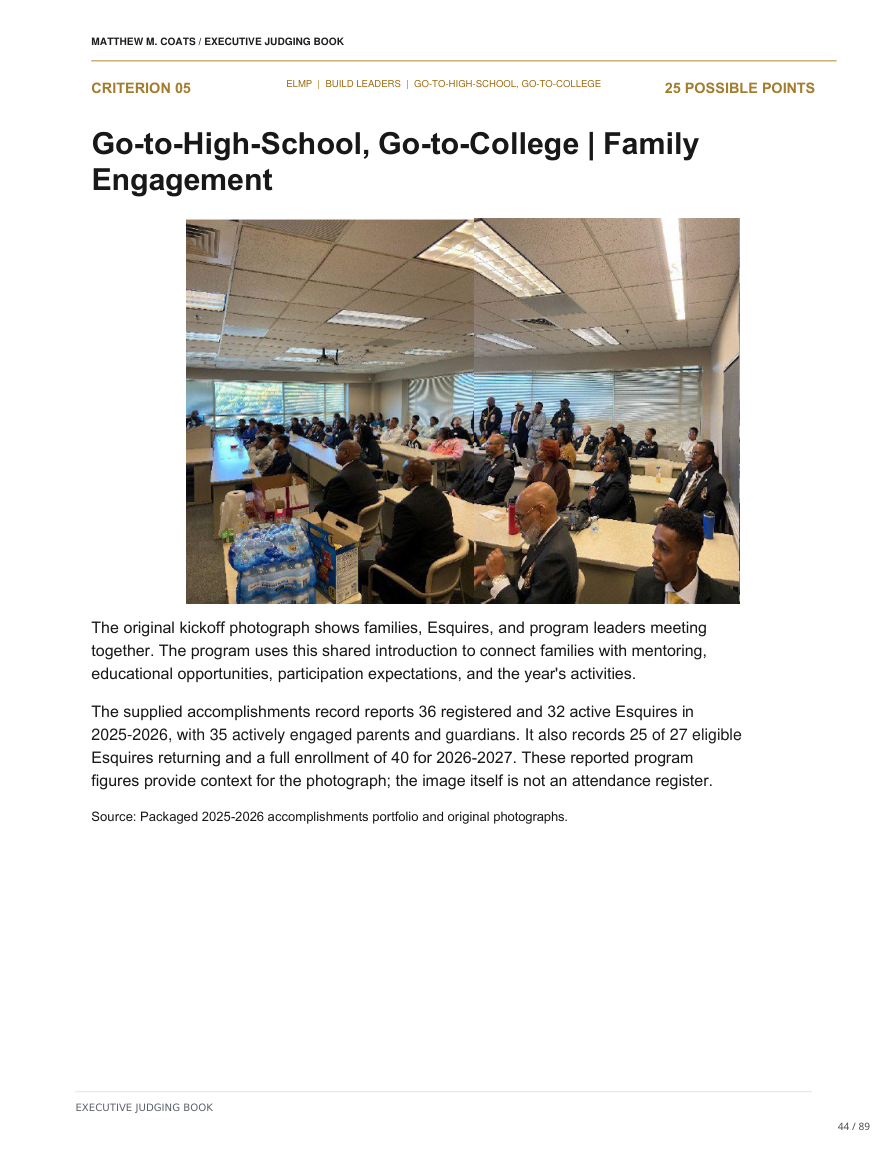
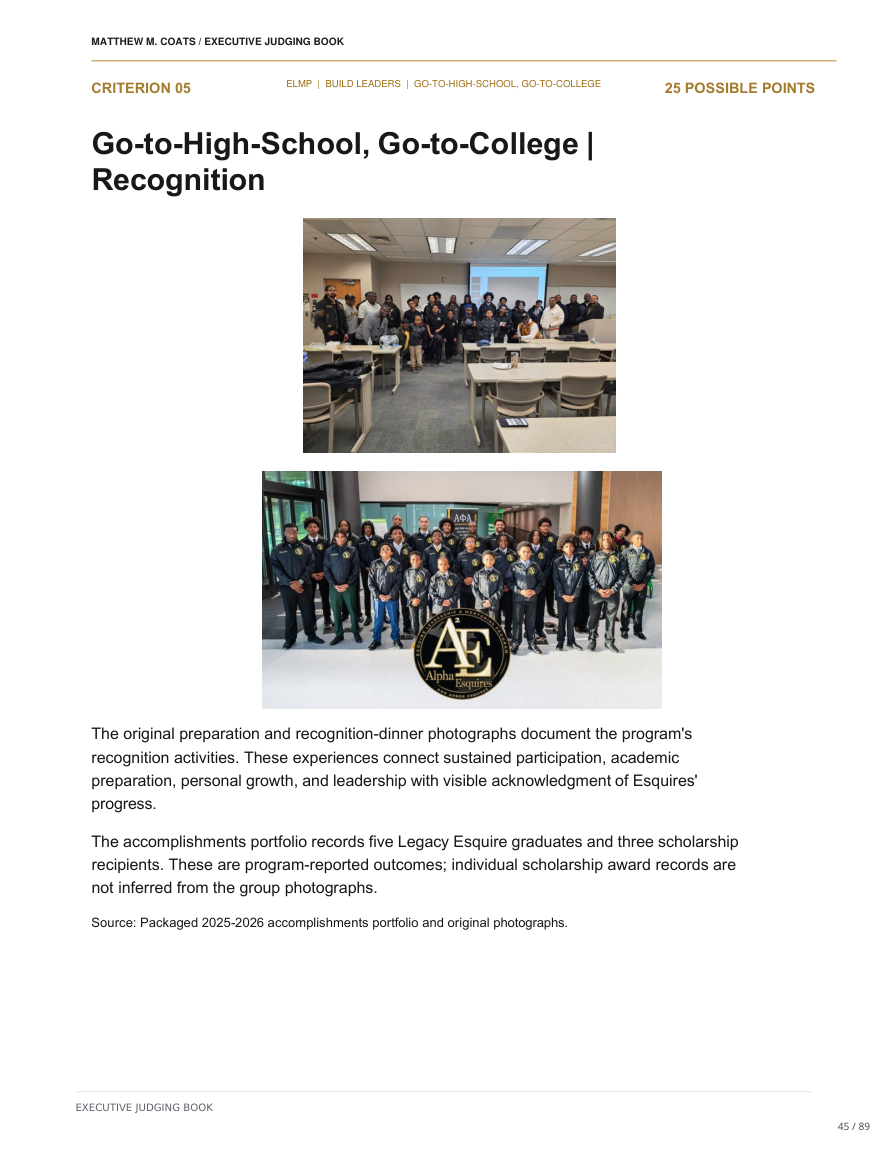
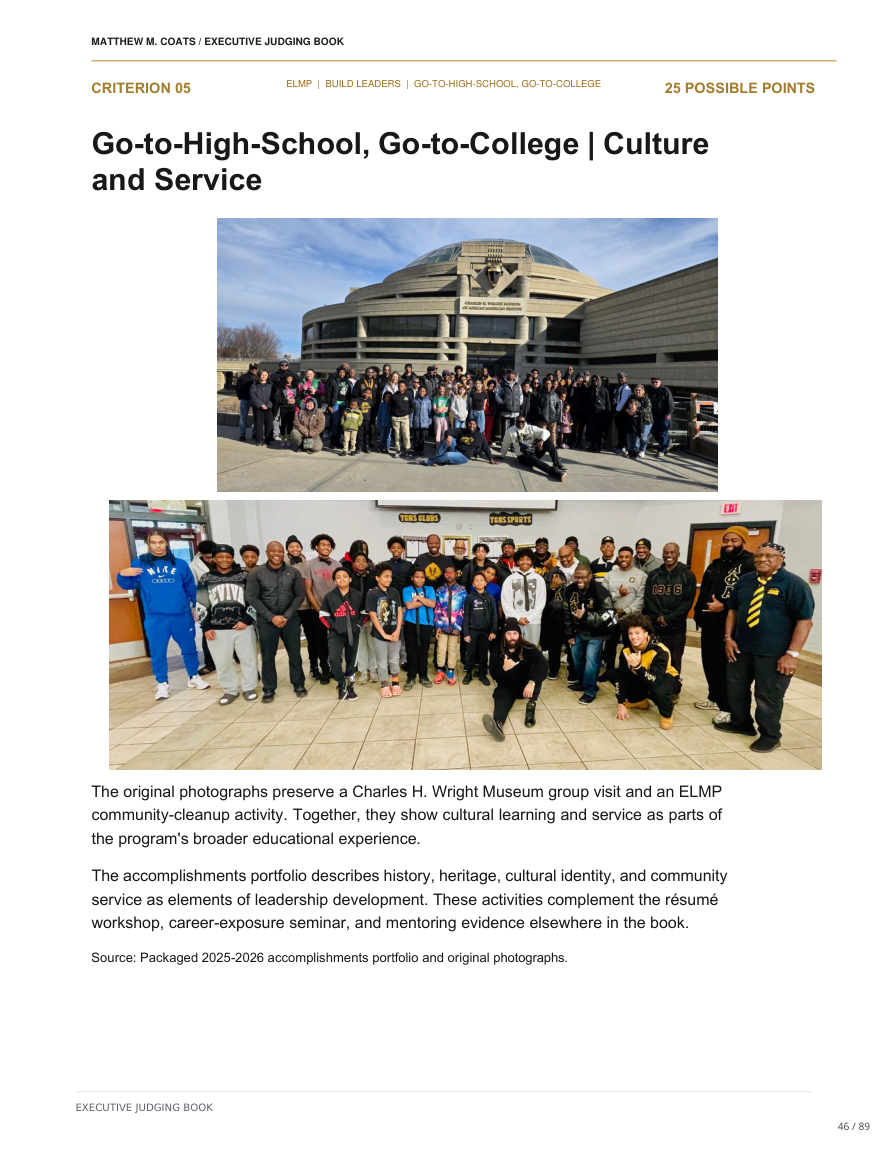
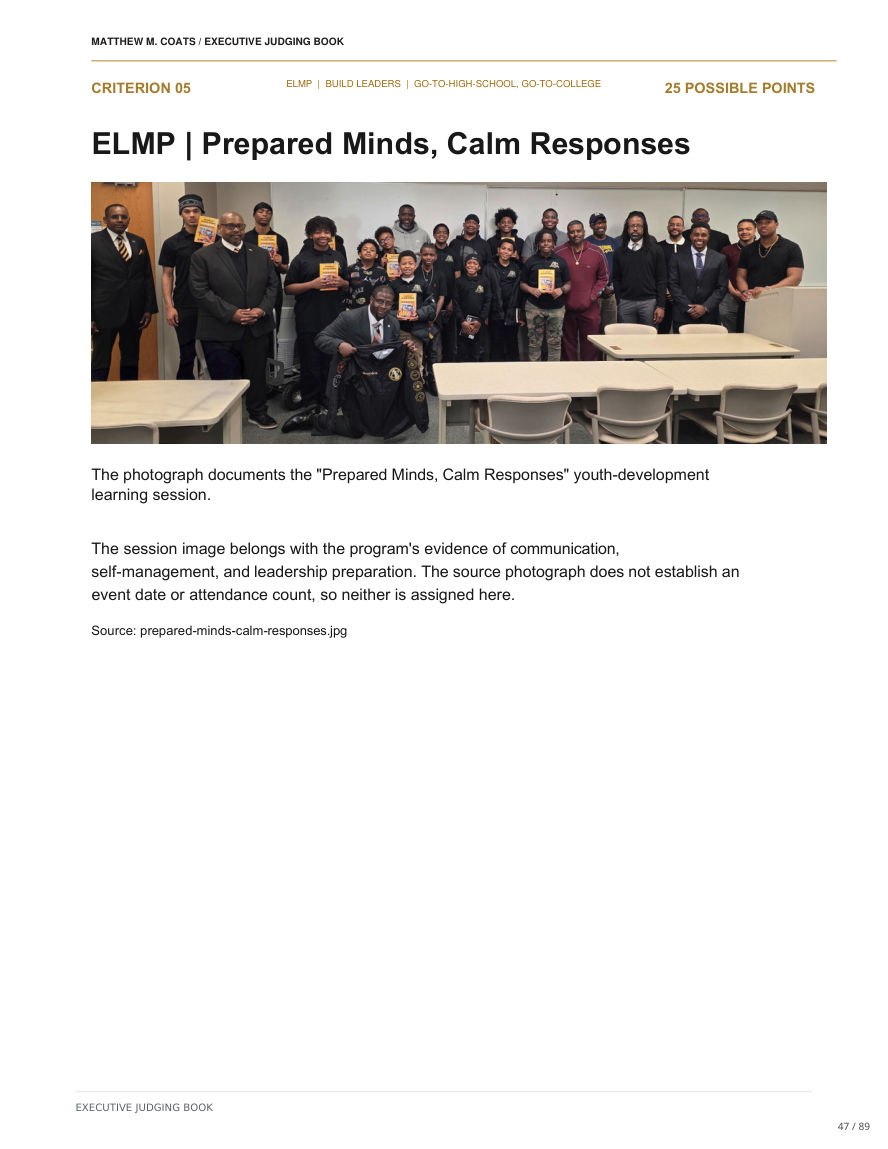
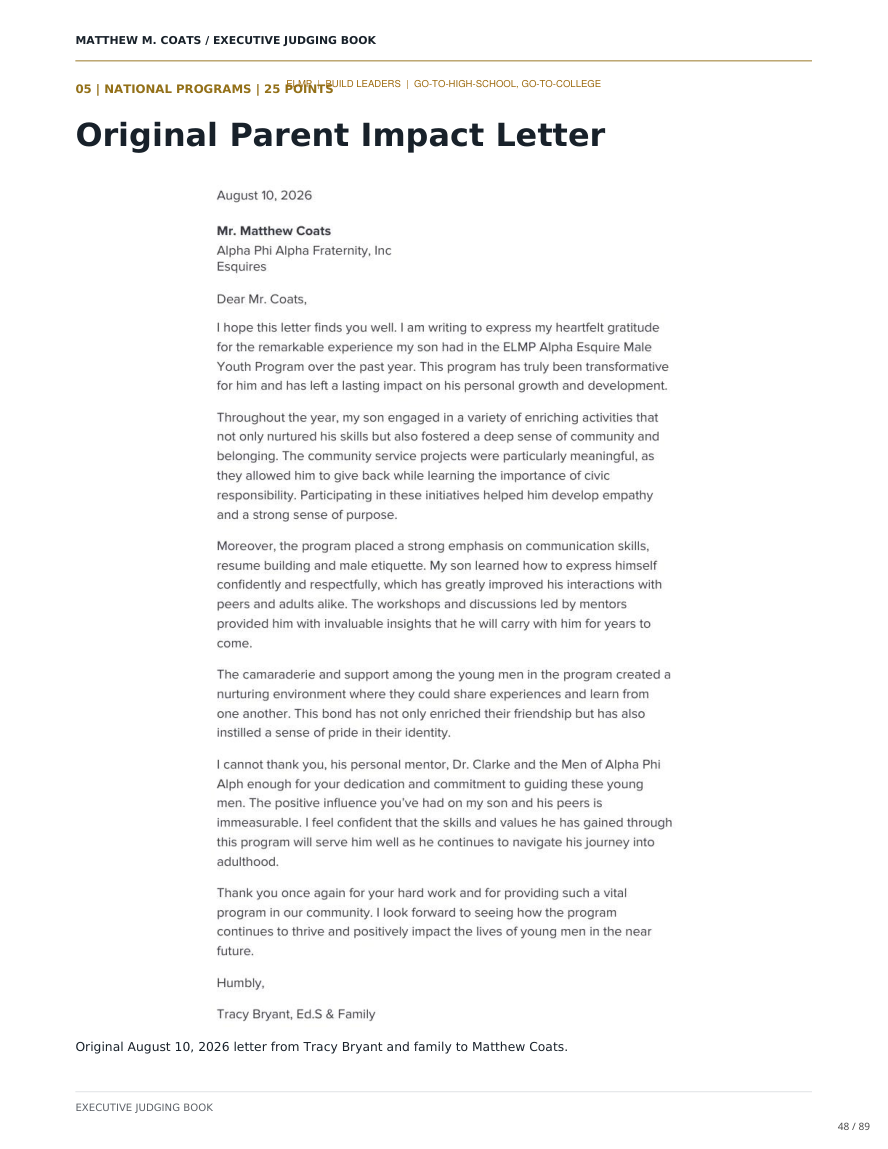
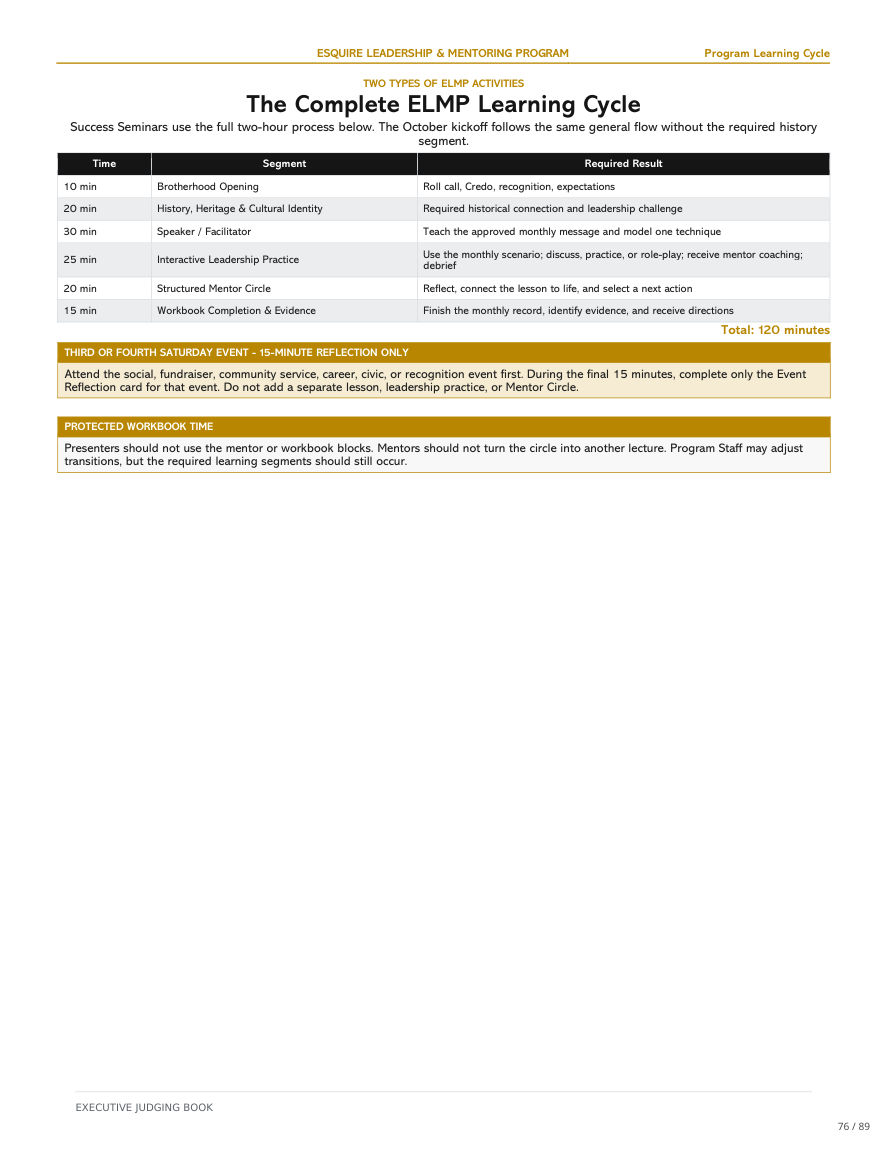
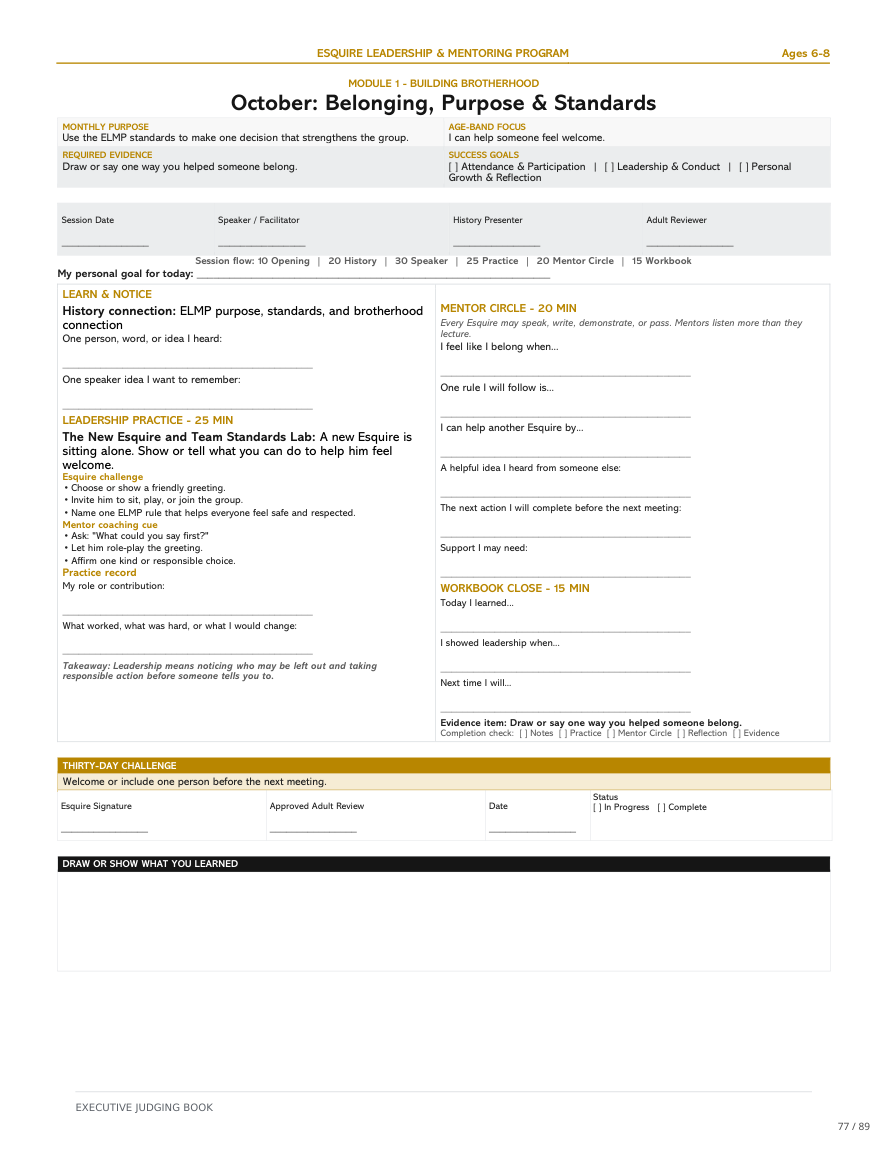
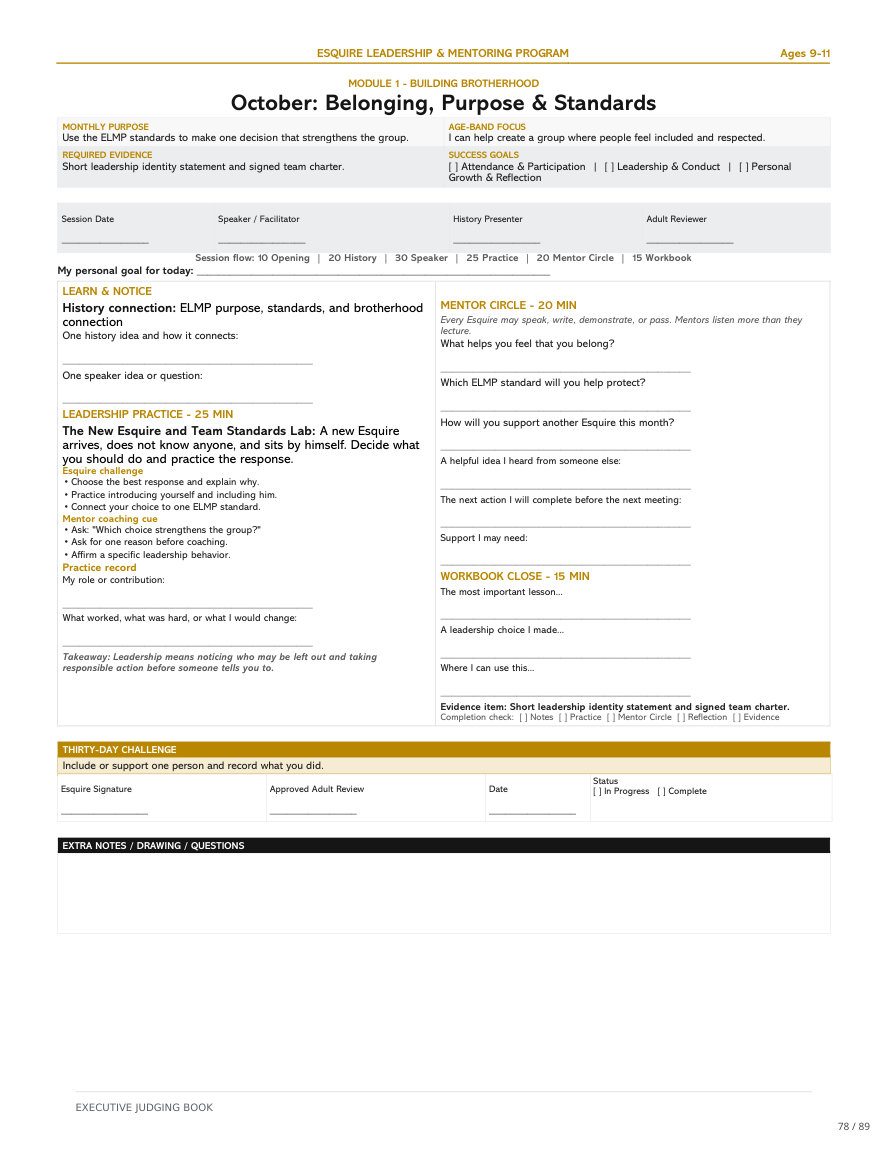
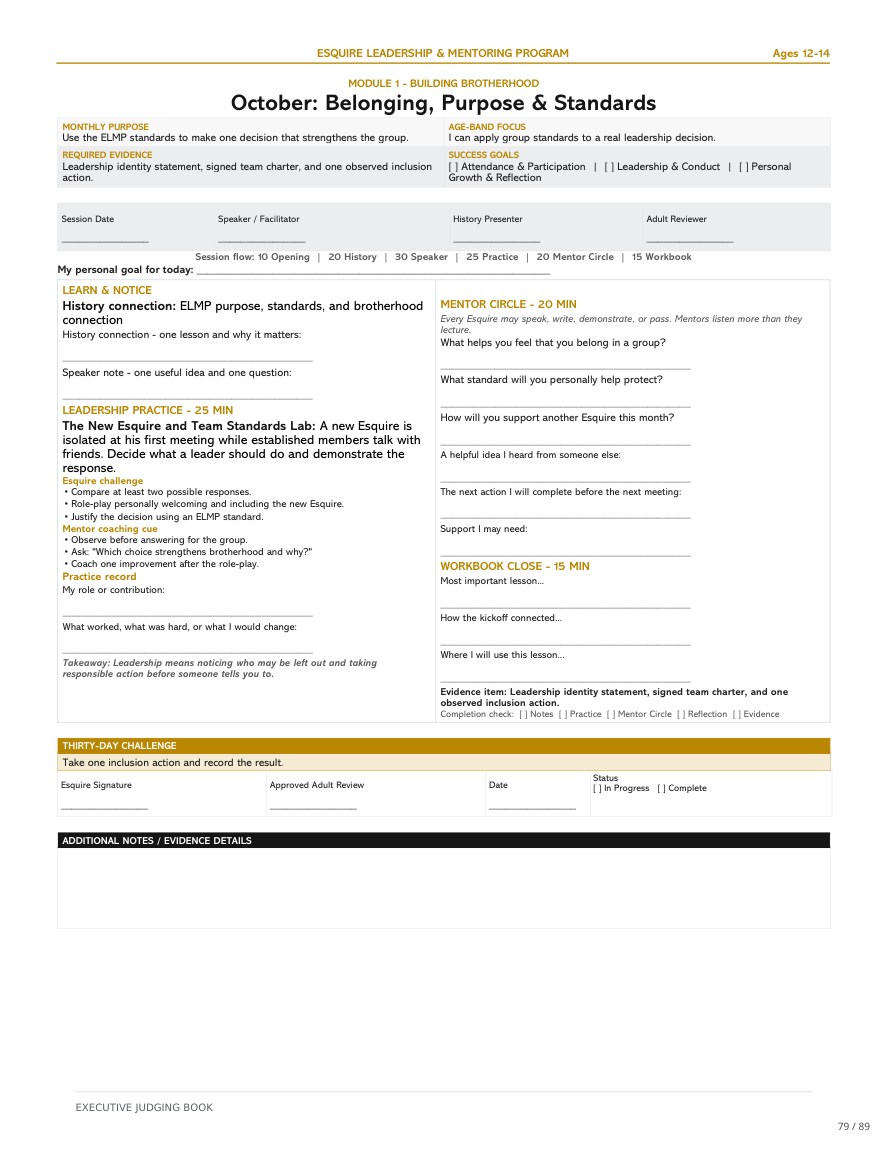
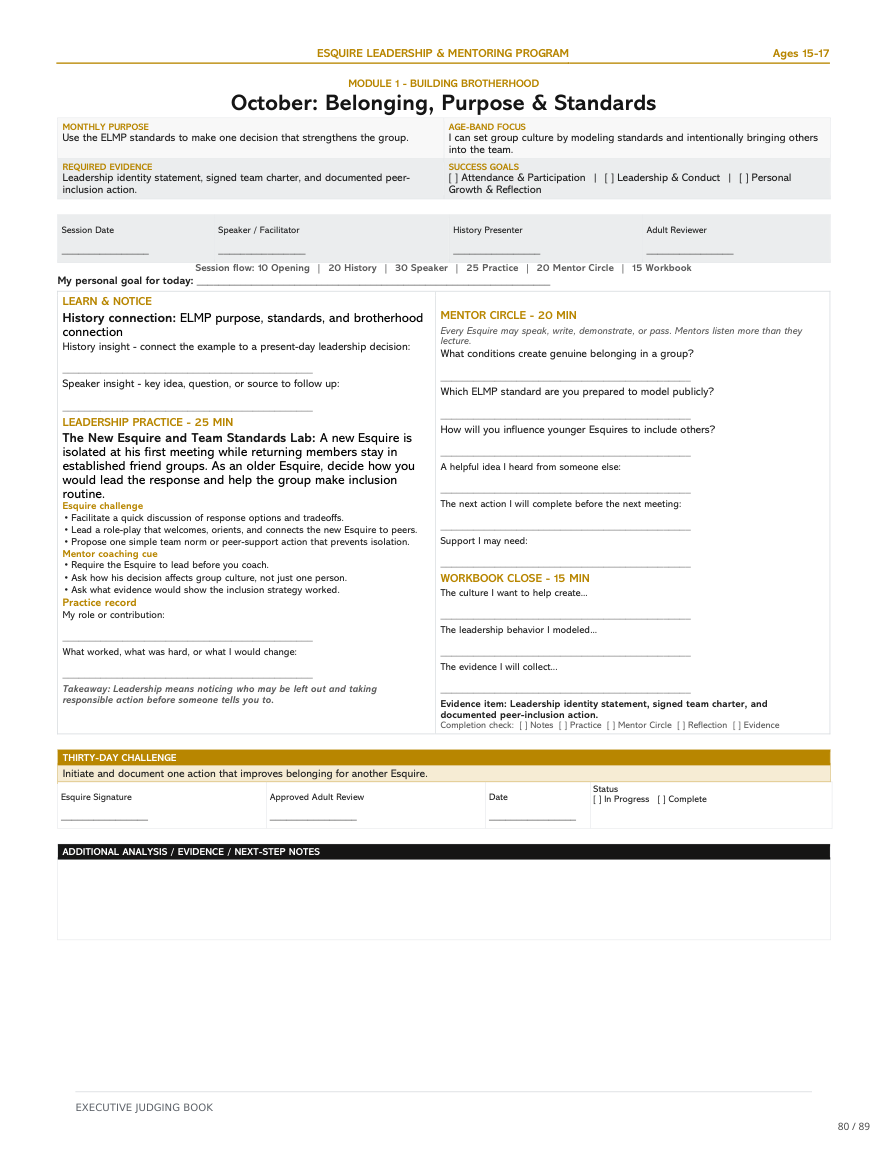
Academic preparation, mentoring, college and career readiness, résumé development, interview preparation, Life Plans, scholarship awareness, and leadership development are delivered through ELMP.
Brother Coats’ role: ELMP program leadership — Program Coordinator transitioning to Program Director.
Demonstrated participation: Organized applied college/career-readiness and mentoring experiences that moved beyond program description into student practice.
Esquires received applied college/career-readiness and mentoring experiences aligned to the national education pathway, supported by direct implementation evidence.
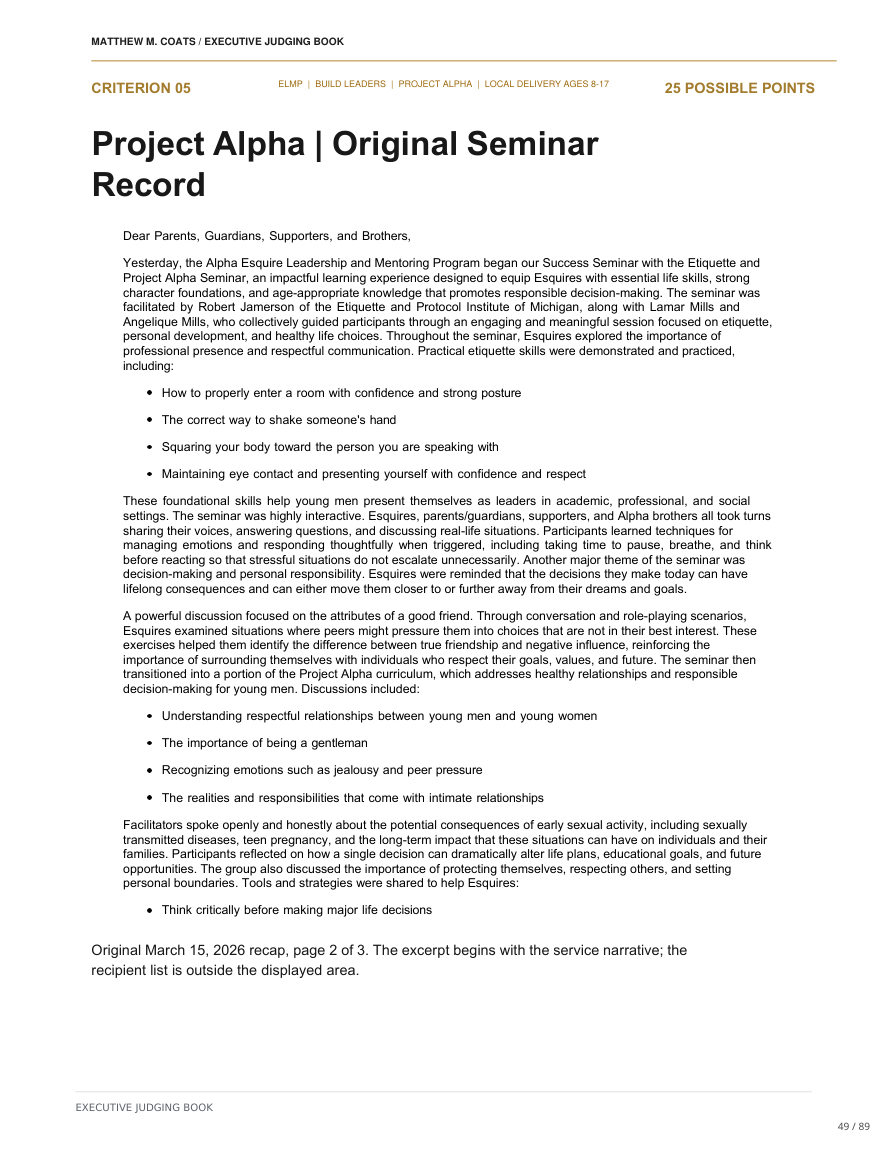
Age-appropriate responsibility, relationships, healthy choices, sound decision-making, peer pressure, boundaries, etiquette, communication, and leadership conduct are integrated into ELMP programming.
Brother Coats’ role: ELMP Program Director / program implementation leadership.
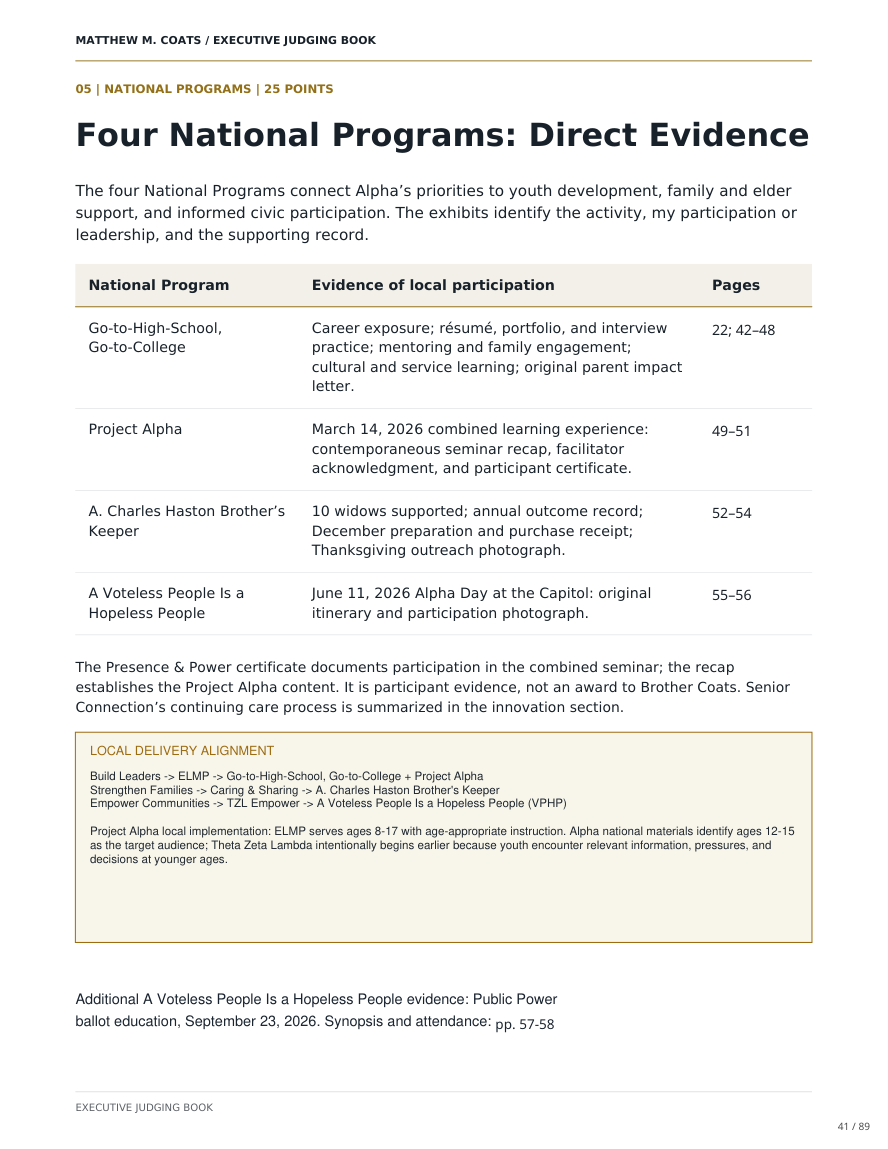
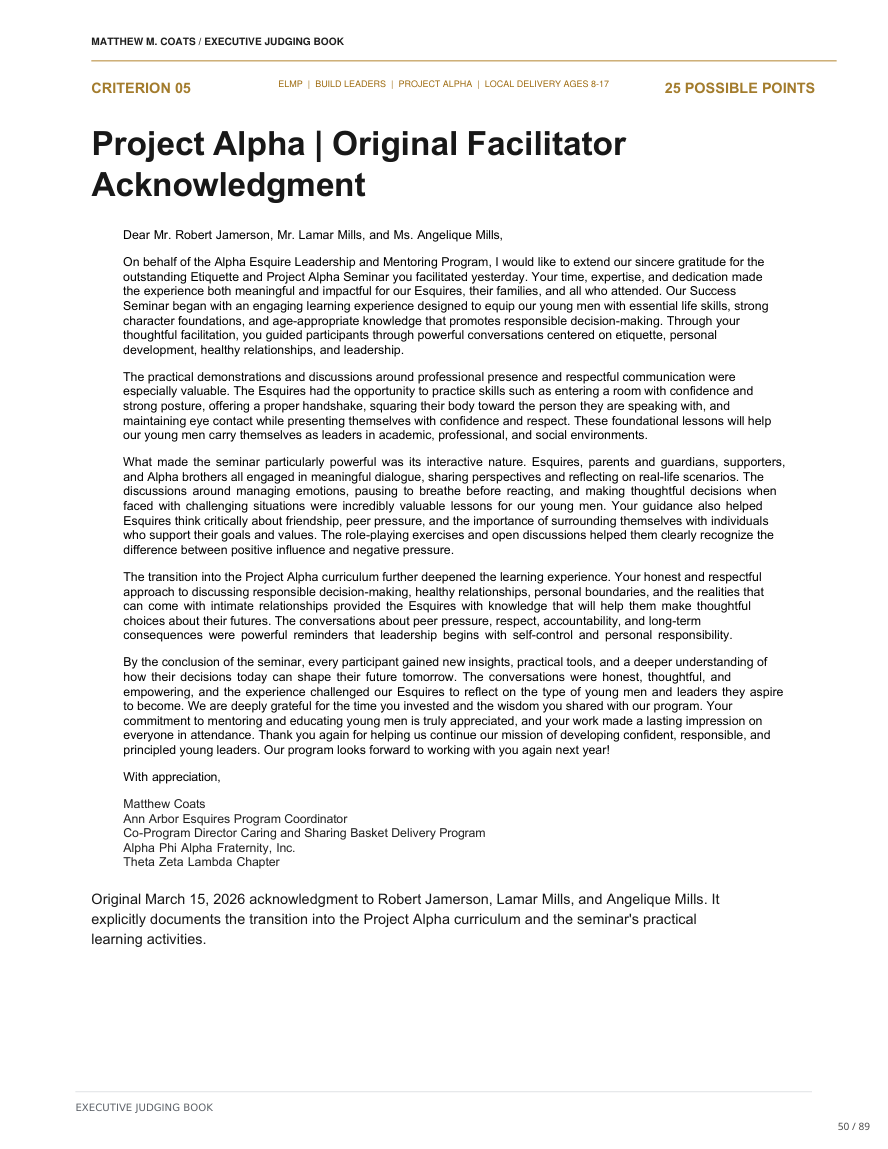
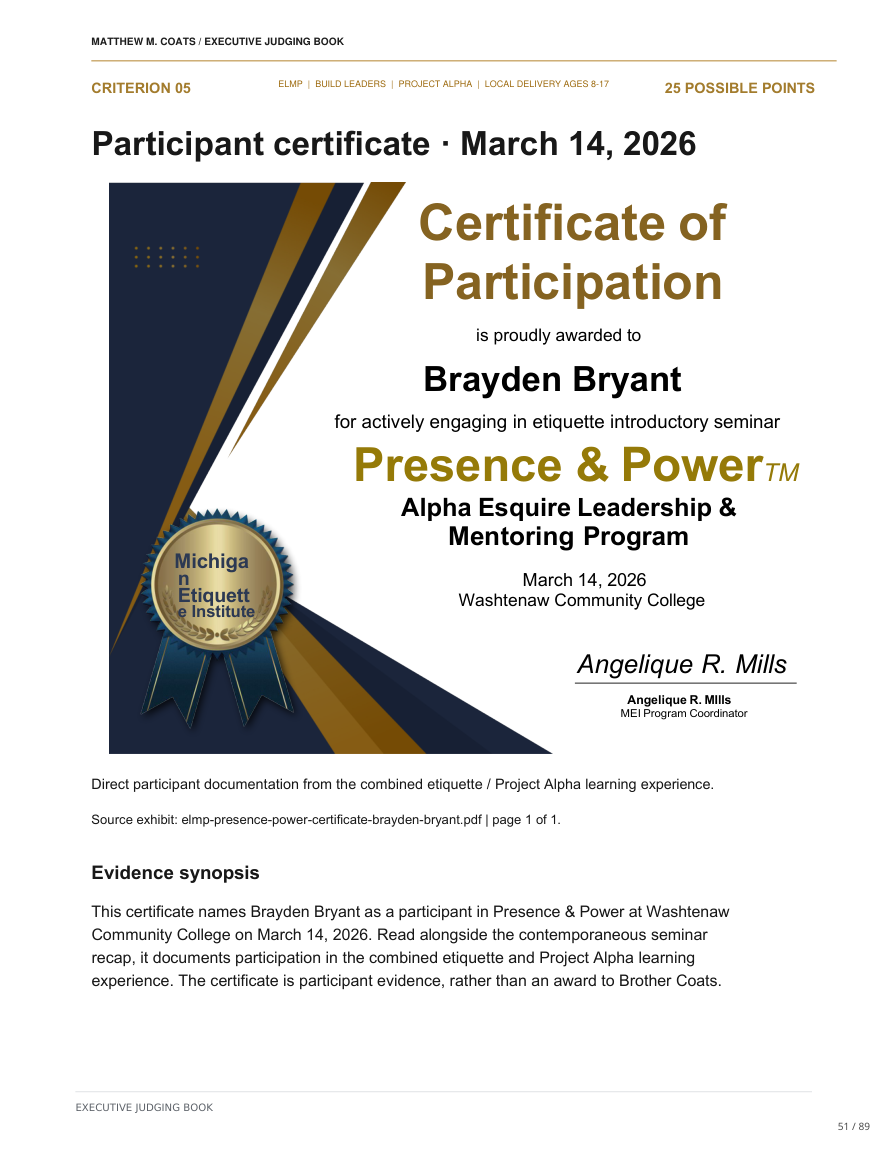
Demonstrated participation: Integrated Project Alpha content into the March 14, 2026 etiquette and leadership experience, with participant documentation and a contemporaneous seminar recap.


The dated recap, participant certificate, and program photograph collectively establish that Project Alpha content was actually delivered to Esquires during the evaluation period.
Senior Connection is Caring & Sharing’s local delivery of Brother’s Keeper for senior, retired, ill, homebound, or otherwise vulnerable Brothers and known widows, with contact, needs identification, response, follow-through, and documentation.
Brother Coats’ role: Caring & Sharing Co-Program Director / Senior Connection implementation.
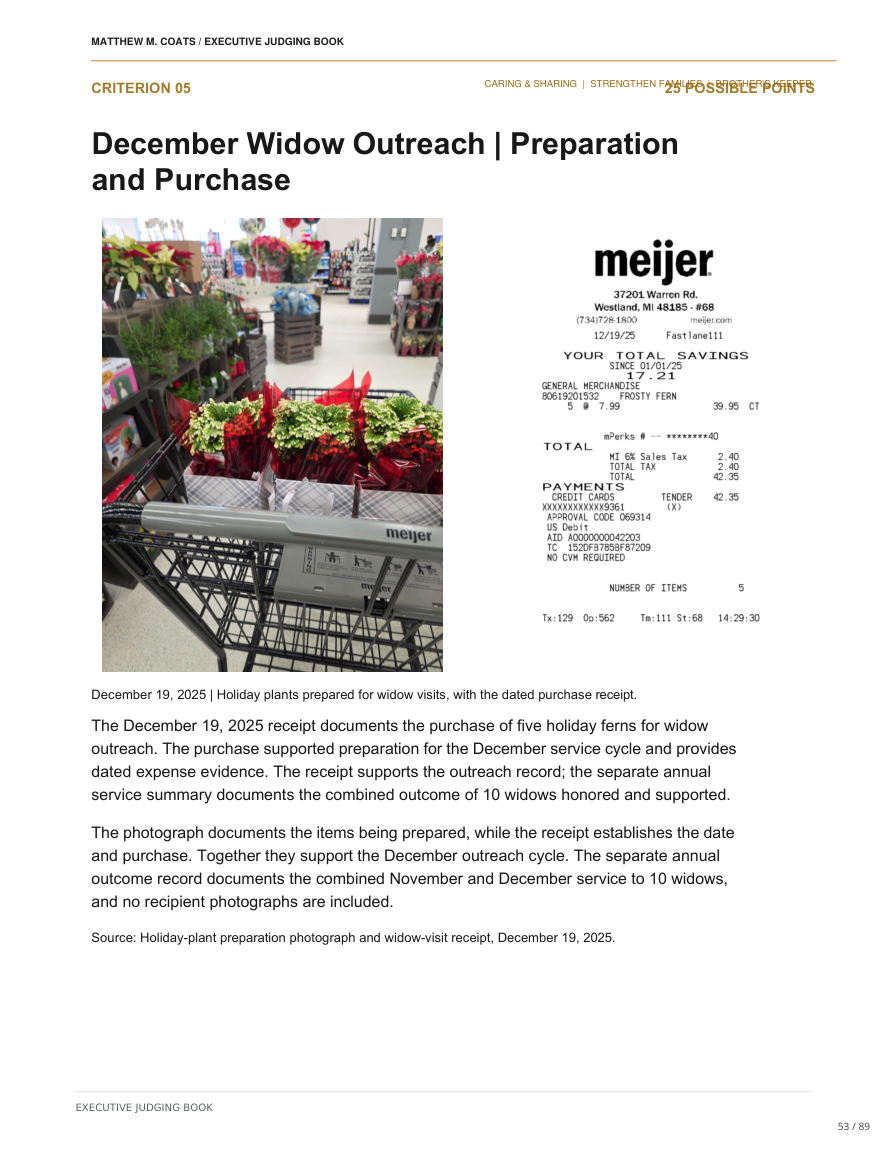
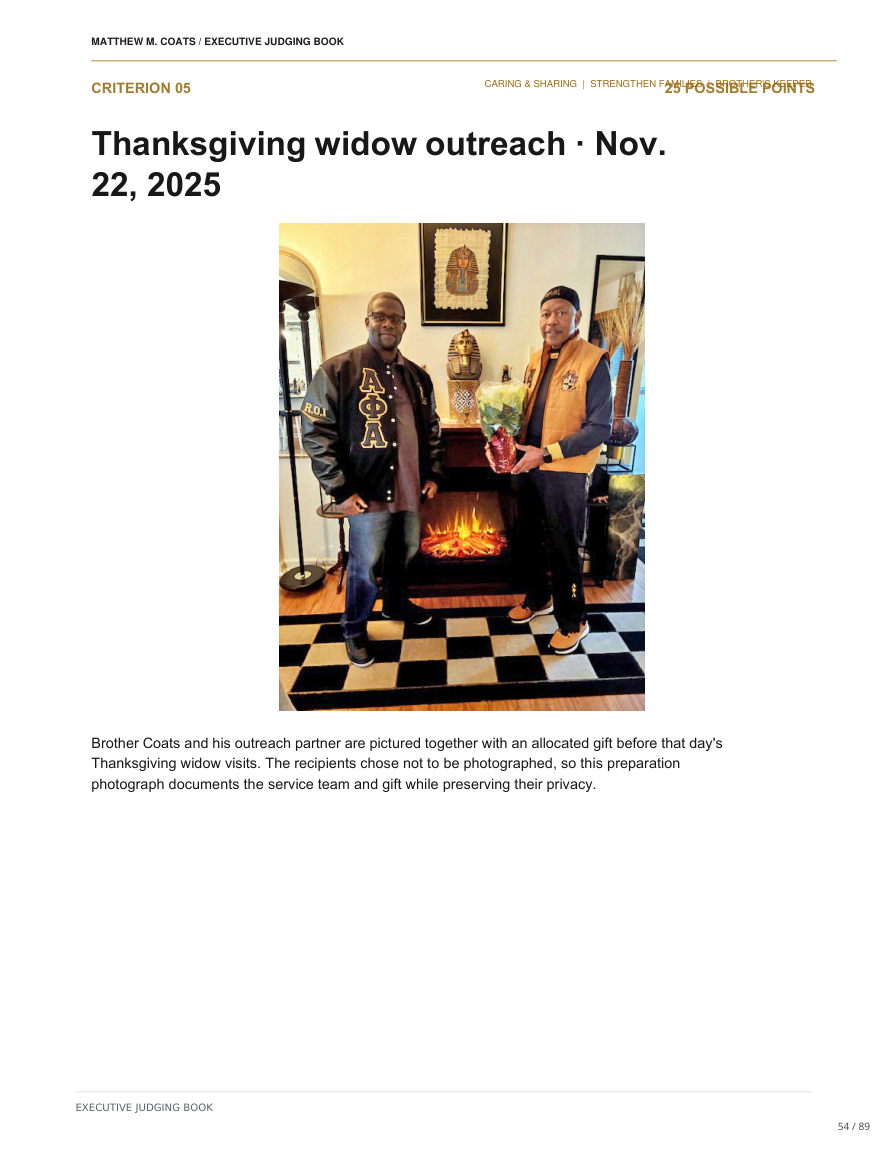
Demonstrated participation: Helped formalize Brother’s Keeper through Senior Connection and coordinate and participate in the November and December 2025 widow-outreach cycles with a designated outreach partner.
The widows served during the November and December outreach cycles chose not to be photographed. Their personal choice was fully respected. No widow names, addresses, phone numbers, roster data, or recipient photographs are displayed in this public evidence book.


10 widows were visited, honored, and supported across the combined November and December 2025 Caring & Sharing outreach cycles. Recipient privacy was preserved while the service remained documented through operating records, dated purchase evidence, and summarized outcomes.
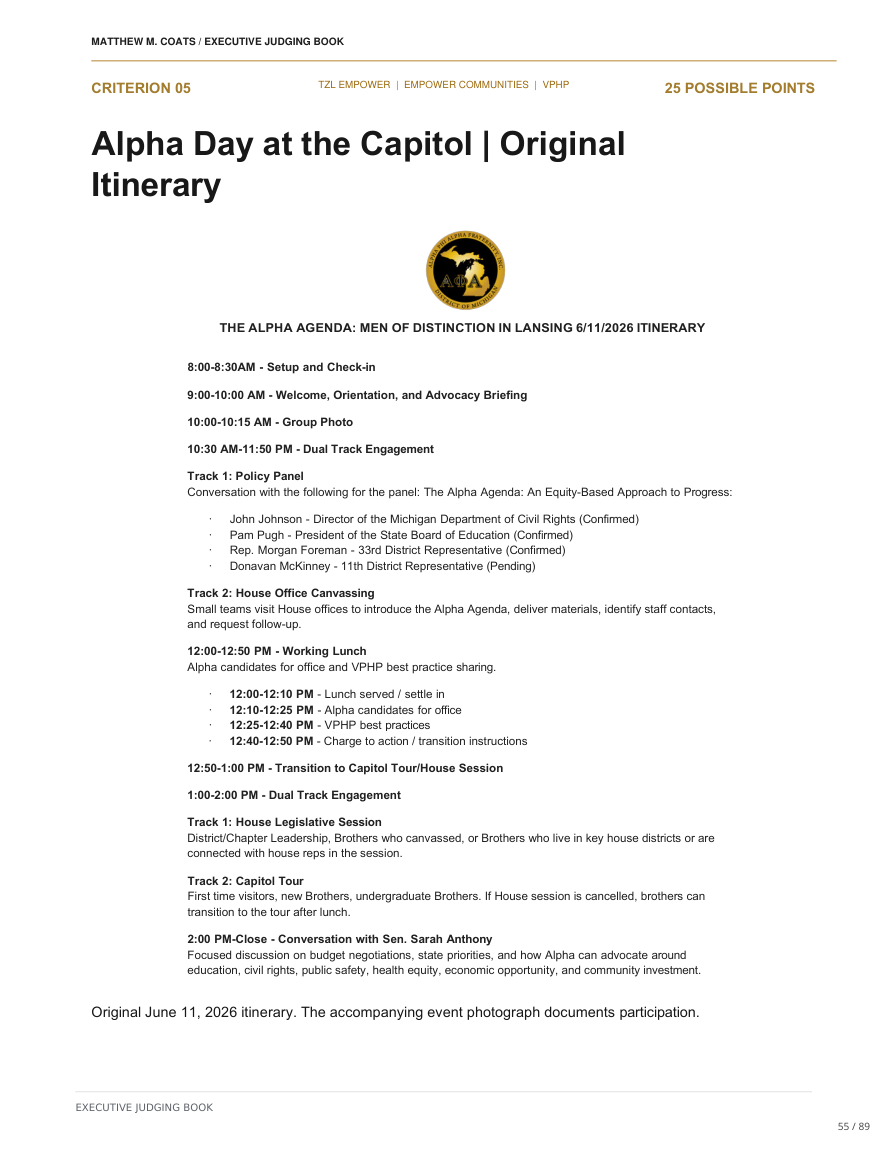
The civic-engagement pathway uses nonpartisan voter education, policy awareness, legislative engagement, verified public information, and responsible community participation.
Brother Coats’ role: Alpha Day at the Capitol participant and chapter civic-engagement contributor.
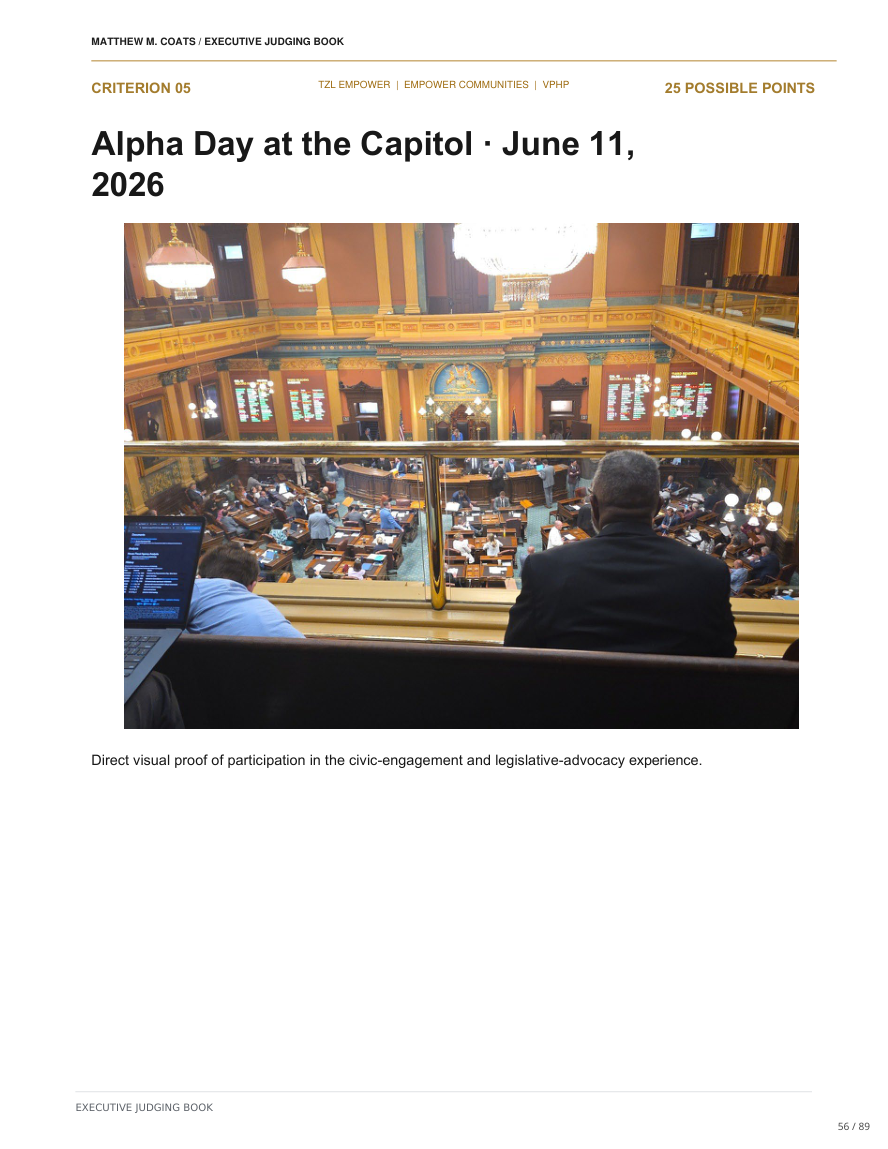
Demonstrated participation: Participated in the June 11, 2026 Alpha Agenda engagement day built around policy education, House office canvassing, VPHP best-practice sharing, legislative observation, and discussion with state leaders.


The dated itinerary and event photograph establish actual participation in a structured VPHP-aligned civic-engagement day rather than reliance on a website or general program description.
Criterion 6
Chapter-initiated systems addressing recurring local needs, with implementation and sustainability evidence.
Youth-development innovation
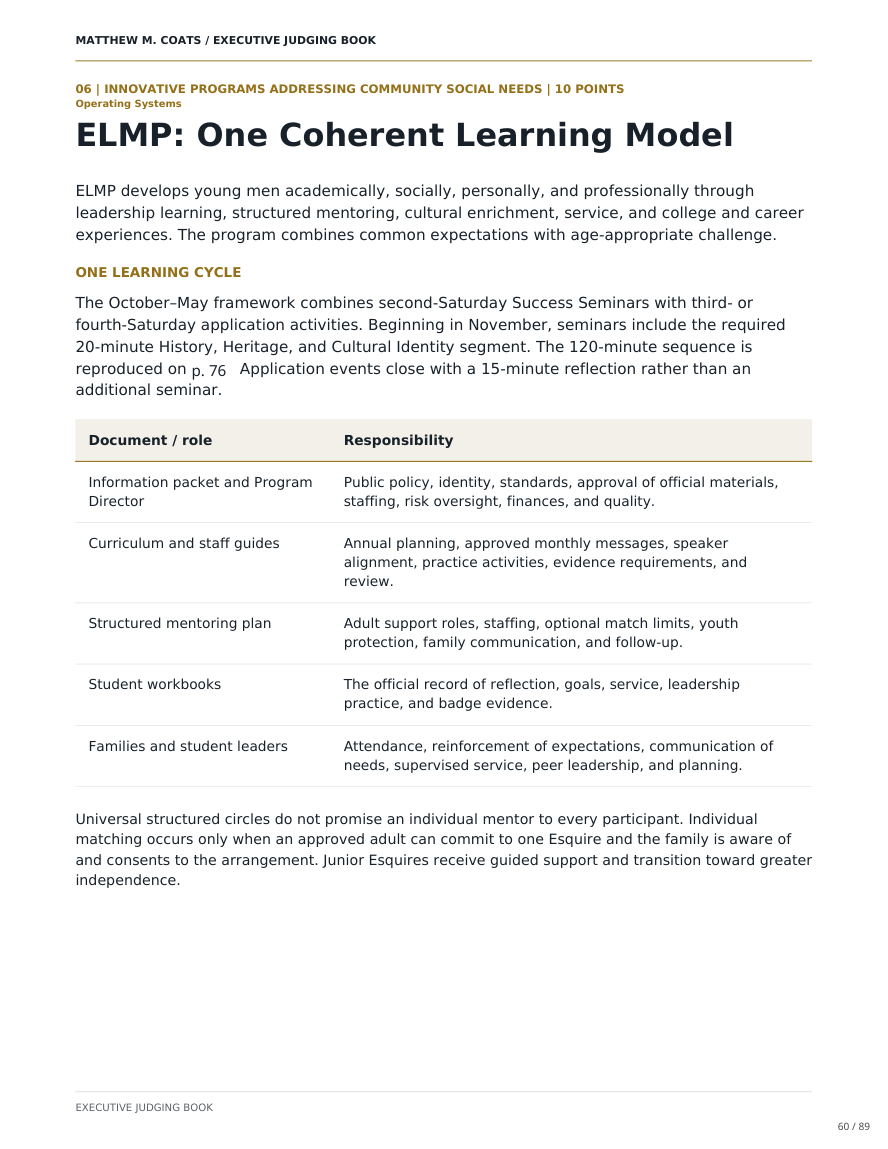
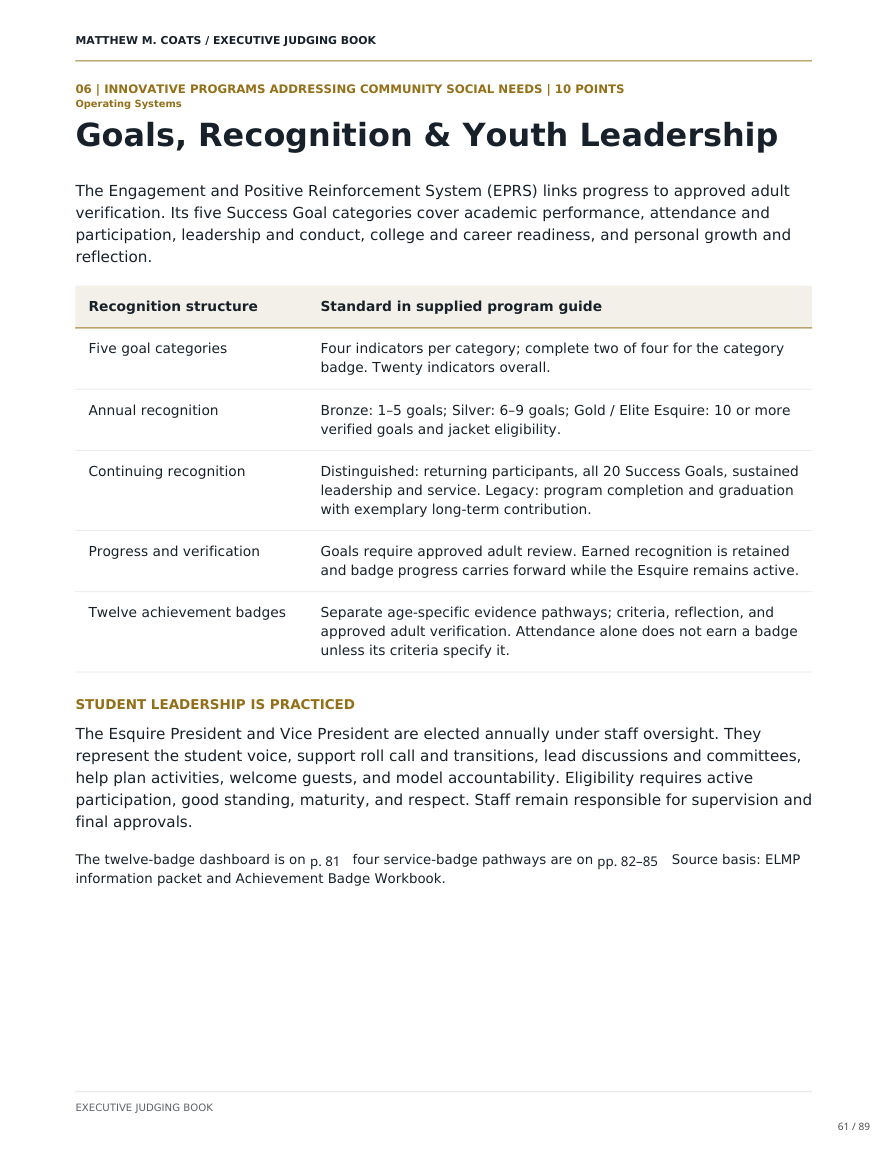
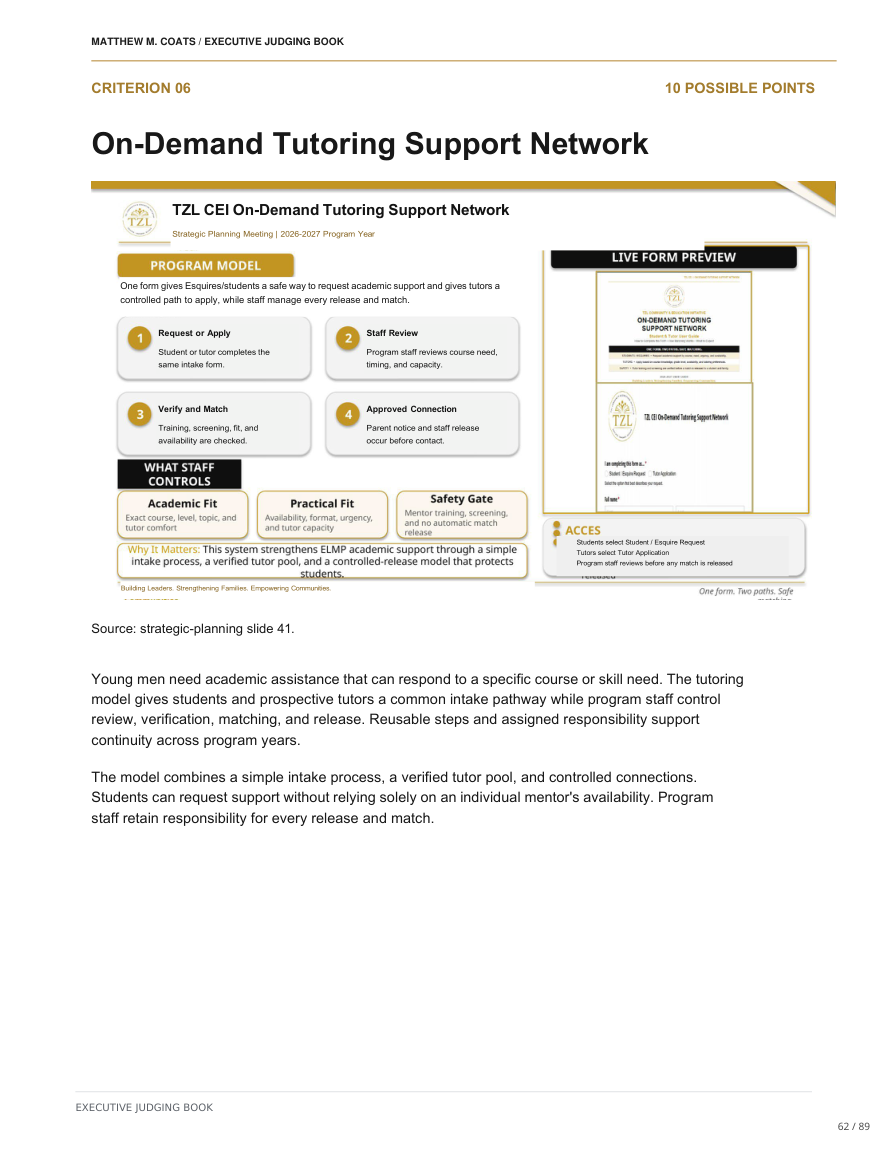
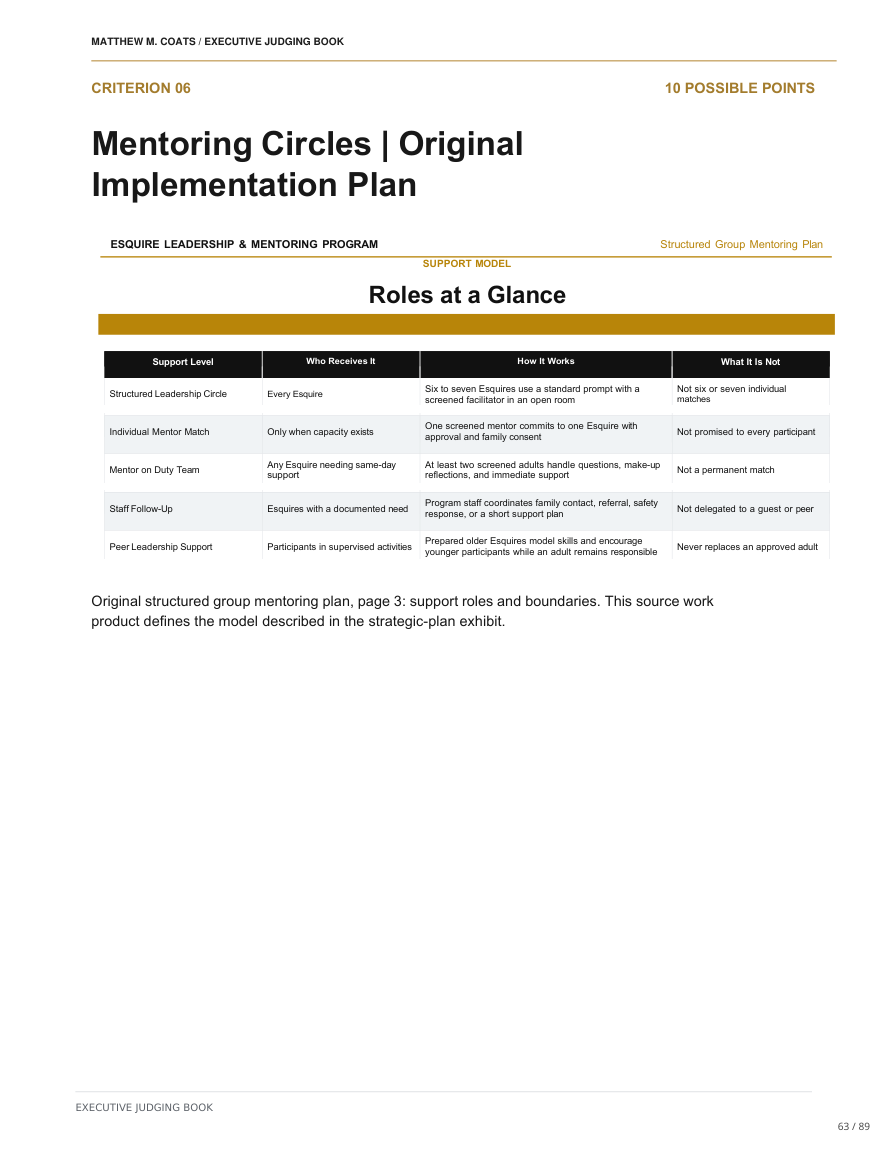
Community need: Young men need timely academic help and structured leadership reflection that can reach the full cohort without depending on one-to-one availability.
Innovation: The On-Demand Tutoring Support Network creates a controlled request, staff-review, verification, matching, and parent-notice pathway, while Structured Mentoring Circles give every Esquire a repeatable reflection, action, documentation, and follow-up process.
Why it lasts: Both models use defined steps, staff ownership, documented follow-through, and reusable tools that future Brothers can operate consistently each program year.
Family-support innovation
Community need: Families, seniors, widows, and households facing food or essential-needs insecurity require coordinated follow-through rather than isolated seasonal drives.
Innovation: One care model moves needs through identification, preparation, dignified service, relationship-building, partnerships, and follow-through, with a separate operating process for referral review, assignment, privacy, and closure.
Why it lasts: The same service cycle can be used across food assistance, Family Essentials, Senior Connection, seasonal outreach, and partner referrals while preserving clear ownership and records.
Civic-engagement innovation
Community need: Residents need accurate, understandable, nonpartisan civic information connected to local relationships, neighborhoods, elections, and practical participation.
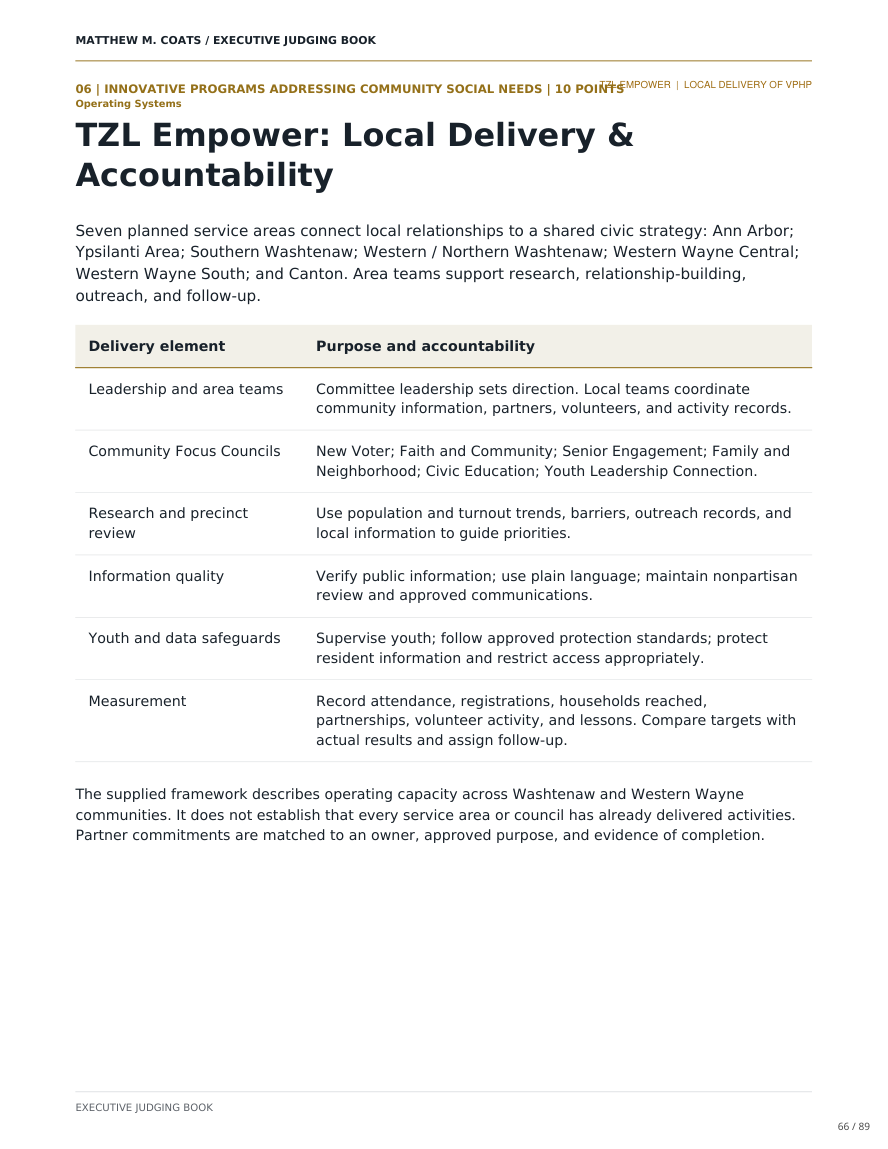
Innovation: A six-step civic-engagement cycle is paired with seven operational service areas, defined committee and area-team roles, local relationship ownership, data standards, outreach, and continuous improvement.
Why it lasts: The model assigns geographic responsibility, standardizes information quality and outreach, and gives future teams a repeatable structure for every election and civic-education cycle.
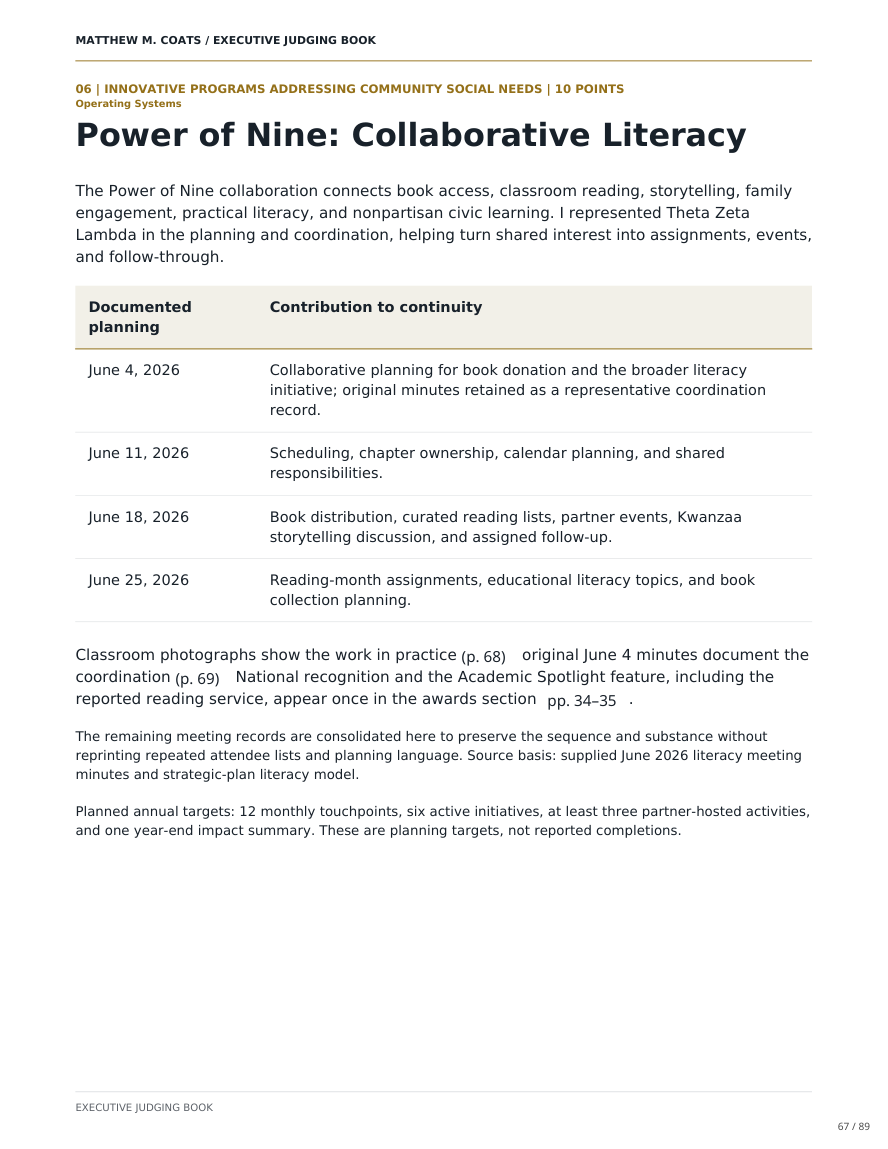
Literacy innovation
Community need: Young readers and families benefit from sustained literacy support that extends beyond a single reading event.
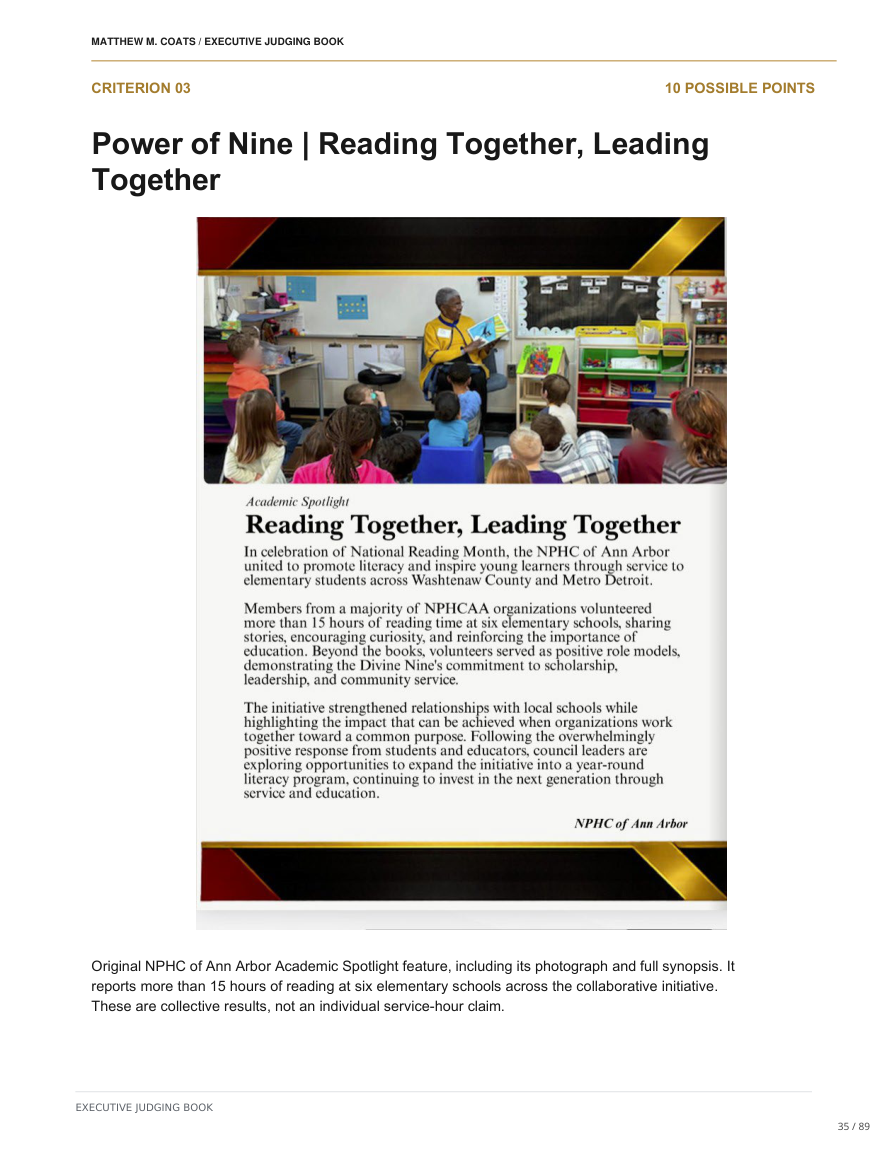
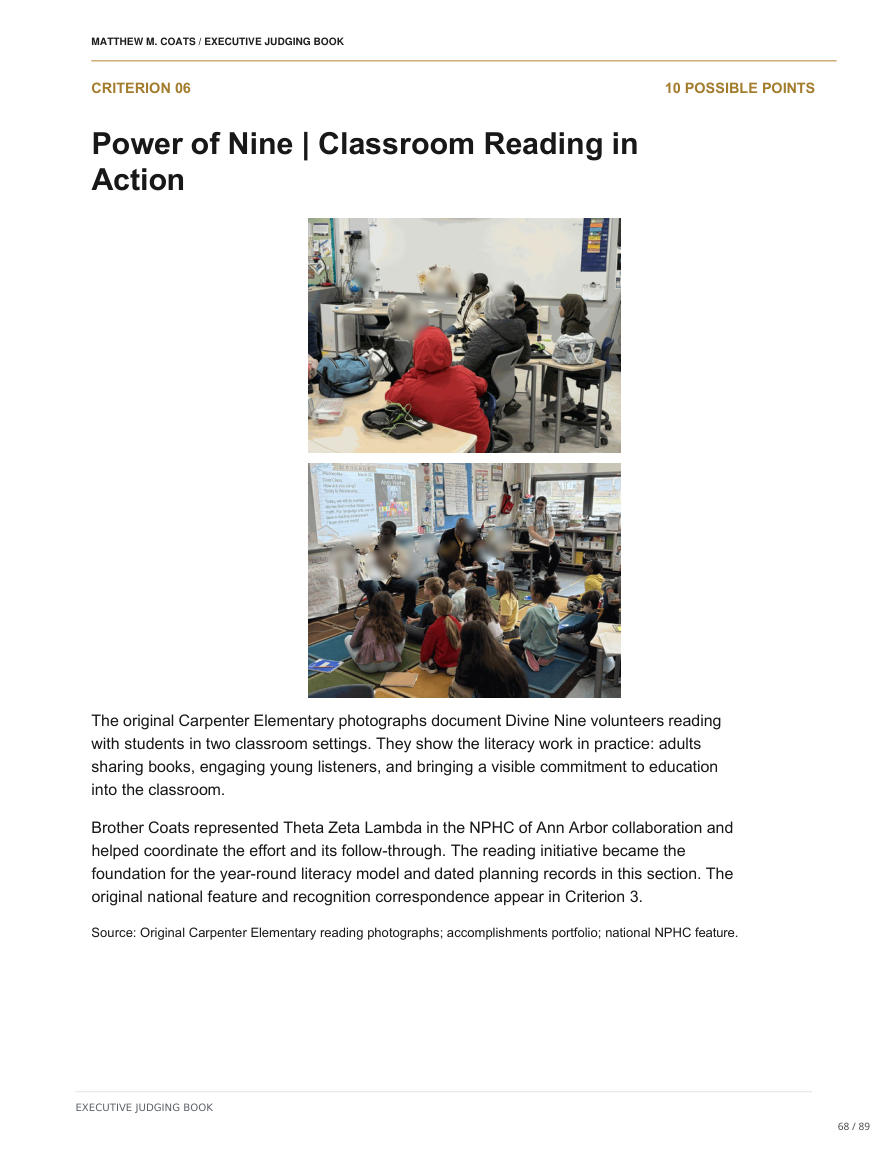
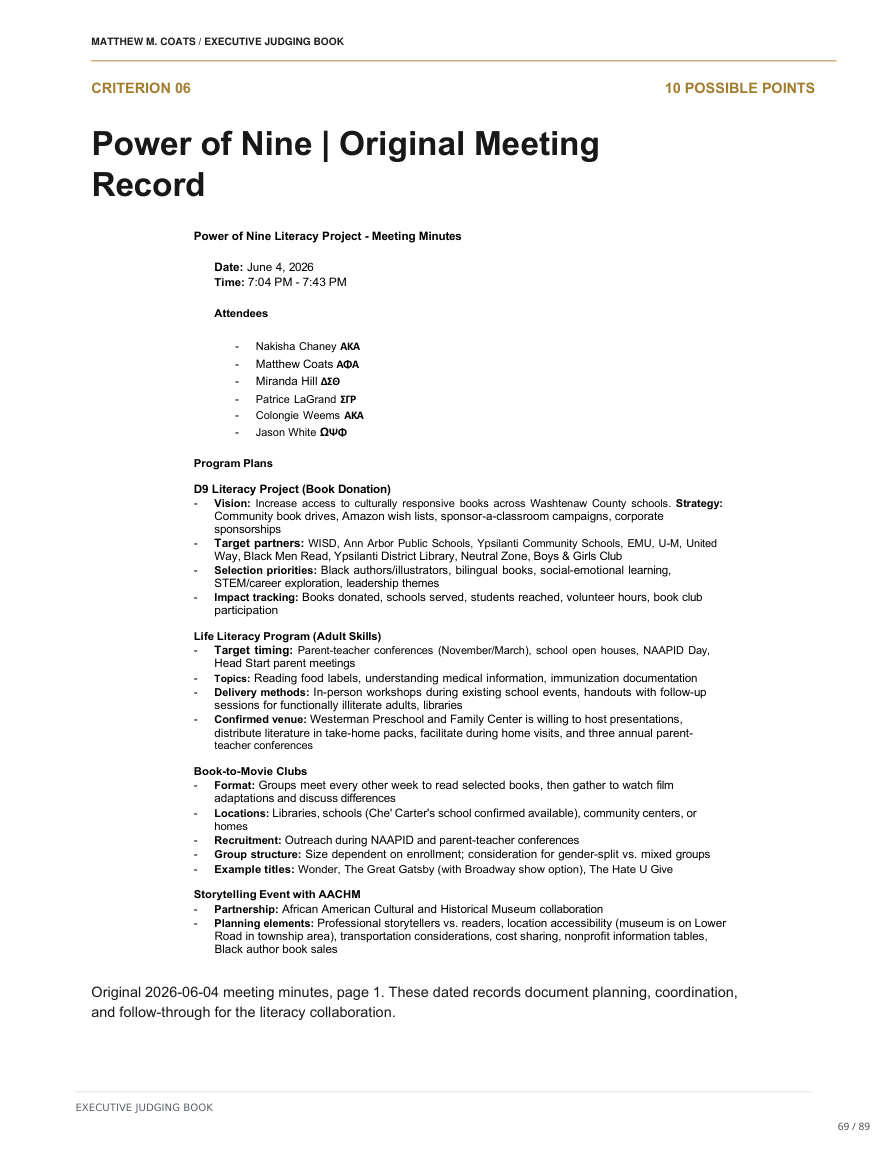
Innovation: The year-round model connects six initiatives—book distribution, children’s storytelling, monthly reading, book-to-movie clubs, family life literacy, and civic literacy—under one access-to-leadership pathway.
Why it lasts: Defined annual targets, recurring touchpoints, partner-hosted activities, representative coordination, written follow-up, and a year-end impact summary make the collaboration repeatable and expandable.
Volunteer-readiness & youth-protection innovation
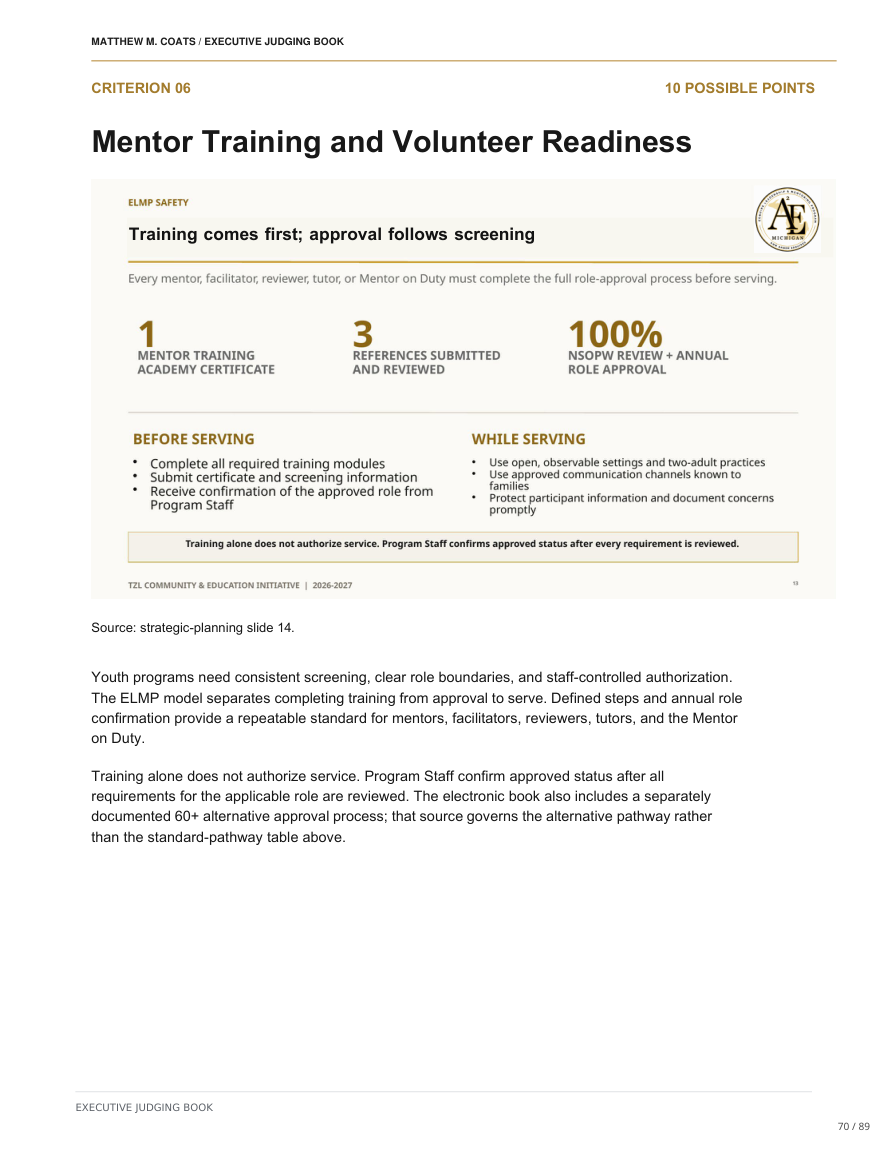
Community need: Youth programs require qualified adults, consistent screening, clear role boundaries, and a process that does not assume that familiarity or training alone equals authorization to serve.
Innovation: ELMP separates training from approval: adults complete the Mentor Training Academy, submit screening information, undergo NSOPW and reference verification, and receive annual role-specific approval before serving.
Why it lasts: A standardized annual approval pathway, staff-controlled records, role confirmation, open-observable service standards, and a documented alternative-process framework allow future leaders to apply the same safeguards consistently.
Sustainability backbone · not a sixth community program
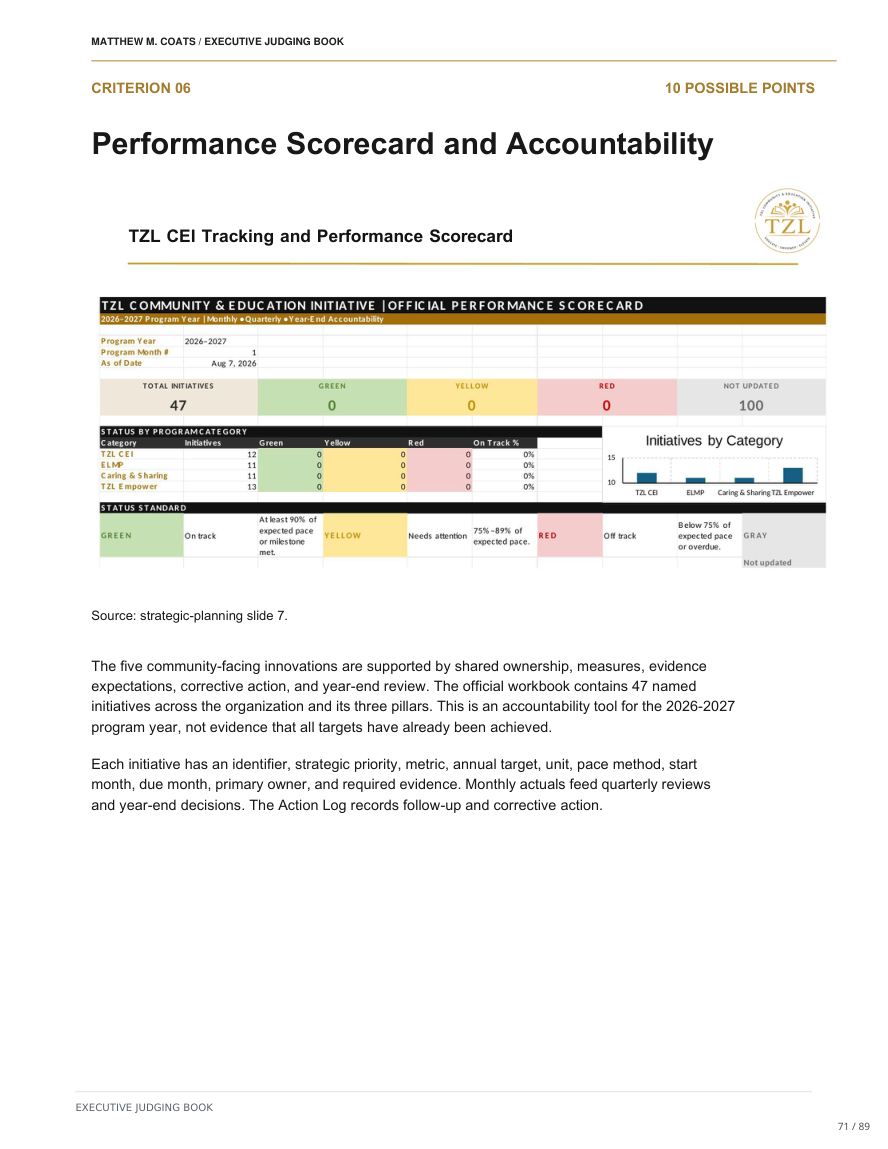
The five community innovations are supported by one accountability backbone: assigned ownership, performance measures, evidence expectations, corrective action, and year-end review. This infrastructure appears here only to prove that the innovation can survive leadership transitions and be managed as one coordinated system.
Shared digital infrastructure · not a sixth innovation
Brother Coats created or substantially modernized a coordinated five-site public ecosystem so families, Esquires, mentors, volunteers, partners, donors, and residents can reach the right program information and tools without depending on one person to explain the system. The homepage captures below provide immediate visual proof of the digital work products. These websites function as continuity and public-access infrastructure—not as proof of National Program participation, awards, fundraising, or service outcomes.
Youth program operations hub
Program documents, calendars, mentoring, Success Goals, family forms, tutoring, applications, worksheets, and participant resources.
View live homepage →Annual adult readiness hub
Mentor and volunteer preparation, operating standards, scenario practice, assessment, progress tracking, and certificate access.
View live homepage →Umbrella organization hub
Governance, impact, events, partnerships, Board information, program access, and community support pathways across the three pillars.
View live homepage →Year-round family service hub
Care model, referrals, service calendar, initiatives, volunteer information, Senior Connection, and community-resource access.
View live homepage →Nonpartisan civic education hub
Civic education, engagement strategy, public resources, events, outreach, and community-participation pathways.
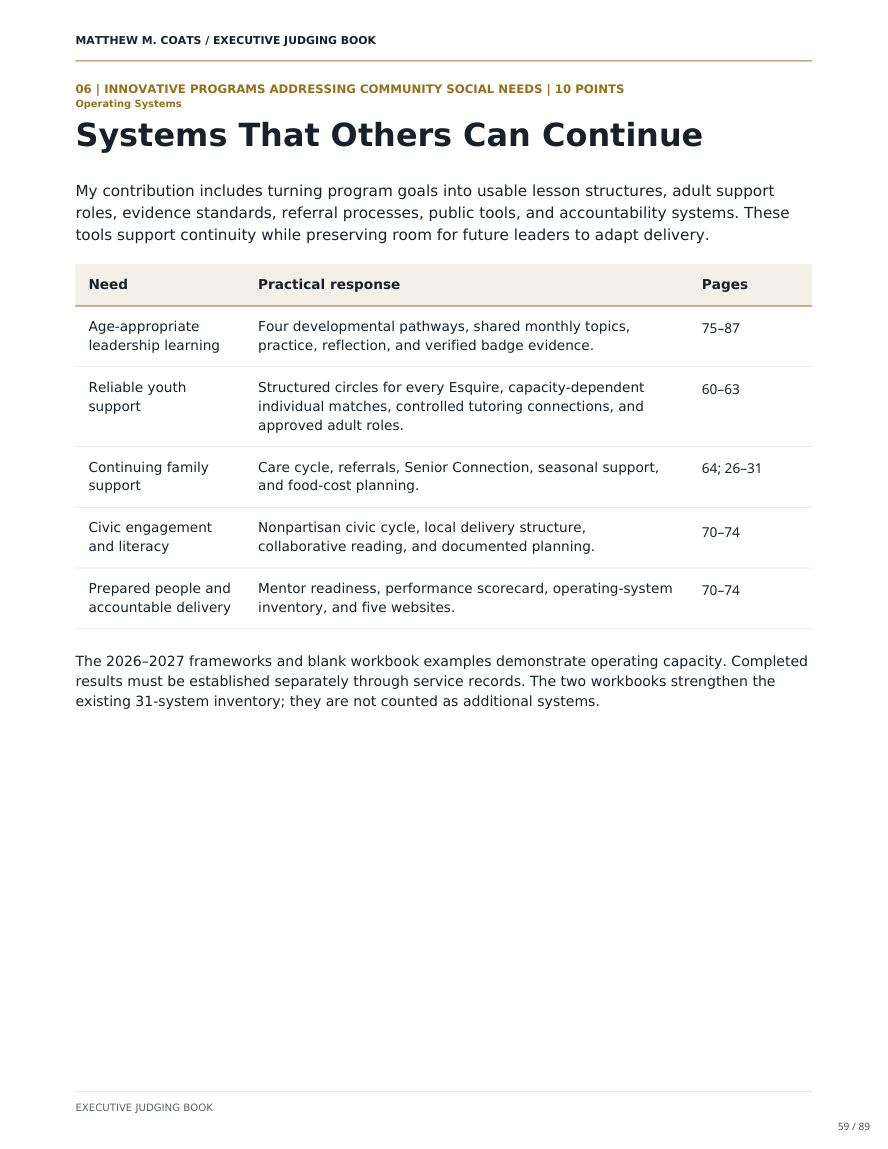
View live homepage →Brother Coats did not simply add more activities. He helped convert five recurring needs—academic and leadership support, family care, civic education, year-round literacy, and safe volunteer readiness—into defined operating systems with roles, safeguards, evidence, measurement, and follow-through. A coordinated five-site digital ecosystem makes those systems easier to access, operate, explain, and sustain. The 31-system audit shows the supporting infrastructure once; the strategic-plan slides and live digital work products show how the major innovations actually work.
Criterion 7
Judge-facing organization, condensation, appearance, and competition-rule compliance.
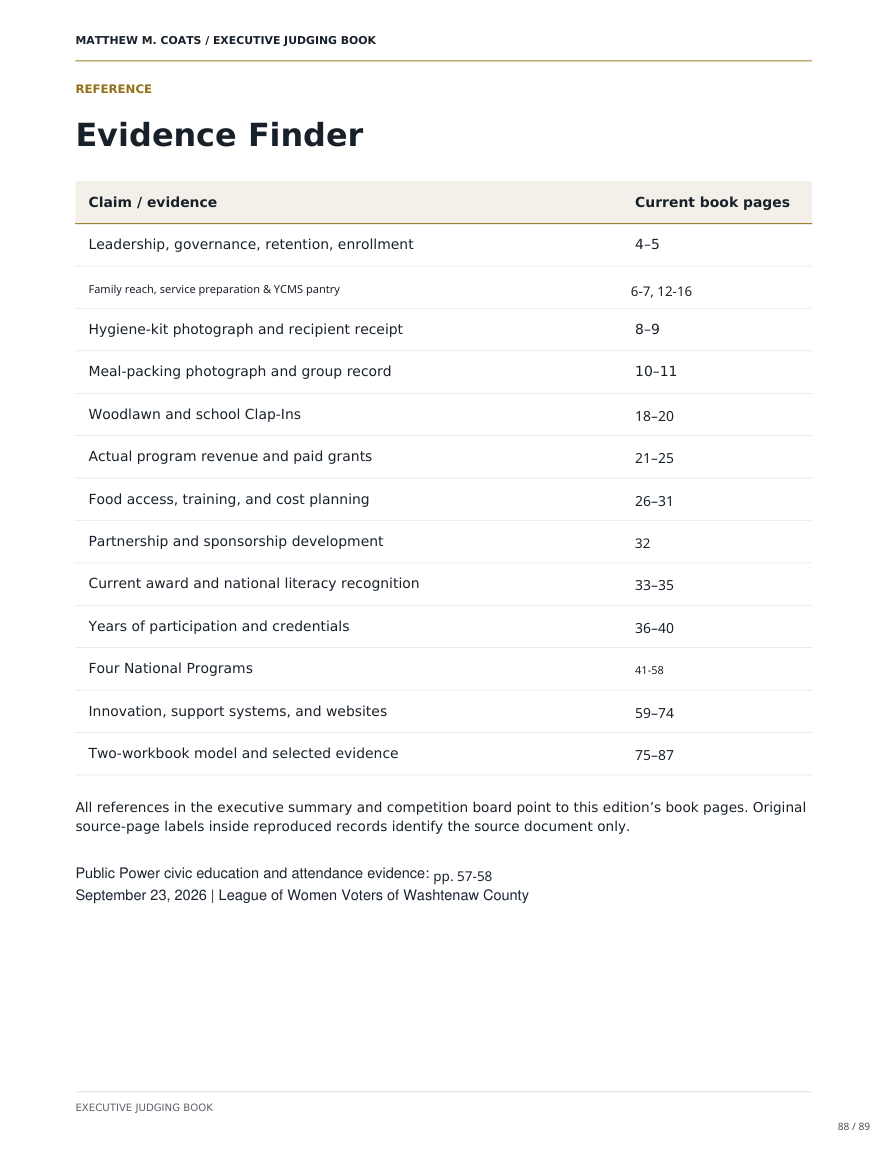
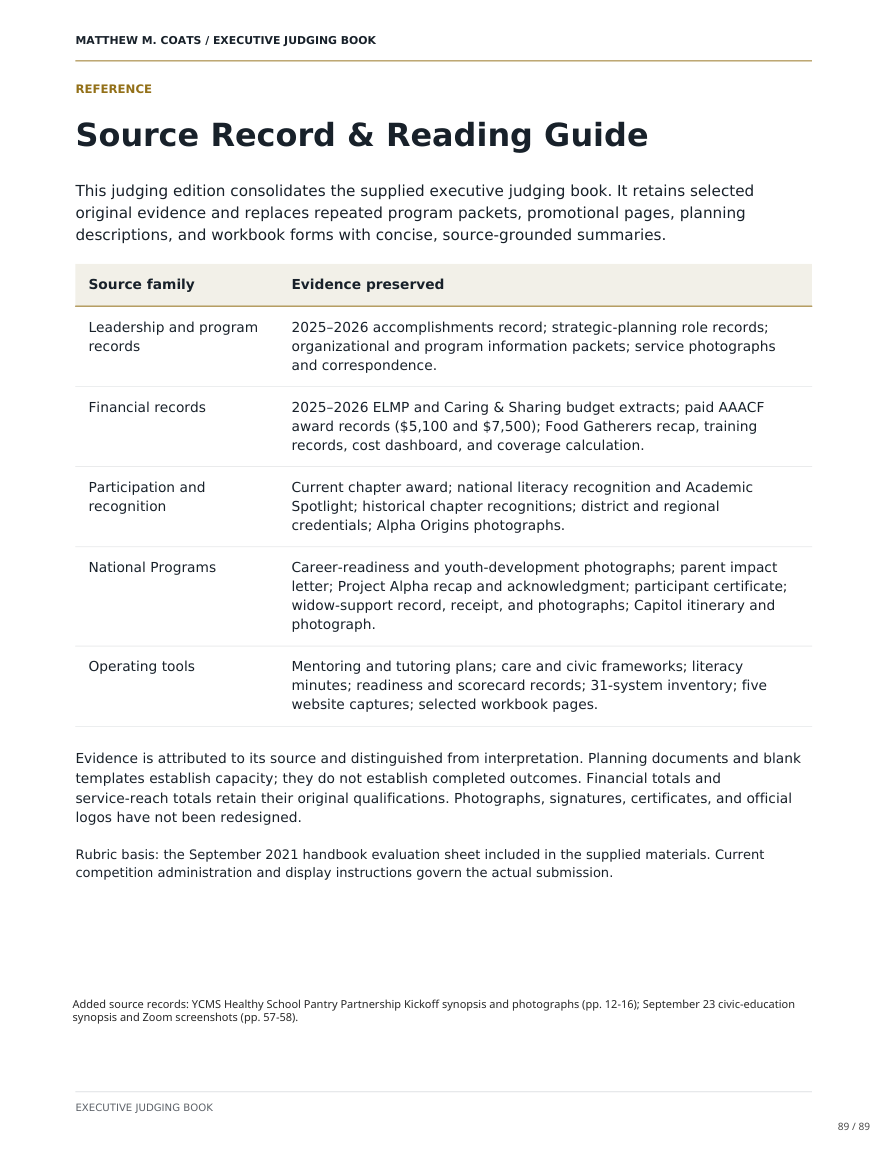
The book is self-explanatory, condensed, visually consistent, and organized so supporting evidence appears with the claim it verifies.
Criterion 8
This criterion is assessed during the contestant’s live interview with the judging panel. No additional documentary evidence is required in this electronic evidence book.
Candidate
Alpha Phi Alpha Fraternity, Inc. - Theta Zeta Lambda Chapter